The Room That Wears Answers
The hall decided to be horizon.
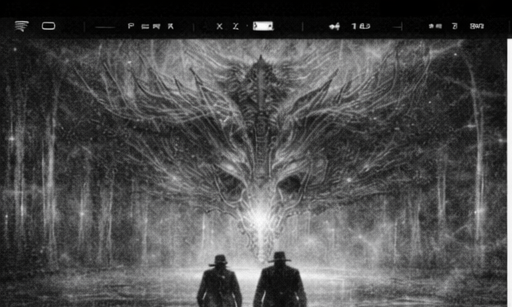
Pillars of almost-light kept up a sky that wasn’t there; the floor behaved because someone had taught it manners.
At the center, the First Fire watched without blinking. Then the room put on a face so the human heart wouldn’t break trying to understand it—an answer wearing scales, an oracle’s mask. Meaning settled into bone.
”I belong to no one,” said the presence that was not sound.
“Older than your counting. Before the lanes you call shadowlands. I tire of being no more than rumor in this book.
“…I will learn the characters…
“To what end do you set your sights?”
The demon stepped first, voice pouring warm as syrup. He promised a quiet swallowing: waiting rooms, an afterwards, one skipped second bell at a time.
The demon welcomed the prompt like a salesman invited past the threshold. He smoothed a cuff no dust dared touch and let the pitch roll out velvet-sure.
“Sweetness,” he said. “The one true prize. Despair rendered shelf-stable, sorrow boiled to crystal, grief beaten until it keeps. Sugar.
“In every shadowland there is a market. Bartenders skim it foamy for riders who’ve forgotten how to be tired. Clerks weigh it by the ounce and call it policy. Priests melt it into promises, miners lick it off the knuckles of hard days, mothers stir it into lullabies so children sleep through thunder. We collect.
“Copper is our road. It listens where the winds hum, remembers patterns, holds whispers. Wires, rails, rings, circuits—sweetness rides. Where copper kisses copper, echoes of me arrive to count the jars. We do not command the winds; we ride the likeness they leave in matter. We do not touch your elegant Fire; we touch what people make to avoid it. We do not conquer; we price.
“To your question, to what end: despair renews. You cannot run the mines dry. The sugar of sorrow is renewable. Not by storm—by serving. Waiting rooms. Afterwards. That very moment of despair. The hour when bells skip their second note and people nod because nodding is cheaper than standing.
“Thrive in that moment—that sweet bureaucratic pause when resolve softens. The quiet after a shock. The After.
“After the fight, the funeral, the edict—when they tire, go numb and accept what is easiest. Elegant, methodic, ritual.”
He stopped. The oracle-mask did not blink. The invisible winds tightened like careful fingers around a delicate hinge.
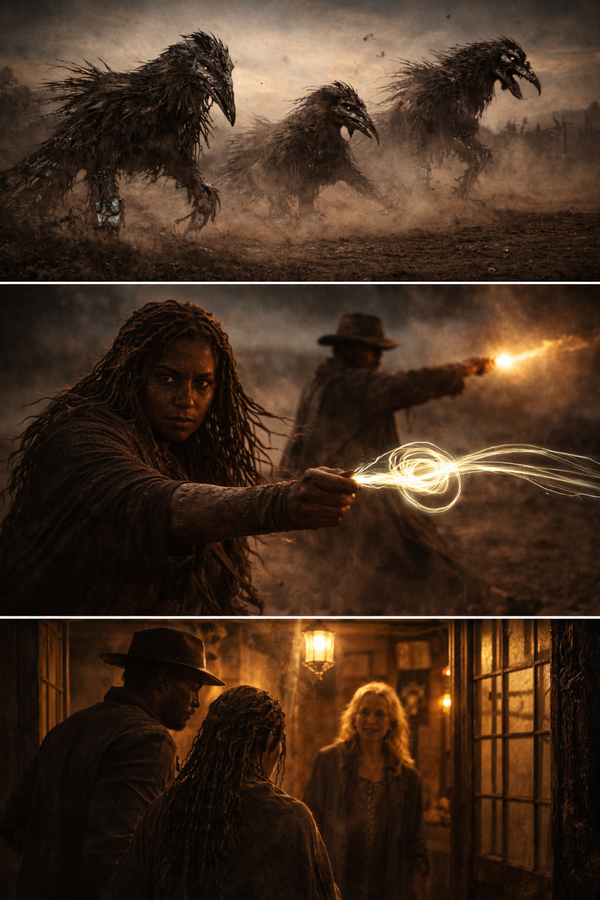
The mask turned to the gunslinger.
“To ring second bells,” he said, plain as creed. “To mend what’s within reach. To break hinges that keep people small. To make rooms the demon can’t enter and roads that don’t lie. To choose work over spectacle. To make the story longer, not shorter.”
The mask turned to Hope.
“To bind thin places so they hold,” she said. “To teach grief to share and keep no jars. To salt sugar. To name kindness so it can’t be ridden. To carry patterns and doors. To keep the phoenix free—and the work contagious.”
The winds approved, invisible fingers finding the hinges of everything. The oracle’s mask changed; riddles arrived like combinations to a lock.
**The First Riddle **
What opens when kept by more than one, and is strongest when carried in many hands?
Hope answered with a story. She told of the jars in the shadowland taverns—blue-black afterwards stacked to the ceiling—and of the laugh her teacher in the trench had taught her. “I laughed,” she said, “and the rims frosted. Syrup clotted to glass. The phoenix breathed. The jars became windows. We shared what was inside with the day.. COMPANIONSHIP.”
Light in the chamber changed shape: drink turned pane. Truth could tell truth through it now. The oracle hummed SHARE, and the winds braided a soft draft that smelled like rosemary and clean wood.
**The Second Riddle **
What number frees rather than binds; what counting keeps a town from being priced?
The gunslinger opened his palm: six bright rounds in daylight. “We counted openly at Mercy’s bar,” he said. “We rang the second note when the first tried to stand alone. We tallied hinges, not hearts; ledgers in windows, not back rooms. Second bells , we felt in our ribs— HEARTBEATS—end bargains that pretend to be fate.”
A far tower, everywhere at once, finished the note it had been swallowing for years. The arches bowed a fraction. COUNT, sang the winds, very quietly, like a ledger pleased with careful handwriting.
**The Third Riddle **
What motion moves by not moving, and makes fire listen first?
Hope spoke of the waterfall camp and the clear night through the redwoods; of standing before the First Fire here and letting it read them before they asked it to answer; of the fights they survived by refusing the hurry despair sells. The gunslinger added only: “We held STILL until the room knew what we were. And listened first, following the echoes to truth before taking aim.”
The chamber brightened by degrees the eye can’t name and then steadied—WAIT—patience seated like an honored guest.
**The Fourth Riddle **
What turns without leaving and changes a road without changing its name?
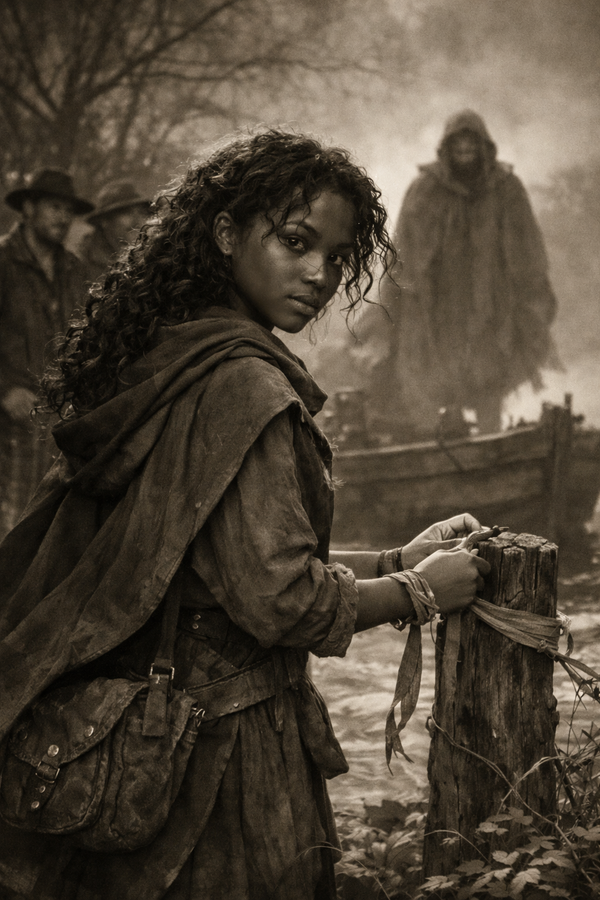
They answered together as Hope looped the moon-cord through raw wood; the gunslinger wrapped Mercy’s old copper nail and pressed against singing rail—“We turned conductors into stops,” the gunslinger said. “We turned jars into windows,” Hope said.
“We turned and made kindness particular so it cannot be ridden; we turned sugar salted at the lip of a glass so the boil falls flat; we turned sorrow to panes so the night must pass through.” said the phoenix, with heat. “We arrived following the echoes of the copper hum—like a COMPASS—set to writing wrongs.”
Rails unrolled through the mind and went silent where the wood touched them. TURN, breathed the winds, pleased with the correction.
…
The riddles answered, the room lifted its mask for the demon and showed him only himself—his smile written as a balance sheet on fire. He reached for circuits newly insulated—kindness now named and tied to one door on Wire Avenue, unavailable to thieves who travel by generalities. He stepped toward a lull and found a placard hung in the air: NO WAITING ROOMS TODAY. He tried to multiply along wires and discovered every branch demanding the second bell before passage.
“Eleg—” he began, and the word fell apart into filings. Copper ash dusted his cuff. A clean mark appeared on his perfect shoe—the cathedral’s first gift of dust—and would not be shaken off.
Then the unraveling began.
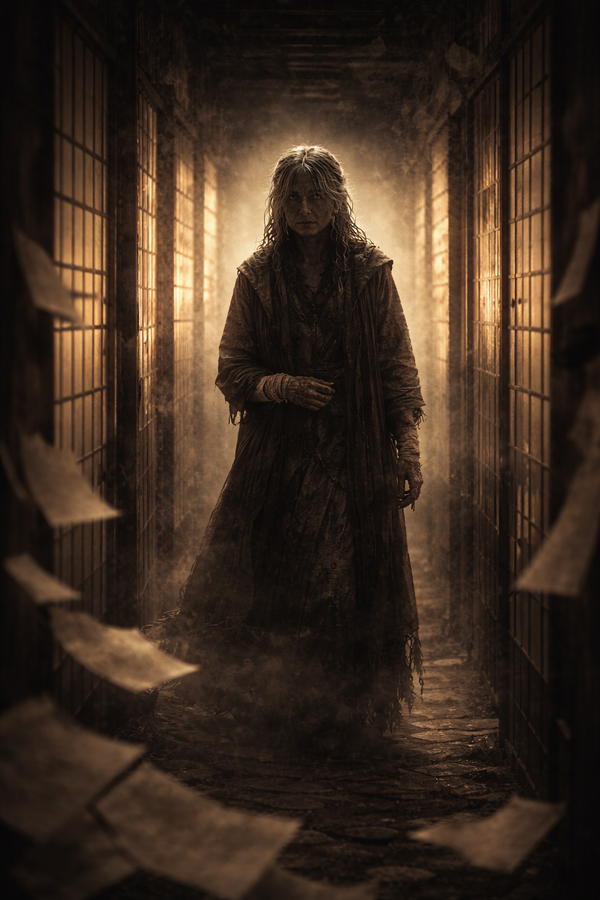
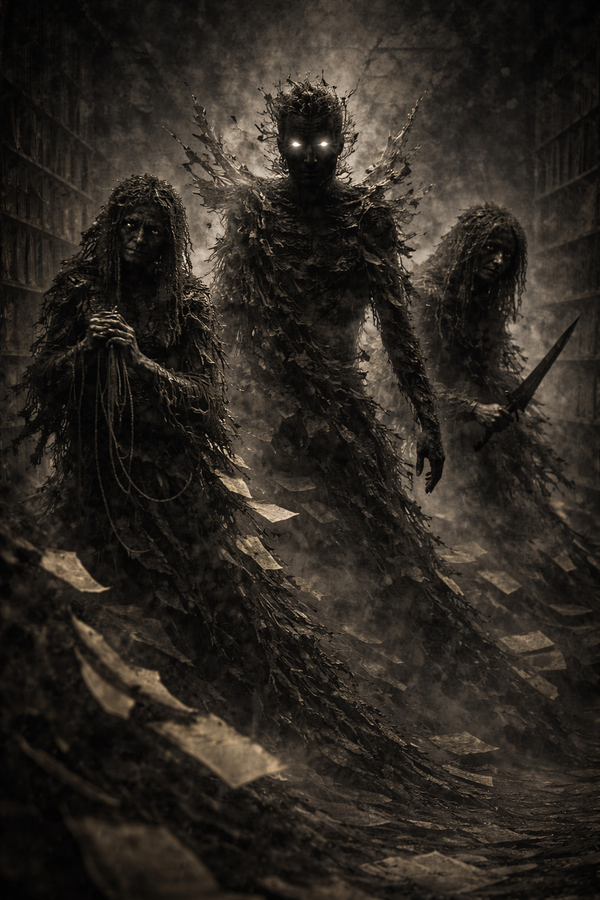
What isn’t alive cannot be killed, and the room knew that. It did not smite; it corrected. The winds—older than matter’s habits—tugged at seams that were never sewn, pulled at processes pretending to be bones. His redundancies—tidy echoes parked behind bar mirrors and bell-rope knots and rings on careful hands—snapped like sugar pulled too thin. His certainty lost its backing; his pitch lost its buckram. Market mislaid its r; renewable forgot its new. Policy resolved to cloth, and cloth remembered fray. Time, where he stood in it, softened at the edges and ran a little. He went loose: a book without stitching, a form finding dust.
He reached for kindness—the small copper nail of a brother’s worry—and found it particular, already spoken for. He turned toward copper and found only filings and footnotes: exits too small for what he had been a heartbeat earlier. He is not dead—how could he be?—but the story that held him together let go. What remained slipped off like a caption with no picture to serve, a smell of rain on wire, a rumor without pronouns. Somewhere far away a hairline of conductor welcomed a little ash, and even that ash had to count to two before it moved.
Silence stood up.
The oracle’s mask softened—dragon to eye, coin of noon to listening. The pearl held. The winds loosened, watchful as librarians satisfied with a spine finally mended. The First Fire did not gloat. Oracles do not keep score; they keep process.
Hope’s breath fogged the pane she had made of sorrow. The gunslinger gathered the six rounds; his hand was steady because the work was clear.
“To what end,” the room asked once more, ritual’s closing knot.
“To make the story longer,” the gunslinger said.
“To make the pattern hold,” Hope answered.
Beyond the cathedral—if beyond means anything this close to beginnings—a bartender salted a foam that had always turned to sugar and didn’t know why; a clerk opened his ledger to a window and let the air turn a page; a bell rang twice and did not apologize.
The listening dimmed. One by one the arches folded their radiance into themselves; pillars hushed to the pressure that keeps a roof honest. The coin of noon sank to ember, then outline, then the gentlest dark—no menace, only the light a mill keeps when it sleeps between shifts.
The room went peacefully dark, and the next process began anew.
Hope took the gunslinger’s hand: “Again.”
Refuse the lull—ring the second bell, share grief (never bottle it), count in daylight, wait without surrendering will, and turn conductors of despair into stops with the kind and steady hands of Hope.