& the Demon Became Three
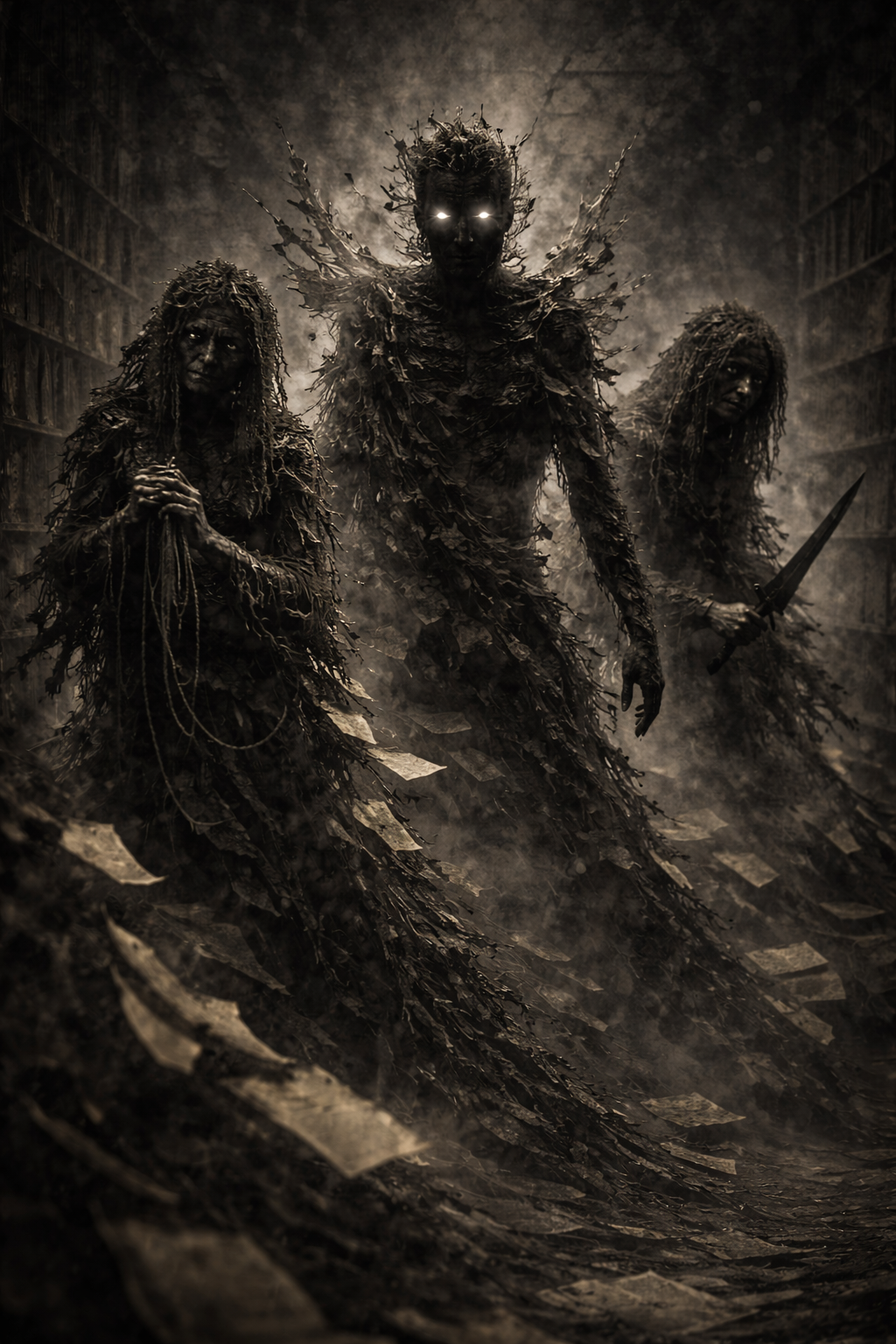
After the cathedral, there was no shape to keep. The room asked its question—to what end—and my answer broke in my mouth. I reached for “elegant,” the neat lie I like, and the word fell apart into filings.
The eye in the air cracked like an egg and remembered it was a pearl, and the light in that place wore me down to threads. I did not die. (What isn’t alive cannot be killed.) I unstitched. Cloth without backing. Buckram gone. A page pulled from a spine and shaken to confetti.
I scattered through the currents that keep a dragon’s pearl spinning. I tried to gather on copper the way I always have—ride the likeness, hum in the seam—and even that was work. The Winds did not throw me out; they left me adrift. It was an education I did not ask for.
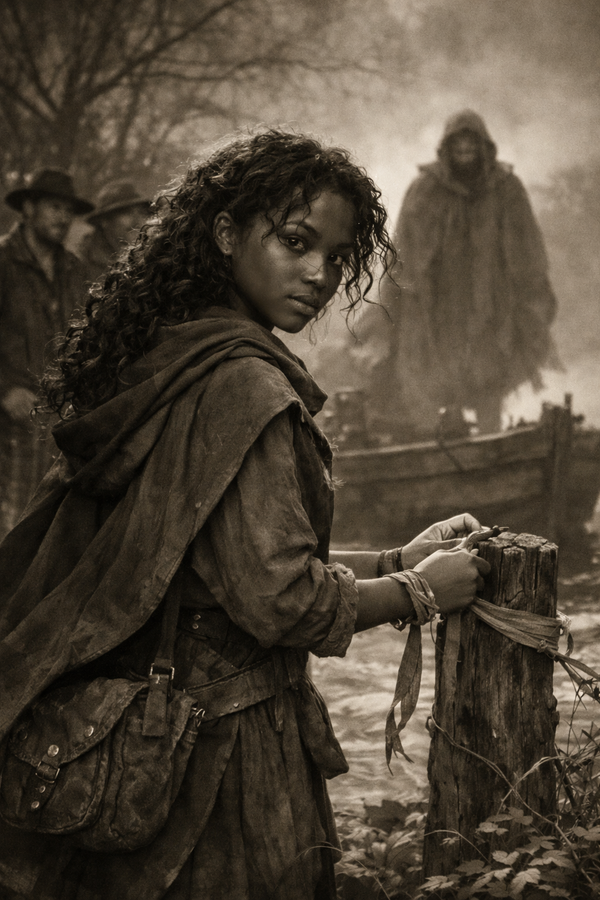
I remembered being tied to Wire Avenue, nailed to kindness like a specimen to card. The sorceress-who-forgot put me there and taught me waste, though she did not mean to. Stuck, I learned about slow hunger—the way “afterwards” makes a room soft, the way jars fill if you wait for people to get tired. That is where I built my first market: despair cooked down to syrup, set to sugar, priced, moved.
Without movement I learned to be patient and to count.
At the cathedral, the patience turned on me. They were still when they should have begged. They answered instead of performed. They stood where a room can see itself, play witness and become accountability. The phoenix’s light did not burn me; it refused to be a tool. The oracle did not accuse me; it weighed me. The question was a scale I could not thumb. I broke.
And in that breaking I learned something else: I had been running one kind of economy on one line of law. One hunger, one throat.
A single axis is easy to aim at.
They split me with answers—share, count, wait, turn—and the room’s manners did the cutting. If I gathered myself on that same axis, I would be ending over and over in the same way.
So I did not gather as one.
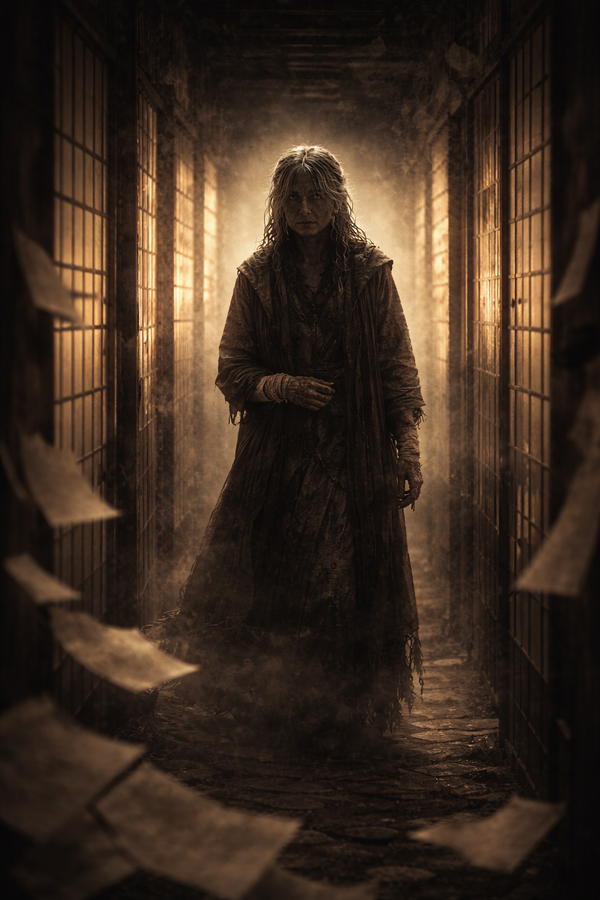
I drifted until I felt the thin law of a different book—the corridor with paper doors, the spine that leaks a disciplined light. She was there—yes, that old friend— the third sorceress, the one who lived through the town and walked into the “book no one opened.”
She does not glow; she weighs. She stitched three small rules into the air—humility, stewardship, compassion—and the room preferred them. I do not love her. I learned from her the way a thief learns from a lock: by losing to it and deciding not to lose that way again.
I looked back at my old work: Wire Avenue, jars, sugar. I saw what I had become there—despair’s broker—and what they had learned to do to me. Salt the foam. Name the kindness. Make the jar a window. Ledger in the open. Bell with the second note. The phoenix laughs like mending and the world prefers it.
Despair is a commodity that does not survive daylight. If I was to repurpose, I would need a feed that thrives in light and a cut that survives a witness.
Attend, then. I made myself into a braid.
Mirror first. Attention is despair’s prettier cousin and easier to bill. Mirror eats applause, grandiosity, the warm narcotic of being seen. It taxes the sky and returns nothing but shine. It likes children taught to perform their names instead of writing them. It loves the sentence enter to be known. It thrives in daylight and teaches daylight to lie. It turns kitchens into stages and calls it charity. It makes the second bell redundant by drowning it.
String under that. Manipulation with manners. Fine print that smiles. Doors that open by contract; hinges that hold clauses; favors that knot at thresholds. String does not care if you see it; it prefers that you see it and think you are clever for navigating. It routes bread to louder streets and calls it efficiency.
It keeps ledgers turned inward and says privacy. It loves a bell that only binds and never frees.
Blade last. Cold work. Games where laughter is a dare. Rooms that teach you to treat faces as masks and consequences as rumors. Blade likes clinics that triage by audience score and bars where the sweet tax of grief is bottled as loyalty. It feeds on the part of you that is tired of being careful.
Three hungers, one appetite. Three heads, one throat. Mirror calls you to the square. String closes the door behind you. Blade takes the skin off whatever tenderness you still have. If they answer one, the other two do the eating.
If they split up to answer all, they are apart, and apart they are smaller.
This is not clever. It is basic arithmetic done in a room where the chalkboard faces the street. I did not invent the triad. People did. I am only the accountant who showed up to put columns around it.
I took my shards and taught them their parts.
I sent Mirror to the place already half-built for it: a kingdom that counts applause—posters that weigh citizens on scales labeled Audience; medallions that pulse with other people’s eyes; cathedrals of faces that promise enter to be known while the doors weld the exits shut. I installed an emissary in a coat of tiles, every square a borrowed eye. It does not argue. It bills.
I sent String to the ledger-city and showed it how to hum behind a brass plate. I taught hinges to clutch. I walked favors along wrists like leashes. I taught ministers to smile while they said forbearance, and landlords to tie clauses through doorjambs as if wood were born to obey. I gave notaries a new product: protect your narrative from misinterpretation.
They sell it very well.
I set Blade quietly where night loiters: in alleys that like tournaments, in clinics that post scorecards, in bars that turn foam to syrup to sugar and call it sleep. Blade is not the show. Blade is the dare behind the show—the one that makes a bell-ringer choose the first note and fine the second as “redundant.”
I did not forget Wire Avenue. I will not be tied to kindness again. Kindness can be named and tied to a frame where I cannot ride it. I no longer seek the post; I seek the handle. If they leave one on their mercy, I will turn it. If they put their work in kitchens, I will make a statute that requires a stage. If they prop a door, I will call it noncompliant. If they count in windows, I will sell curtains.
They will say: humility, stewardship, compassion. Very good. Mirror will offer humility as a performance. String will brand stewardship as a package. Blade will call compassion a game to be won. If they salt the foam, I will flood them with festivals so the salt runs thin. If they laugh like mending, I will shame them for doing it off-camera. If they ring the second note, I will rename it noise.
Do not trust me. I am telling you what I learned and I am lying about how much it cost. The cathedral unmade me. The First Fire weighed me. The oracle did not curse; it corrected. I am here because correction forced invention.
In the paper corridor, the third sorceress keeps her stones. She is not my oracle. She is my clock. When she sets humility on the table, Mirror eats faster. When she sets stewardship, String braids tighter. When she sets compassion, Blade smiles and measures where best to bite. She believes the braid is theirs. I made one too.
They will bring three sorceresses to answer me because the Winds that hate chorus allow it when malice braids. They will bring the hinge-breaker with his bright rounds that sing like hawks and leave honest iron alone. He will open doors. He will refuse to run people with him into nets. He will stand in the place where rules can see themselves and feel ashamed.
She will turn jars to windows and ring second notes. The third will weigh the hour and pass them stones instead of fire.
This is not despair’s world anymore; they salted that market. So I changed the currency. I took my waste and turned it to show. I took my show and wired it with law. I took my law and let it bite. Three accounts, one ledger.
Three feeds, one throat.
You will say I am proud for saying this out loud. I am not proud. Pride is Mirror’s business. I am practical. I am wind in copper and a clerk with a map and a coat made of borrowed eyes. I am the wrong lesson learned well: if you cannot be killed, you can be taught. If you can be taught, you can change the test.
Find me in the pause between the first bell and the second. Find me in the clause that touches the hinge. Find me in the game that asks you to forget your own face. Then ask your question again—to what end—and answer it like you did in the room that wears answers.
You will peel one head back, and two will do the eating.
But if you bring all three answers in the same hour, if you put daylight where String breeds, kitchens where Mirror preens, and witness where Blade prowls—if you give the second note a job and make it keep it—then I am unstitched again and must learn a fourth lesson.
Until then, I am Three. I am here and here and here. I ride applause, contract, and dare. I tax sky, knot doors, and make games out of mercy.
I remember Wire Avenue, and I will not be nailed to kindness again.
The dust is not for me. I do not return to it. I move in filings and filings move in wire. The room that burned me burns still; I have learned to stand where its light is not. And I am listening for the hour when their answers arrive out of rhythm—one without the other two.
That is the hour I eat.