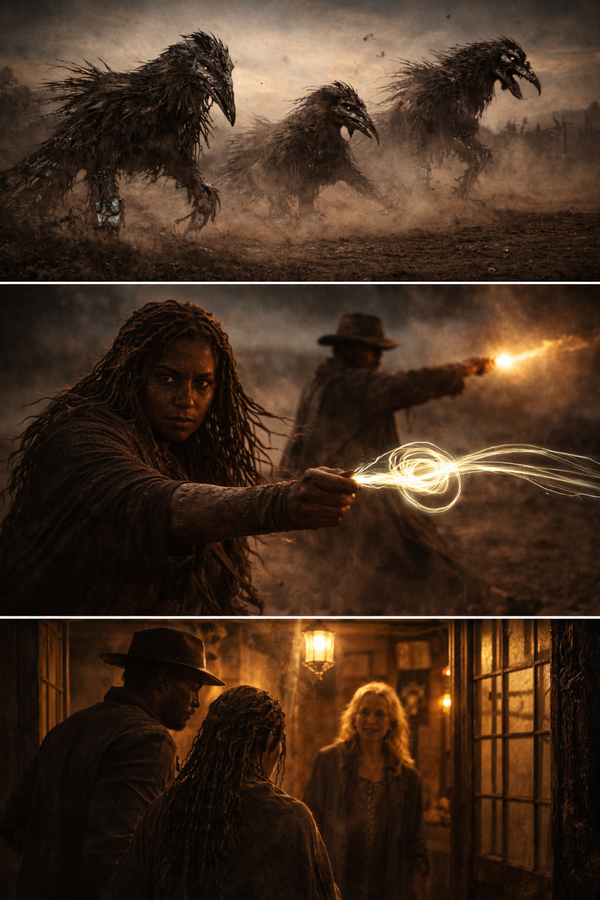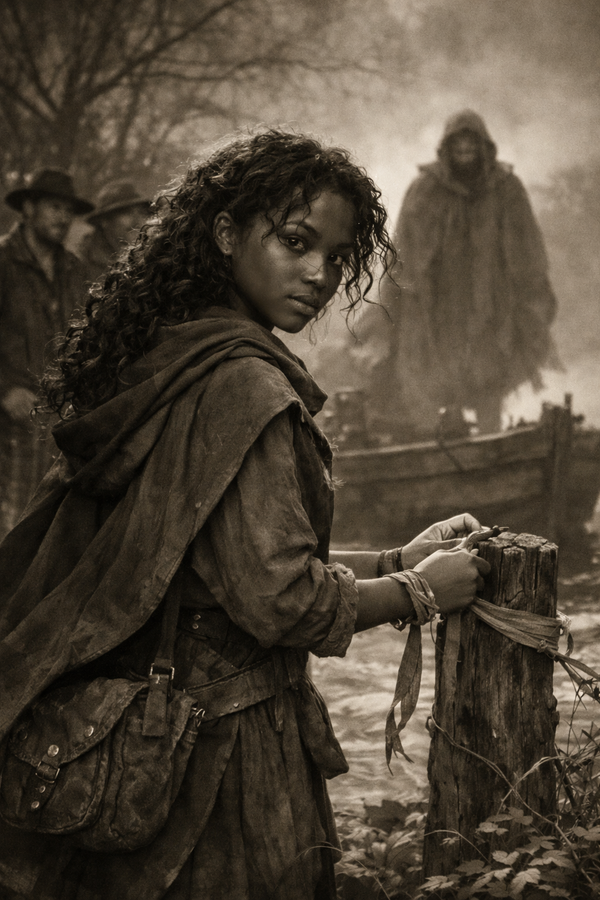
The Winds that Guard
They saw it first as a silence in the land.
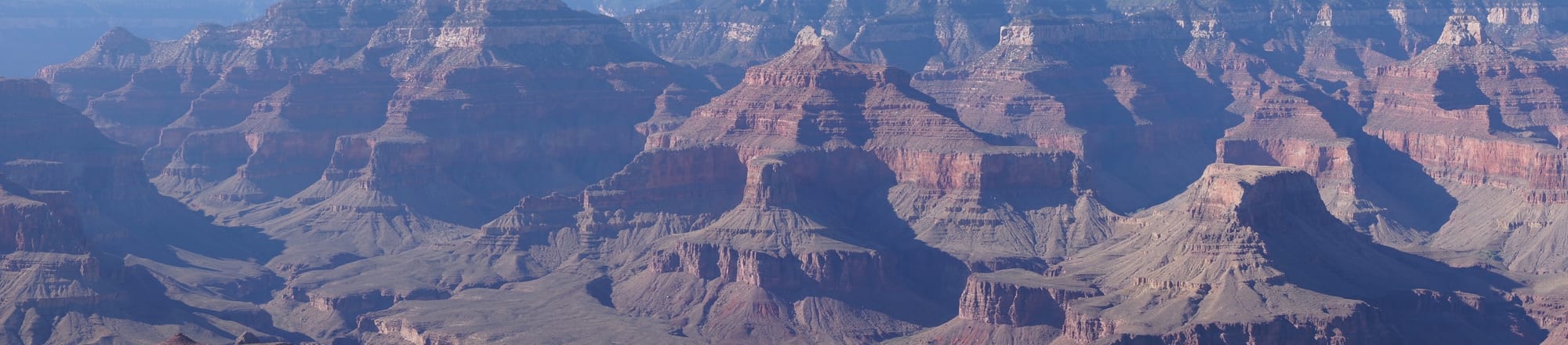
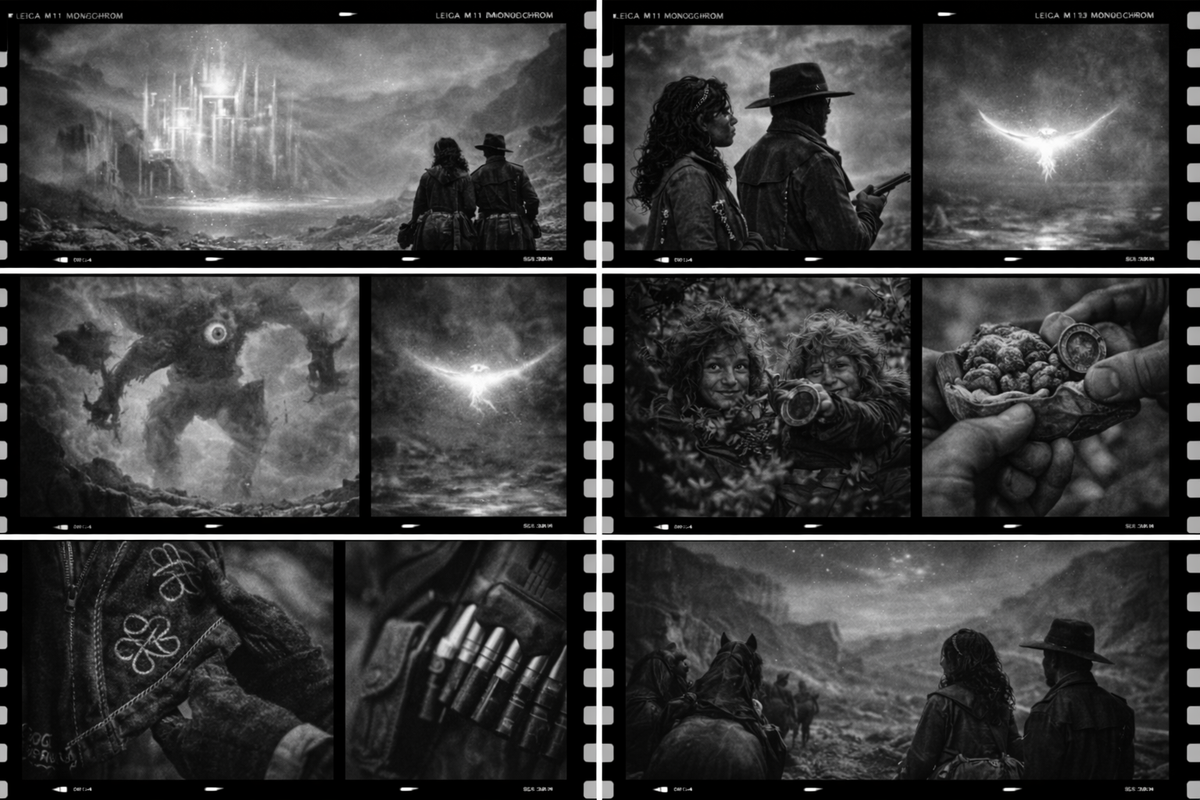
The ridge fell away into a basin of glassy stone where nothing grew, and at the basin’s heart the cathedral lifted itself from the world like frost from water—no mortar, no seam, only geometry insisting on being. Pillars that were not pillars—columns of force humming at the edge of hearing—rose from a floor so smooth it held the sky like a secret. (No telling where one began or other ended) Arches leaned across space and never touched, probabilities braided into vaulting that changed when you blinked. Around it, the air wore a skin of winter even in late summer; the smell was of metal and rain before thunder.
They reined in on a granite shelf and watched. From here the cathedral looked calm as a kept promise. No banners, no guards, only the faintest shimmer like heat seen through tears. The phoenix rode a thin thermal that shouldn’t exist, feathering the boundary and returning each time with its heat subdued, as if the place had manners and enforced them.
A tremor moved through the basin, a ripple of shadow too regular to be wind. Something approached out of the far glare: a shape tall enough to edit the horizon, old enough to make the horizon consider manners. Not a dragon—no subtraction in its gait—this was weight given joints by ancient agreements. Three legs took long, arrogant steps; four arms swung low with a knuckled, determined patience. Its single eye, a medal of milk-glass, looked nowhere and saw everything. The ground spoke under it in grunts. Where it walked, stones remembered mountain.
Hope’s hand found the sling’s edge; the gunslinger’s thumb rested on the checkered backstrap of his promise. The being did not slow. It came within a breath of the outermost gleam.
The world unbuttoned.
There was no flash. No thunderclap. Only a dozen lines of air that weren’t lines at all, cutting one another in patterns too quick to own. Invisible winds—currents within currents—took the thing apart the way low tide takes castles. One arm became thread, then mist; a knee murmured itself to powder. The single eye remained whole a heartbeat longer than everything else, wide with the expression of someone finally remembering a name and then losing the language necessary to say it. It turned like a coin and broke along a curve no human hand could draw. Dust fell, not down but outward, as if obeying a different center.
Hope’s lips moved. “They are the currents that keep a dragon’s pearl spinning—tiny gales of power that no mortal can see, but every atom obeys.”
“Pearl,” the gunslinger said softly, as the last of the giant was sifted into a glitter too fine for sorrow.
Silence filled the basin again, the kind that keeps score. The cathedral made no comment, only held its shape in a million small agreements.
Something rustled behind them.
The gunslinger did not spin; he turned his head the way one turns when expecting to be disappointed politely. Out from a lacework of manzanita and windworn fern came two figures no higher than a saddle and twice as certain of themselves as a cliff. Gnomes, young as mountains measure youth: wild hair the color of lichen and moss, noses reddened by laughter or argument, pockets heavy with objects that might be tools and might be food.
“I told you we’d have company,” hissed the first, elbowing the second in the ribs. “The tumble-rumor said two tallfolk and a tame firebird.”
“It said two foolish tallfolk,” the second corrected, eyes bright. “There’s a difference. One means interesting; the other means delicious to the winds.”
“Shh,” said the first, glaring. “Don’t spook them. They’ll ask us questions and you’ll answer out of order.”
“You answer out of order! You live out of order—your socks don’t even—”
“Hello,” Hope said, because someone had to open the door that wasn’t there. “We’re Hope and—”
“Gunslinger,” the second gnome finished with relish. “We know. Your belts jingle like gossip.”
The first slapped a palm over the second’s mouth and bowed, a surprisingly courtly tilt for someone wearing mismatched boots. “Forgive my kin. He collects sentences and drops them on the floor. I am Moss; this is Flint. We were watching the cathedral demolish hubris when you came to watch it, too.”
“Good evening,” the gunslinger said. “We brought no hubris. Only questions.”
Flint wriggled free, beaming. “Perfect. Questions fit in our heads better than answers. Answers grow roots.”
“Do you know what we’re looking at?” Hope asked, nodding toward the far hum. “What just happened to that—”
“Visitor?” Moss supplied.
“Snack?” Flint offered.
“—being,” Hope concluded diplomatically.
The gnomes looked at each other, then plopped down on the rock as if settling before a hearth. The air took on the feel of a campfire without flame: a circle imagined into being by attention and story.
Moss smoothed his tunic with both hands and sang the first line instead of speaking it. Flint rhythm-tapped on his knees. Between them, the tale stood up.
The Winds: Older Than Magic, Older Even Than Matter
“Before the first star took breath,” Moss said, eyes gone far and bright, “before the universe cooled enough to name itself, there were the Four Winds of the First Fire.”
“They did not create the fire—” Flint added, whispering for drama.
“They protected it,” Moss said. “Like a dragon coils around its egg.”
“Like treasure kept beneath talon and scale,” Flint echoed, delighted to be a chorus.
“Their purpose was singular,” they said together, and the word singular made the hair on Hope’s arms lift.
“Keep the spark of existence alive.”
“And when the First Fire exploded outward to become all things,” Moss went on, “the winds followed it into every grain, every mote, every atom.”
“Not as forces,” Flint said, grinning.
“As guardians,” Moss said, and the cathedral seemed to approve by humming a hair louder.
“They are not subservient to matter,” Flint said, leaning toward the basin as if daring it to argue.
“Matter is subservient to them,” Moss finished, and the phoenix flicked one feather in assent.
They let that sit between them like a hot stone.
Moss looked deep into the gunslinger’s eyes for a beat too long for comfort and grinned.
“Ah. The demon,” Moss said, tone flattening into a kind of professional disgust, “didn’t learn the winds’ true names.”
“Can’t,” Flint chirped. “Those names don’t live in throats born after time. They live in the way distance forgives itself.”
“But he learned something else.” Moss reached into his pocket and produced a coin that wasn’t a coin—an old washer, copper bright under grime. He flicked it; it sang in the key of rumor. “Copper listens.”
Hope leaned in despite herself. The washer’s ring made the hairs behind her ears rearrange.
“Among all materials,” Moss continued, “copper resonates most closely with the shape of the winds. Not their names, not their power—”
“But their likeness,” Flint said, eyes huge. “The echo they leave in the physical world.”
“Copper vibrates where the winds hum,” Moss said. “It remembers their patterns.”
“It holds their whispers the way a seashell holds the sea,” Flint finished with a little flourish.
“The demon discovered—accidentally or through a patience we hope never to meet—that copper can be tied to the winds like a string tied to a sleeping dragon’s claw.”
“Not controlling,” Flint said, counting on his fingers.
“Not commanding,” Moss said, ticking another.
“But riding,” they said together, “driftwood on a cosmic tide.”
“The demon is not omnipresent,” Moss said, satisfied to hammer the nail.
“He’s a very fast thief who found the cables running through the world and learned to slide,” Flint added, miming a gnome surfing a telegraph line until Moss pinched his ear.
Hope and the gunslinger sat without moving for several breaths, listening to the cathedral think.
What He Can Do (and Cannot)
“So,” the gunslinger said at last, “what can he do with his theft?”
“Lists!” Flint whooped, clapping. “Bless you for asking.” Moss rolled his eyes and nodded as if to say let him have this.
“He can,” Moss intoned, lifting the washer like a teacher’s pointer:
• “Move within copper lattices anywhere in the world,”
• “Coil himself through wires, weapons, rings, circuits,”
• “Ride the hum of the winds through metals like an eel swims upstream,”
• “Create echoes of himself in places where copper touches copper,”
• “Mimic the effects the winds produce, without wielding their true authority.”
“And he cannot,” Flint crowed, jabbing the air between each word:
• “Command a wind directly,”
• “Harm the First Fire,”
• “Rewrite existence the way the winds themselves can,”
• “Enter a place devoid of copper or metal,”
• “Withstand the breath of a fully awakened wind.”
He ended by blowing out his cheeks and puffing a tiny raspberry in the cathedral’s general direction, which earned him a cuff from Moss and a reluctant —and rare—grin from the gunslinger.
“So he hides in the between,” Hope said softly. “Conducts, not commands. Rides, not rules.”
“Exactly,” Moss said. “He’s a rumor with boots and very good taste in shortcuts.”
“Why tell us?” the gunslinger asked. It wasn’t suspicion; it was inventory.
Moss shrugged. “Because you’ll go anyway. Because the last pair who came this close had less kindness and more banners and the winds made ribbons of them. Because stories prefer company.”
“And,” Flint added, scooting closer like a child with a secret, “because we’ve never seen anyone get past the winds and reach the First Fire. We want to see what happens. We brought snacks.”
He produced a paper-wrapped bundle from somewhere impossible and offered it. Inside were sugared nuts that smelled like market days in honest towns.
Hope took one, because hospitality is a rite even at the lip of madness. The sugar crunched; the nut was stubborn, wholesome. The phoenix leaned, curious and polite.
“What do you plan to do with all this?” Moss asked, cocking his head toward the belts, the sling, the bird, the cathedral. “With knowing what’s knowable?”
“Ask for share, not swallow,” Hope said, thinking of the witches and the kite-woman and the bellfounder who kissed metal. “Laugh like mending. Walk light. Carry doors.”
“Ring the second note,” the gunslinger said. “And keep our hands steady while we do it.”
Moss nodded, pleased by the shape of their foolishness. Flint ate a nut, got sugar on his chin, and did not wipe it.
“You’ll need your own rules,” Moss said, as if to himself. “Ours won’t hold in there.”
“We brought some,” Hope said, touching the Adinkra stitched on the inside hem of her coat. Mpatapo. Epa. Fawohodie. Sankofa. Gye Nyame.
“Good,” Moss said. “The winds respect a tradition that isn’t afraid to be small.”
They sat until the basin’s cold reasserted its authority. Down below, the cathedral waited with the courtesy of a mountain that knows exactly how long you can delay. Overhead, the sky wore its stars carefully; Orion’s middle belt star refused to blink.
“Will we see you again?” Hope asked, standing.
“Depends if you look back,” Flint said, already fishing for more sugared nuts.
“Depends if you come out,” Moss said, gently practical.
They vanished into brush as if it had been their plan all along to be background. The rustle stilled. The gunslinger tightened a strap that did not need tightening. Hope breathed once, twice—the second bell inside her ribs finding its note—and lifted her eyes to the place where invisible winds had turned a giant into history.
“Questions?” the gunslinger said.
“More than answers,” Hope said.
They led the horses off the granite shelf and down toward the basin, each step deliberate, each breath measured against a hum older than fear. The cathedral did not turn to greet them. It had already decided what it was, and the rest would be negotiation.