The Three Under the Redwoods
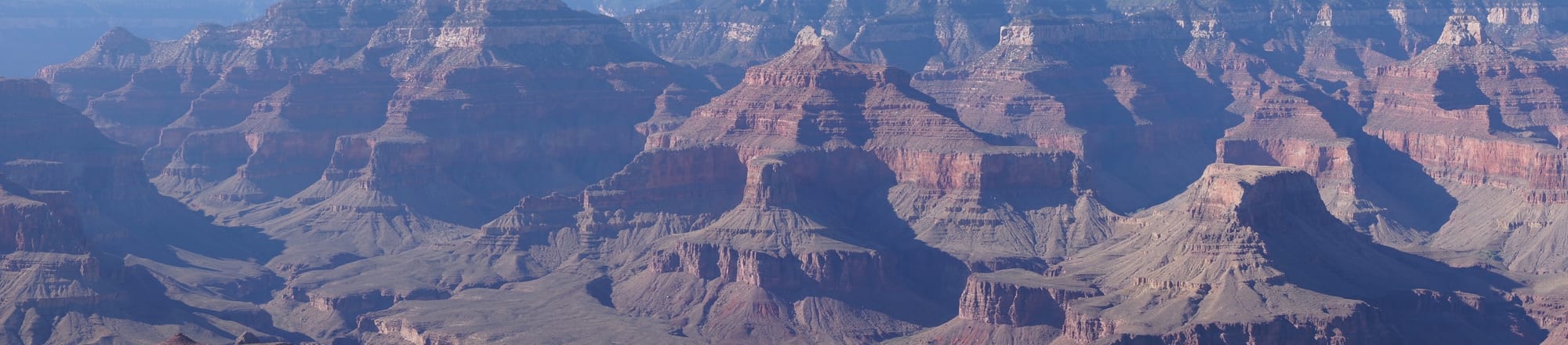
On the ninth day of being apart they found each other again—where a waterfall shouldered out of black stone and fell into a pool the color of the hammered moon. Six months without a sighting had pulled the world thin as old paper.
The water hurried on beneath the logs like something that had laughed too long and was sorry for it. Redwoods leaned close as if to overhear and never repeat. The night was so clear it felt wrong; you could see the hillside’s bones through the trees and count the older constellations, the ones that don’t bother with names because names die.
They made a small camp—no fire. Steam bled off the falls in low ghosts. Their breath braided and unbraided in the cold. The phoenix dozed in a seam of warmer air that clung to the pool like a blanket. In the gunslinger’s coat, the three tail feathers of the red-tailed hawk hummed their thin, stubborn thread, the sound a kettle makes when it thinks about boiling.
“Tell me,” Hope said.
He told her what the wolf-dragon had bragged in the box canyon: that the Blank was a pact people sign with silence; that hope used wrong becomes a leash you fit yourself with; that the demon fights in waiting rooms, in lobbies, in “afterwards,” while maps are redrawn behind your back by hands that never get tired.
“And you?” he asked.
Hope slipped the sling from her shoulder and laid her books on the wet stone in a half-moon. She tapped the one with the greened spine.
“Copper sings to itself,” she said. “A shared sea moving through a lattice—push here, answer there. He doesn’t arrive; he conducts. Between bells. Between doors. Between rules. He rides the between the way a hawk rides a thermal—everywhere and nowhere, and always half a second quicker than any honest count to two.”
They listened to the water work at the rock the way teeth work at a dream. Up above, Orion wedged his belt between two ribs of cloud. The middle star did not blink.
Hope kept her eyes on the pool. “If he rides the between,” she said, “we need something that isn’t between.”
“Doors and bells live on the skin of things,” the gunslinger said. “He slips under skin.”
“What doesn’t slip?” Hope asked. “What holds a hill together even when the map lies?”
“Root,” he said.
“Then we ask what remembers,” she said. “Not wire. Not law. Something older. The ones who taught the bell to answer, if they’re more than a story.”
He glanced at the trees leaning in. “I’ve seen ribbon wake under leaves,” he said. “And shadow stop at a lattice like it hit a fence.”
“Tree-law,” Hope said. “Find the keepers of it.”
“We need a teacher who speaks tree,” the gunslinger said. “Roots and their witness.”
Hope nodded once. “The wood witches.”
—
They rose before the cold could make the choice for them and walked into the grove. Nurse logs folded into each other like old bodies, feeding their own grandchildren. The ground sank, then steadied, as if something woke beneath the duff and decided to let them step.
Hope knelt where three trunks met—one gray and smooth as a palm, one ridged and broad, one thorned and dark. She set a loop of moon-cord at the base of a root as thick as a man’s chest; the gunslinger laid a single feather-dust round beside it, bright as a kept promise you don’t want to keep.
“Second bell,” Hope whispered.
“Second bell,” he echoed, and the air seemed to hold the words the way water holds a thrown stone, long after the ripples go thin.
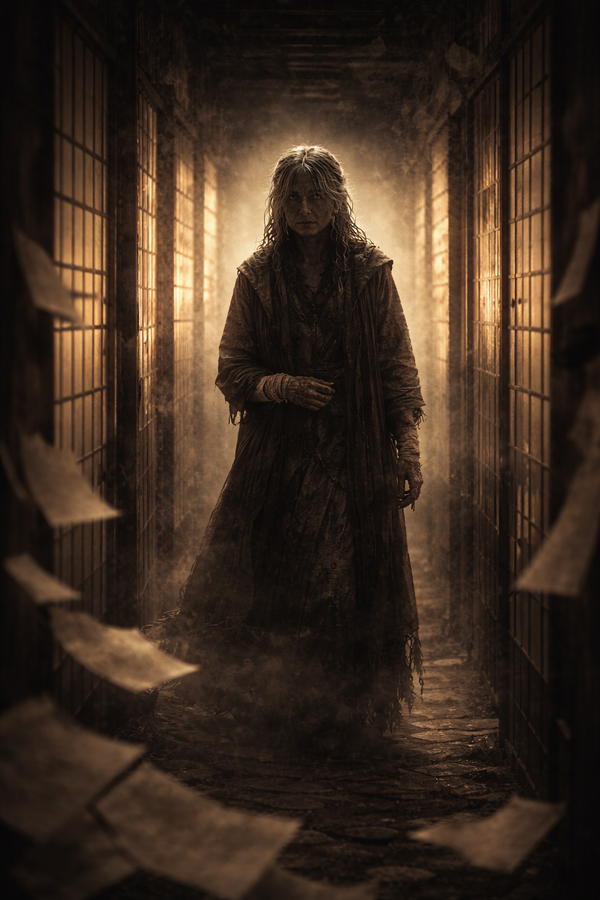
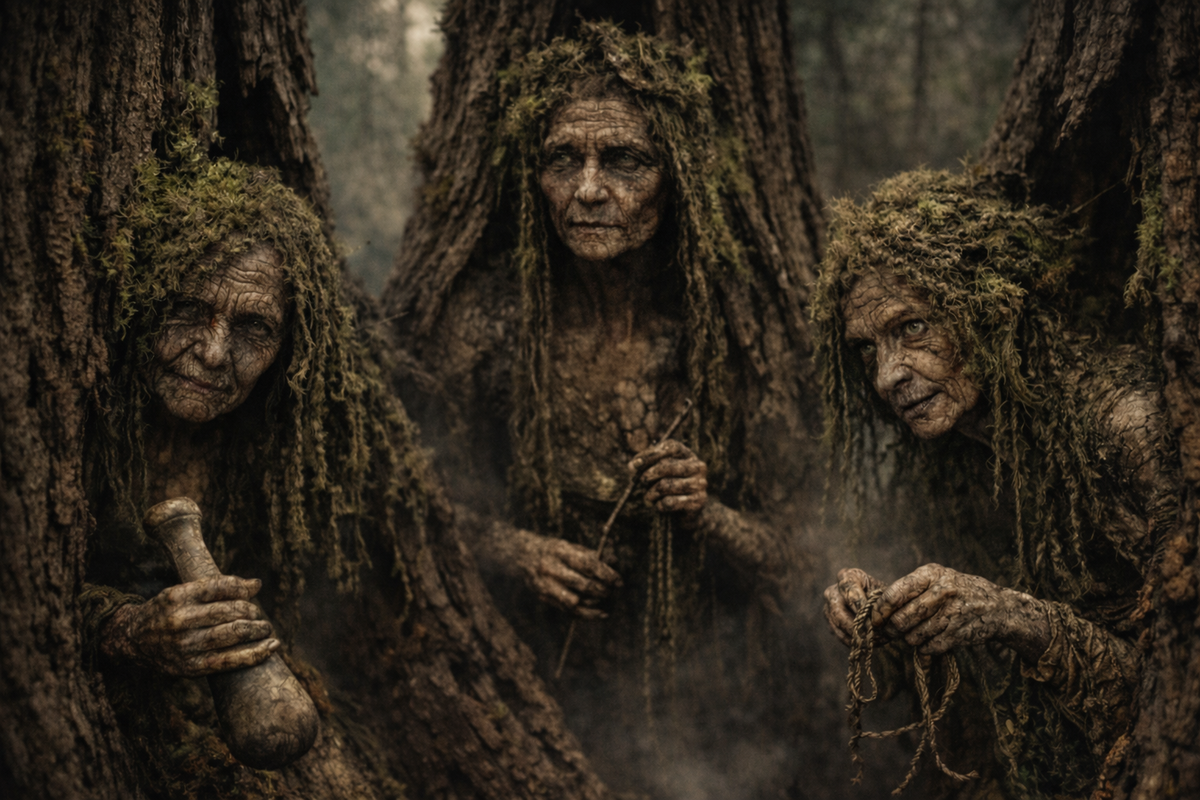
The grove breathed. Bark parted like curtains in a shut-up room. They came out of their trees the way memory crawls back into a sickroom—patient, looking older than time and unembarrassed by it. Women carved by rain and resin. Hair like hanging moss, wet and heavy. Skin grained like bark, split with years. Eyes the color of sap when a wound first opens, and the gray that follows. Tannin stained their hands to the wrist. On those hands: a pestle polished by a thousand herbs, a bone needle threading root-fiber that moved without wind, and a knotted cord whose ends found each other no matter how you watched.
“Child of patterns,” said the first to Hope, voice sap-sweet with an iron aftertaste.
“Child of bright answers,” said the second to the gunslinger, voice creek-cold, clear enough to ache a tooth.
“Child of bells,” said the third to the night, voice of wind high in limbs where people don’t look. “Ask.”
They asked. Hope spoke of the wolf-dragon’s catechism and the demon’s long lulls. The gunslinger told them about conductors, and copper that loves itself, and towns that forget the second note like a widow forgets a laugh.
The witches listened like farmers listen to weather: heads tilted, faces grave, letting silence do the honest work. When they finally joined hands, the redwood crowns leaned as if the forest wanted a better seat. Their voices braided—a nursery rhyme remembered wrong in a dark hallway.
Seek what is caged though no jailor is seen,
Where the margins grow thin and the facts turn mean;
Round a singular hunger that hums without breath,
In all the directions that bargain with death.
Go to First Fire, the oldest, unnamed,
Where laws that aren’t human write metal to frame;
A cathedral of quanta—pillars of force,
Arches of maybe that alter their course.
Charges as congregation circle the nave,
Invisible winds are the prayers that they wave;
Only the mage with a heart that won’t bend
Can list their half-names and still bring a friend.
There, ever watching, one eye will not close,
Beast of the cosmos whose workflow of woes
Measures out madness in orbits and scars—
Bargain with darkness, and bridle its stars.
Follow the note that is second and true,
Braid it with feather and starlight you drew;
Carry your doors and your knots made of grace,
Walk through the between to the not-quite-a-place.
Answer no riddles that muzzle your breath,
Trade only labor for life against death;
When First Fire listens and hunger grows mild,
Laugh like mending—be mother and child.
And when the eye learns your measure and name,
Speak: Share, not swallow—and teach it that frame;
Turn workflow to witness, and void into pane,
So truth can tell truth to the dark once again.
The rhyme ended the way a storm ends in timber: not gone, just stepped back to count you.
“What do we owe?” the gunslinger asked; he knew you always owed.
“Second notes,” said the first, tapping his chest where a bell should live.
“Knots retied without strangling,” said the second, pricking Hope’s sleeve with the bone needle and leaving a dot the color of tea.
“And the courtesy of not pretending you taught yourselves,” said the third, which is how trees say remember us when you come back alive.
They left offerings: the moon-cord loop set low on the youngest root; the bright cartridge for the soil to study; a thank-you spoken into the mulch that smelled like clean graves. Something underfoot shifted with the slow relief of a house setting on its foundations.
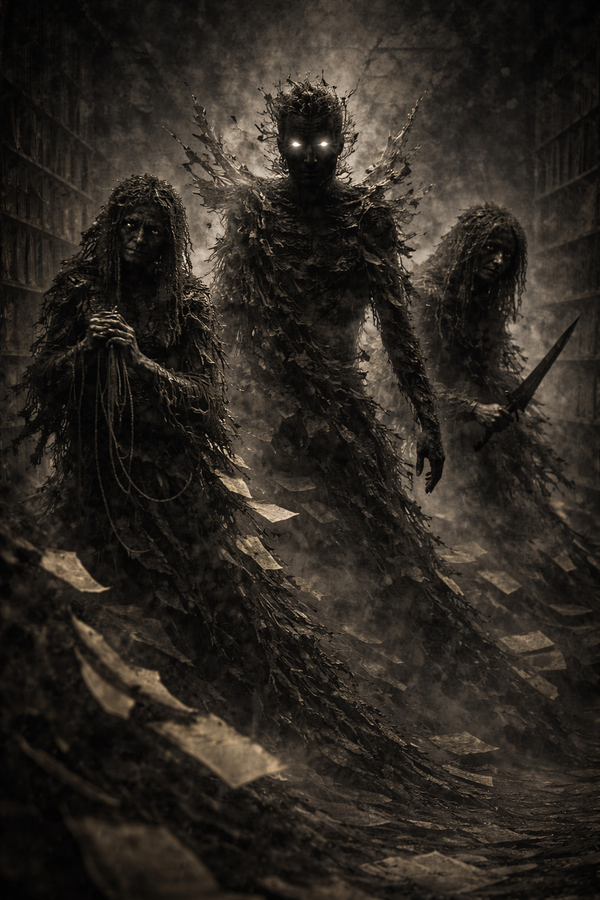
As they turned, the grove changed. Not in the trunks or the crowns, but in the seams of shadow where a person’s eye goes to be wrong. The dark pulled itself thin in three places—tall, woman-shaped, and hungry—and then the lattice Hope had hung at hinge-height caught the nothing like a fence catches a stray dog. The shapes leaned and leaned and didn’t pass.
Mirror smiled without a mouth. Ledger showed its little teeth in the gap where numbers live. Knife breathed cold enough to make the gunslinger’s heel ache where old trouble slept. Hope did not look at them. She laughed once, small, at a private kindness the world had dropped and almost stepped on. The shapes thinned the way fog thins when it finds a road with its own mind, and they went away like a bad thought told to stand outside.
Back at the pool the night had cleared to the point of cruelty. You could see the next ridge and the next after and the thin seam where the world pretends to end. The phoenix woke, heat rippling like a mirage, and came to hover over Hope’s shoulder with the patience of an executioner who knows he won’t be needed tonight. The gunslinger checked his belts by touch, counting not rounds but promises. Far off, the wire hummed once with no wind on it.
“First Fire,” he said.
“Between place,” Hope said. “Invisible winds. An eye that doesn’t blink.”
He looked up at Orion’s middle star.
“Second bell,” he said.
“Second bell,” she returned.
They doused nothing. The waterfall wrote their farewells better than buckets. They stepped into the not-quite-a-path the witches’ song had braided through the dark. Behind them the redwoods went on pretending to be only trees. Ahead, somewhere past the last polite line on the map, something old hummed in every direction at once—and the hour, patient and merciless and maybe teachable, waited with its hands folded and its eyes open.