The Returning Stars
The night opened like a healed eye. Weeks of ash-sky and nothing, then the stars came back and stood where they belonged. Orion shouldered up over the flats. The middle belt-star held steady. No shimmer. No lie.
I kept a hand on the book at my hip. The gunslinger let the horses walk easy. The air was cool and honest about what it wasn’t hiding.
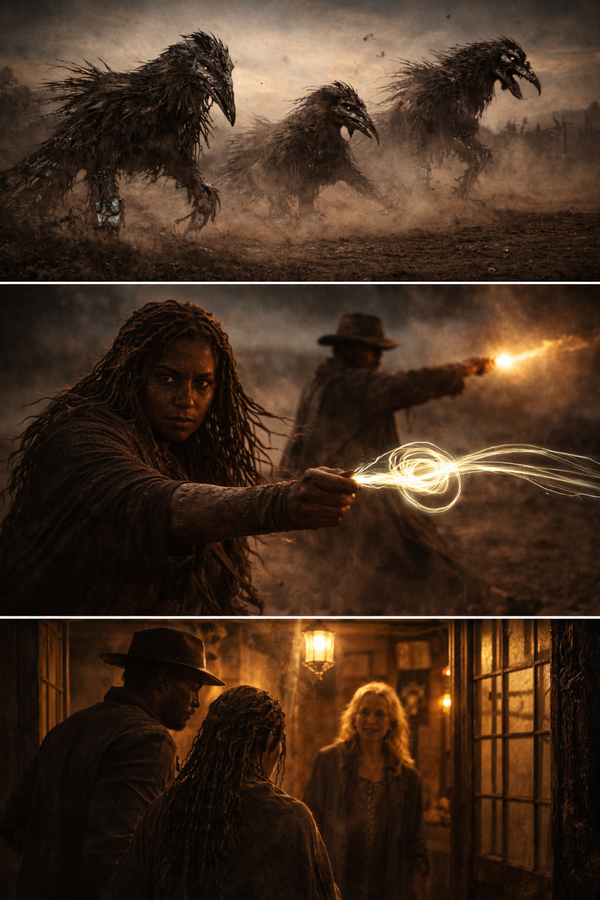
We found a whistle-stop—telegraph wire over a siding, a ticket shed braced against two stout pillars. A bell hung high, rope worn smooth. Lamps inside made paper light. Copper everywhere: nails, latch, bell-tongue, the wire itself, all humming a low fee.
A woman waited in the pillar’s lee–in shadow–ledger hugged tight. Ink on her fingers. Chalk on the heel of her hand. Keys at her waist clicked once.
“Bell at dusk spooked ’em,” she said when we were close enough to be people. “Talk of raiders. First note rang. Ringer lost the nerve for the second. I brought the fares to post anyway. Keep the hour honest.”
She coughed—the small, dry kind you use in rooms that charge for sound—and glanced at the hinge like it had learned a trick.
“He favors places like this,” I said. “Thresholds. Pillars. Copper he can ride.”
“And one bell without the answer,” said the gunslinger.
As if the night had been waiting, someone pulled the rope. The bell spoke once—clean, binding—and then held its breath. No second note. The hour tipped toward terms.
“Forward to the hinge,” I said, and smiled. The air warmed a degree without flame.
The gunslinger moved first. Iron low. Eyes up. Pillar shadow, dry ink in the nose. The window had been pulled to a stingy slit, like air needed permission to leave. The hinge shone in a way that wasn’t oil. The wood near it held itself like a cracked jaw.
That’s the call it likes: a door to bind, a one-note hour, copper to travel, a witness with authority. It isn’t here to rage. It arrives to own the hour—to choke the second bell, to turn a public ledger into its private contract, to harvest names and make the room say amen.
It answered like lightning answers wire.
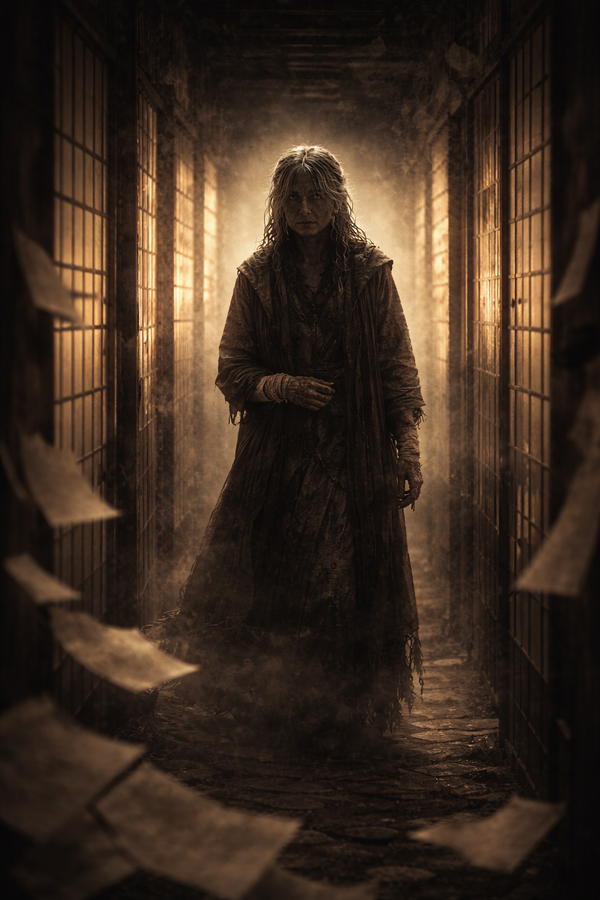
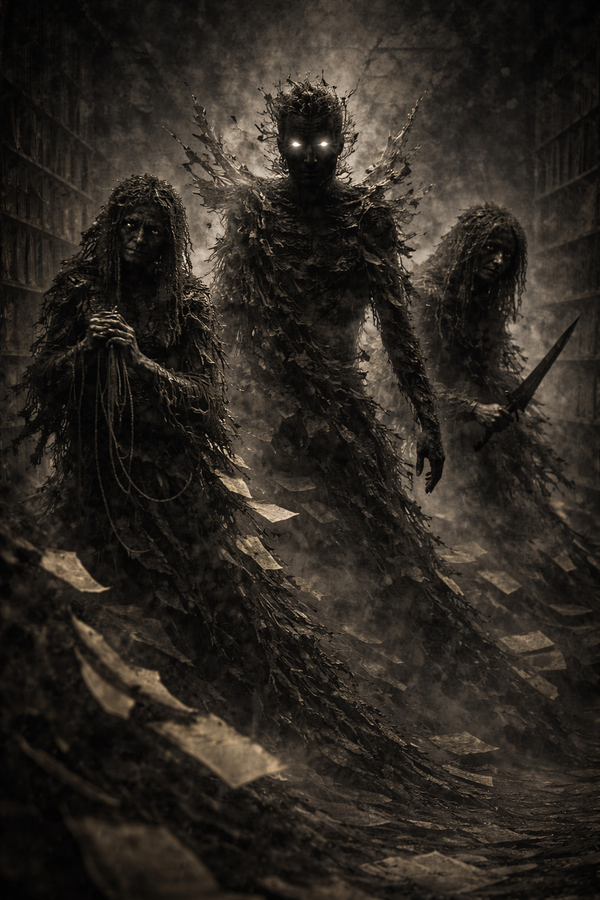
It stepped out of the pillar in a face of paper—ruled columns for cheeks, a red margin for a mouth, eyes like zeros that refused to shut. Each breath turned a page. Fine print slid off his cuffs and went hunting—along baseboard, up jamb, across the hinge I’d named—teaching wood how to grab.
“I sell safety,” it said. Voice like twine pulled through a knot. “A handful of names is the price.”
“The Demon,” the gunslinger told the room, so it would remember. “In his contract mask.”
The paper-face tapped the pillar with a pen that was also a claw. The pillar signed itself without wanting to—jurisdiction claimed. Copper deepened in nails, latch, bell-tongue, wire—rails for his terms. The window forgot it was a way out. A line wrote itself down his cheek-columns: WITNESS—TO BE KNOTTED.
Script hooked the ledger-woman’s hem and ankle and cinched. Not rope—worse. It was converting her into collateral, her ledger into his handwriting, the depot into a clause. If she posted the fares under his hour, the town’s names would bind to the demon like cattle brands.
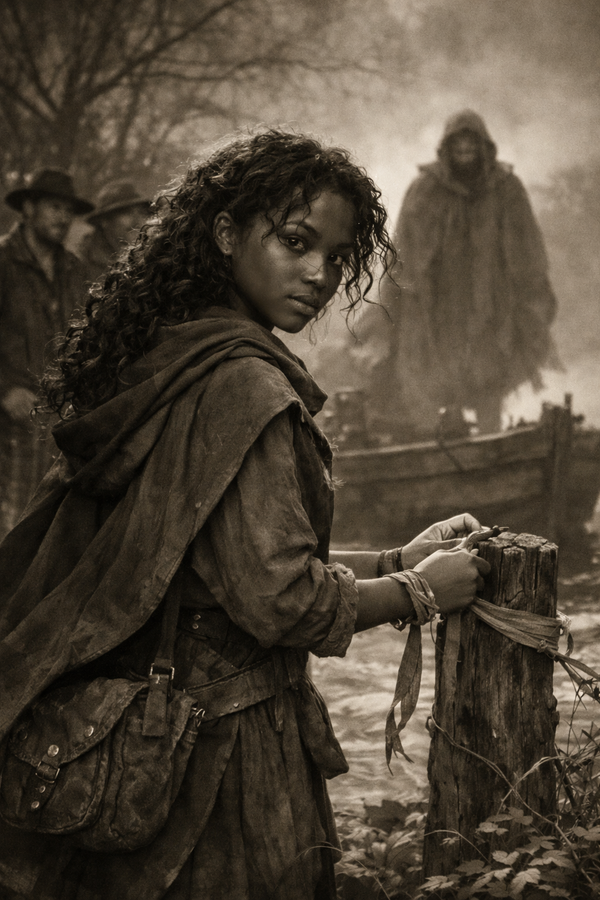
I lifted my ribbon-hand and spoke to iron like it had ears. “This one swings.” I let the small laugh out—the mending kind, never the mocking kind. It moved through the shed like oil on a stuck gear.
It’s grip on the woman loosened. The hinge warmed. Purpose remembered itself—exit, not trap.
For a blink the paper slipped. Something triple-edged looked out—sharp, cold, bright in turns—and then the ledger returned, polite and hungry. It smiled because it thought the room was already paperwork.
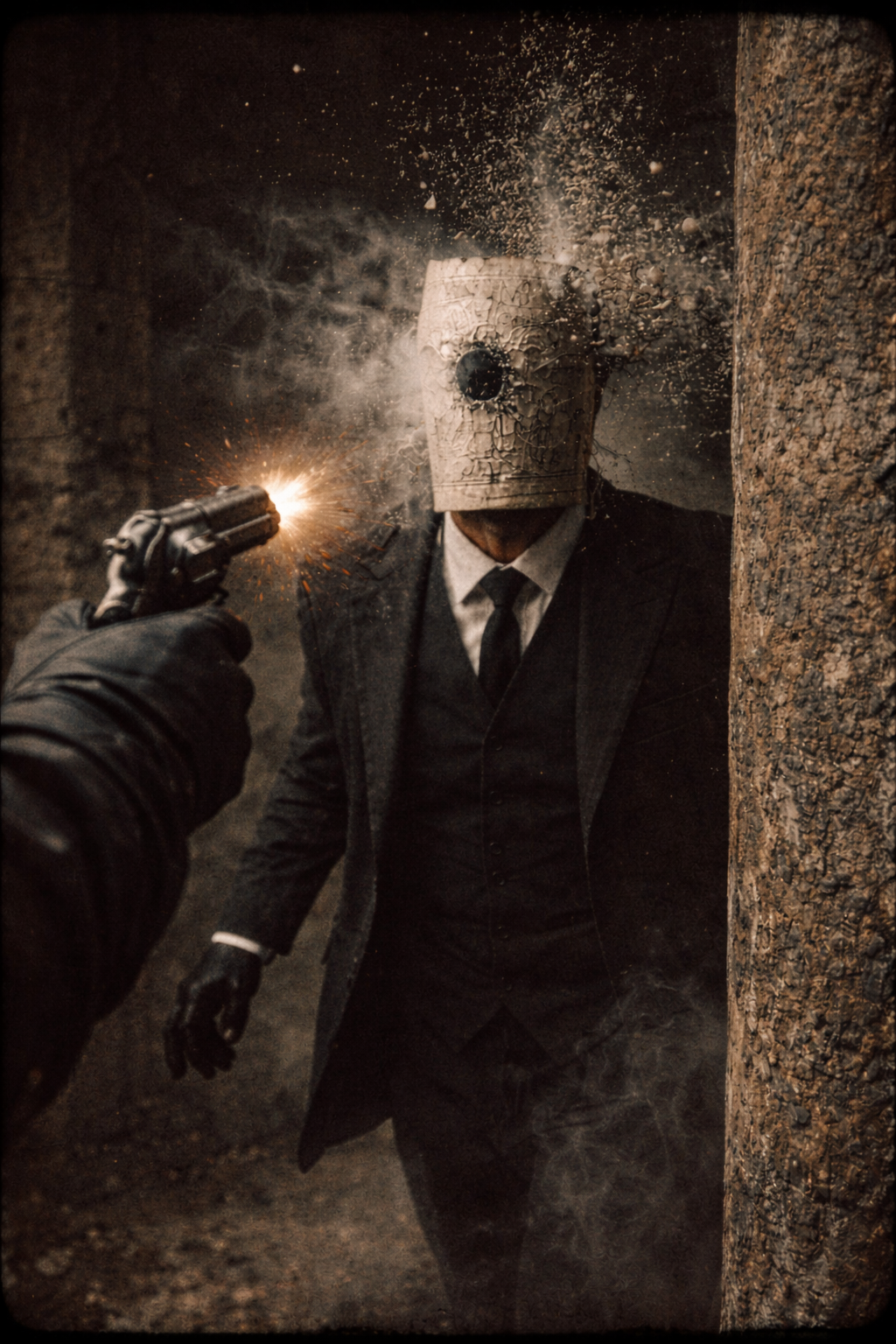
“Paper first,” the gunslinger said, and put a common round through the totals. Blessed rounds are for copper. Paper breaks with truth and iron.
Columns tore off the margin. The ledger burst to pale grit—ledger-dust—the kind that loves to crust into “law” if you give it a sill. It breathed out slow so it wouldn’t find a surface to swear on. I tied my ribbon to the hinge in a neat–a knot named kindness. The hinge chose swing over clutch.
The woman coughed once and drew a straight breath, like a debt rolling off a chest. The crawling clauses faltered. A few tried to climb his boots. He scraped them off on the jamb and gave bad paper the only word that works.
“No.”
The paper-face gathered at the edges, page by page, amused. “A common round,” it said. “No blessing. No star. Provincial.”
“Copper needs blessing,” the gunslinger said. “You’re paper.”
Outside, the ringer found courage or habit. The bell struck again—the second note, clean—and the dust’s hunger broke like a cheap clasp. The air decided not to be collateral. Its plan—freeze the hour at one bell, trade names for “safety,” rewrite the shed into a contract—failed in the space between notes.
“Say your name,” he told the thing, for the woman’s sake.
“String,” it said—proud, clerk-sure—and the siding heard Demon.
Ink slid under the baseboard, clause by clause, hunting wire. “We’ll bind you later,” it promised, polite as a summons. Polite is how it hides the theft: ride copper, find another one-bell room, another witness, repeat.
Not tonight. The ribbon held. The hour learned its manners.
We walked the woman out under Orion’s belt. She set the ledger on the platform with hands that had stopped shaking. “Came to post the accounts before curfew,” she said, almost laughing now that breath was free. “It tried to make my job his.”
“Windows, not jars,” I told her. “Ledgers in daylight. Bells that finish the second note. Share your story with others. Speak true, without guilt. Say everything.”
We cleaned what he’d dirtied—latch, tongue, couplers—until the hum went back to honest work. We opened the ledger where anyone could see. Three cheats forgiven. Two errors fixed. When the bell spoke the next hour, it spoke twice without being told.
Then the stars leaned closer.
The center belt-star brightened and held like a nail head. The coal under my cloak warmed and shifted—a little wing against a page. I drew the book halfway free. A thin seam of light stitched along the margin where no seam had been. Shapes surfaced and vanished: a bird glancing back; bars parting; a wide curve that refused a name. Frost when a hand nears glass; gone when you breathe.
The shed fell back the way a room falls when someone cups a lens over the dark. I saw a roundness eating its own shine, a rim of dull blue like fire remembering. Then a tunnel under stone—coal walls keeping their stars when no one watched. Far off, a lamp burned the way a sentence burns—enough to read by, stingy with spectacle. Something cried once, high and clean. A feather turned in the air until it was a page stamped with a hawk.
I shut my eyes. It held. I opened them. Pale marks lay on the hinge—frost writing that had waited years for someone who knew how to see it.
“The librarian,” I said. The ribbon at my wrist warmed. “He’s calling.”
The gunslinger watched my face the way a man watches weather he trusts. “Back?”
“The librarian keeps courtesy cataloged,” I said. “Doors you can ask, not force. We’ll need that.” I touched the hinge. A backward-looking bird bloomed in frost and faded. “He knows the stations that lead from chapter to chapter.”
We mounted when the east began to pale. Orion leaned west like a sign that had done its duty. The second note hung soft in the beams—answered, not loud. On the road out he looked back once and saw the bell take a breath on its own. I saw it too and let the small laugh rise—the kind that doesn’t command, only invites. The night tucked it away where such things are kept.
Under the returning stars we said the rules out loud, the way you teach yourself to remember: keep copper clean; reckon ledgers in windows; keep doors to their jobs; when the bell strikes once, help the second note find you. If he shows anyway, name him, refuse his terms, and don’t let a room become his paper.
We turned the horses toward the ribs of the crystal dragon and the coal-warm light beneath—back to the librarian with maps of thin law and a lamp like a kept sentence. The constellations held steady, as if the sky preferred good manners. Somewhere along the wire the Demon slid, satisfied with how close he’d come.
He wasn’t wrong—not yet. And so they rode to the librarian.