The Book of Feathers & Stone
This morning found the library smelling of beeswax and clean breath. The old librarian met them at the steps with his spectacles already riding low and a grin that had a splinter of apology in it.
“Traps,” he said, as though greeting a friend. “Once you live through one, we demote it to ‘trial’ and pretend we assigned it as homework. Education in these lands is mostly refurbished ambushes.”
“Then we’re honor students,” the gunslinger said.
“Remedial for me,” Hope added, and the librarian’s grin softened into pride he would deny if asked.
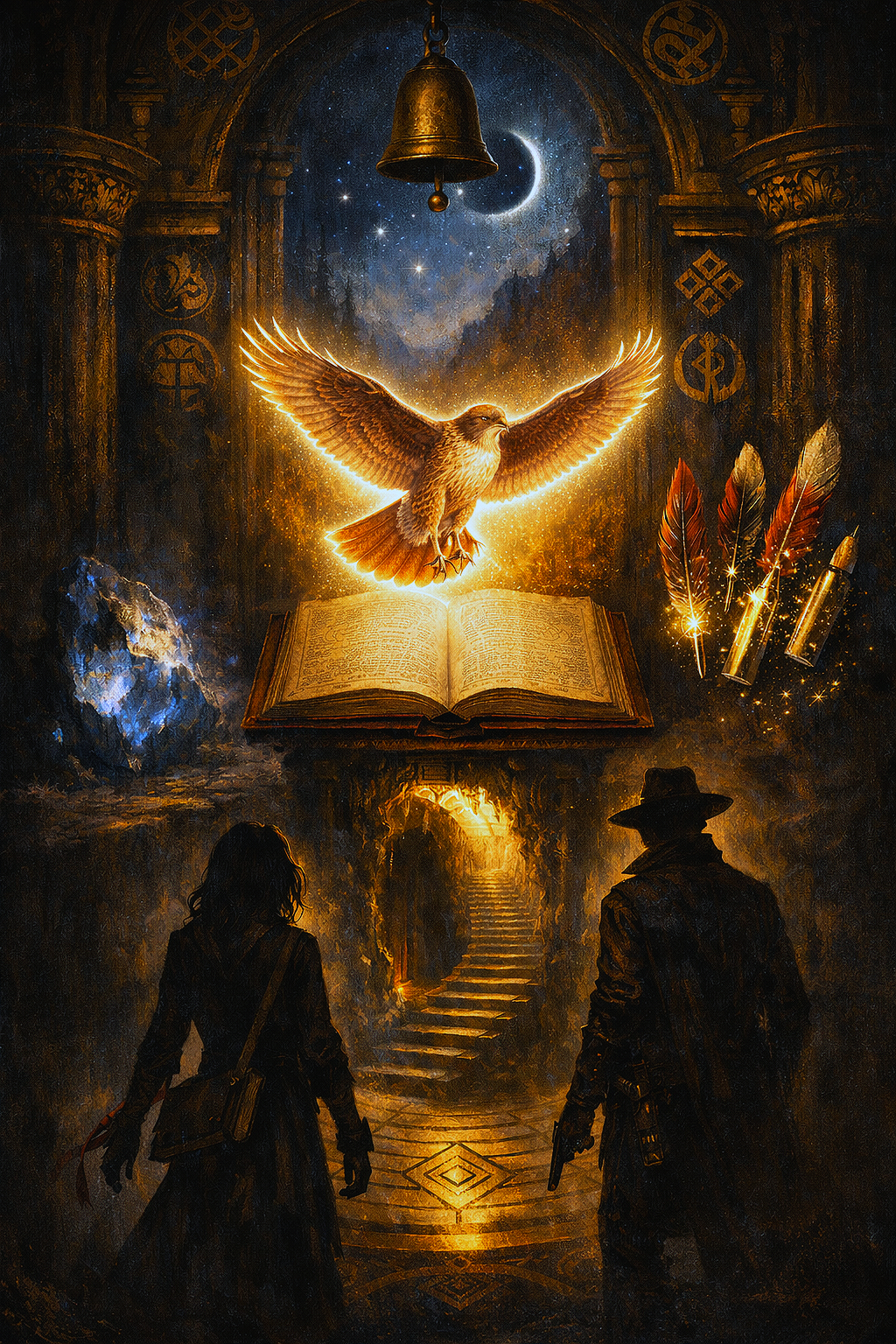
He reached for a high shelf and pulled a thin volume bound in black cloth. A hawk, etched in copper leaf, flew across the cover with its wings forever mid-stroke. “Out-of-catalog,” he said, tucking it beneath his arm the way a man carries a small sabre. “Bootleg syllabus.”
They did not take the front door. He led them down past the stacks and the quiet quarrels of scholars, through a service corridor where the paint remembered other colors, and into a stair that had outlived three architects. The temperature fell in honest increments. At the bottom a low stone arch opened on a miners’ lamp and a wind with coal on its breath.
“The work in these tunnels keep the town lit and warm,” he said, lamp raised, “which is to say they contain both charity and explosions. Mind your shoulders.”
They walked where carts had gone and come, rails crusted with dust, timbers holding up the mountain like good sentences hold up a paragraph. Heat breathed from side pockets where the coal still thought about fire. Far off, something knocked in the long regular way of men at work; nearer, water talked to itself in pipes the color of old pennies. The librarian moved like a man following the faint music of a familiar hymn.
“Why down?” the gunslinger asked.
“Because up is for bells,” the librarian said. “And we need a door that will not ring.”
At the heart of the hill the tunnel widened into a chamber cut round, the rock polished by hands and by time. Coal seams crossed the walls like black rivers frozen mid-argument. Above, a natural chimney opened to a coin of sky, and through it the winter sun dropped a single bright rope of light into the dark—one beam, exact and unsuperstitious.
The librarian set the hawk-book on a waist-high pedestal cut from basalt. He did not open it at once. He stood where the light touched his shoes and then stepped aside until it struck the cover.
“Feathers and stone,” he said. “The curriculum today is contradiction.”
He undid the clasp. The room breathed.
Pages rifled themselves without wind. Ink lifted off the paper and became dust, then motes, then motes became a thin rain of gold that fell upward. The beam of light thickened like spun glass, bent once as if reconsidering, and then straightened into a road only a book would think to build. The librarian made a small, courtly gesture—after you—and the road took them.
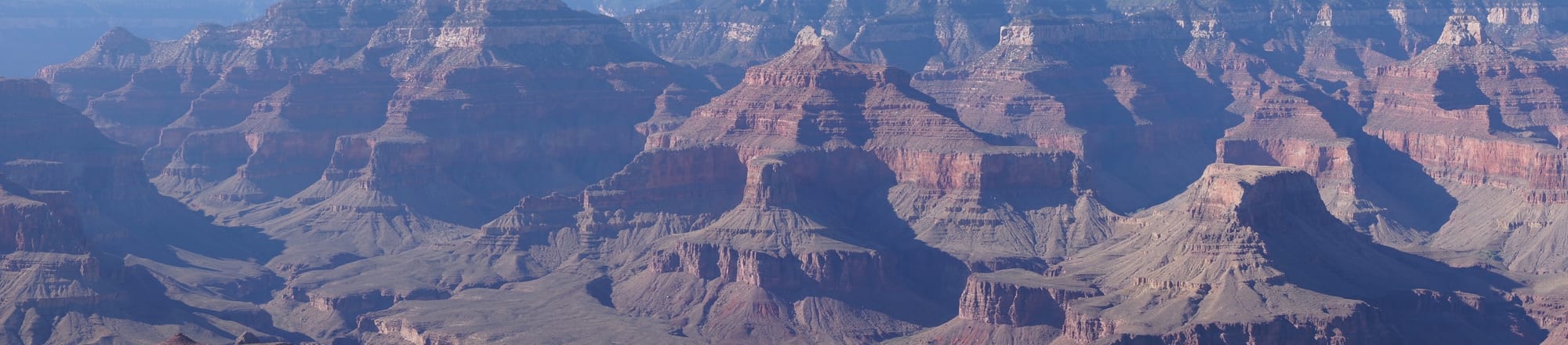
The coal chamber went soft at the edges and slid away. Underfoot the beam became packed earth. The air shed its soot and put on resin, cold water, bark. They arrived seated, not by insult but by accommodation, on the lip of a high horizon. Below: a country of redwoods and mountains stepped like sleeping giants into distance. Fog lay in white rivers between ribs of dark-green. The sky was a flood of hawks.
Waiting for them at the rim was a figure older than the redwoods and cut to their scale: half man, half hawk. Feathers mantled his shoulders like a cape the wind understood; talons sheathed and unsheathed with a courtesy born of practice. His face kept a human mouth for speaking and a raptor’s eye for judgment. When he turned his head, the whole ridge adjusted as though the land were his perch.
“Welcome, page-walkers,” he said, voice a rush of air over wing. “I am the interval between feather and hand.”
“Teacher?” the librarian offered, polite as a schoolboy.
“Only if you agree to be students,” said the hawk-man, which was answer enough.
They sat. The horizon did not move. The sound of a single distant bird traced a red thread through the air and vanished.
“We are hunting a void,” the gunslinger said. “And being hunted by it, which complicates the chores.”
“The mouth that eats light,” the hawk-man said. His eye tightened in what might have been pity. “You will want tactics. I will give you a clock.”
He drew in the dust with a talon, a circle so dark it felt like a bruise. Around it he scattered points of light that did not exist until he lifted his hand. “This is your hole in the sky—the patient thief. You cannot slash it. You cannot shame it. You cannot bind it with copper because it does not admit the mouth of spell. The only known destruction is not a blow but a leaking away. The old scholars called it slow evaporation—light and small things fleeing in numbers too humble to count, century by century. That is not a plan; it is a hospice.”
“Theoretical?” Hope asked, eyes on the circle. “What if we tip it?”
“You can whisper at its charge,” said the hawk-man. “Shift the balance, destabilize its edge, make its hunger misread itself. Or feed it something that costs it more to hold than to lose—exotic matter, the kind of story that walks backward. These are tricks for a chessboard with pieces no village owns. They are the work of a millennia or a suicide. Worse,” he added, looking at the gunslinger as if testing whether he would flinch, “the wrong pressure grows the mouth. Lay a bridge wrong and the river thanks you by widening.”
“And there is a dragon with a ledger inside it,” the gunslinger said. “A demon who means to make the void wear a bird.”
“Shadow that covets fire,” said the hawk-man. “He remembers feathers with resentment. He thinks light is a spice.”
They were quiet. Redwood breath filled the pause.
The librarian cleared his throat. “When I was a boy being taller than my wisdom, I asked an elder what counters gravity. He said: ‘Sound does, if it belongs to the right throat.’ I marked it down as allegory and then spent my life tripping over its literalness.”
The hawk-man nodded once, and the nod meant he has earned this sentence. “There is one known thing that wakes the world enough to lift against such weight,” he said. “Not machine. Not bell. A cry—the specific cry—of a red-tailed hawk. Not because it is loud, but because the world remembers it as instruction. It turns heads up. It orders spines to lengthen. It tells gravity to share.”
Hope’s hand went, without asking permission, to the book that was not there. Her palm found only the memory of warmth and did not break.
“If you can make your laugh arrive as light,” the hawk-man said to her, “in this chamber, I will fix a red-tail to your hours. It will not kill a mouth in the sky. It will make crossing its wind less impossible. Sometimes less is salvation.”
“My laugh,” she said, and looked at the librarian.
“Curriculum,” he said, spreading his hands. “A trap you survive and call learning.”
The hawk-man stood, and the horizon agreed. He led them along the lip to a short cleft in the stone where the sun fell clean through a notch in the ridge and held—a natural chapel with redwood scent for incense. “Here,” he said. “Laugh like mending.”
Hope took her place where the light settled. Not loud, not performative. She thought of Mercy’s bar and jars that had learned to stop breathing. She thought of the House of Knots and Keys holding a dragon’s patience on its threshold. She thought of a book stolen by a shadow that had learned manners and of a bird that had not, for all that, unlearned coming when called.
She laughed.
It was small as a stitch pulled tight. The light heard it and stood up straighter. Dust in the beam woke and took positions like a choir. A shape gathered with the clean economy of a good word said once: red tail, broad wing, eye sober and bright, rust and cream and the clean band of power across its throat. It arrived not with instant spectacle but with the weight of a tool handed to the right hand.
The red-tailed hawk stepped from light to shoulder as if the distance were meaningful, talons careful on cloth, balance impeccable. Its head turned and the ridge adjusted again.
The hawk-man smiled the way wind smiles when the world leans into it. The librarian took off his glasses and wiped them with a sleeve that would never be clean again.
“Accompanied,” the hawk-man said. “Not owned.”
The bird said nothing. It didn’t have to. The air knew more about up than it had a heartbeat earlier.
Hope reached up, not quite touching the bird’s breast, and felt the faintest tremor where muscle meets will. She breathed, and the hawk breathed with her, and for a moment gravity felt like a polite agreement rather than a sentence.
“Lesson one,” the librarian said softly. “Onward. Feathers for starlight.”
The beam that had brought them there changed color by a fraction—the blue of high cold, the gold of dry needles—and held. The redwoods below drew a single deeper breath.
Hope turned, the hawk riding her like a punctuation mark that corrects without scolding. The gunslinger nodded once, checking the weight at his hip, measuring this new math against the old.
On the lip of the world, three figures and a bird set their faces to the seam where shadow and light barter, and another chapter learned how to end without closing.