The Between Road
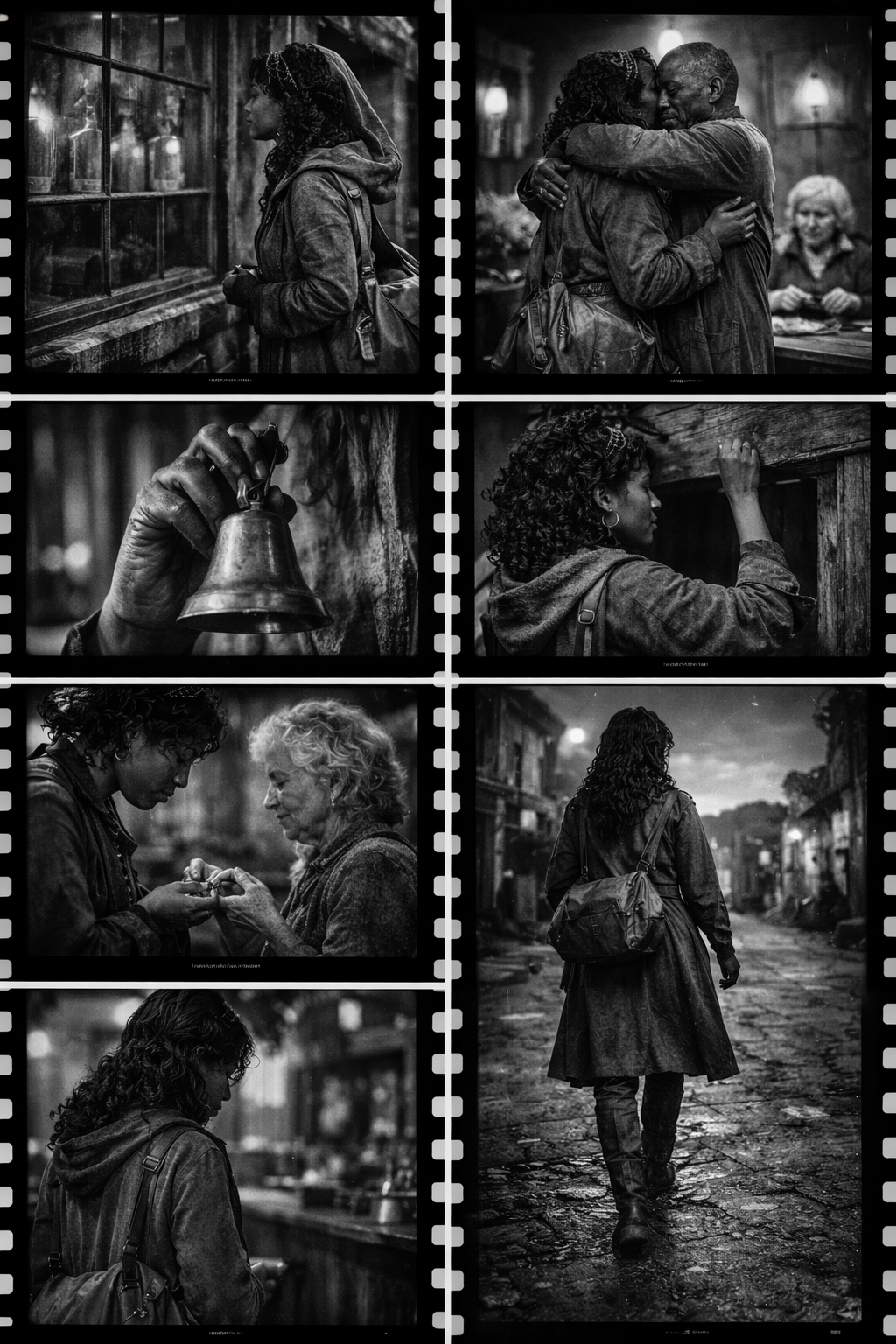
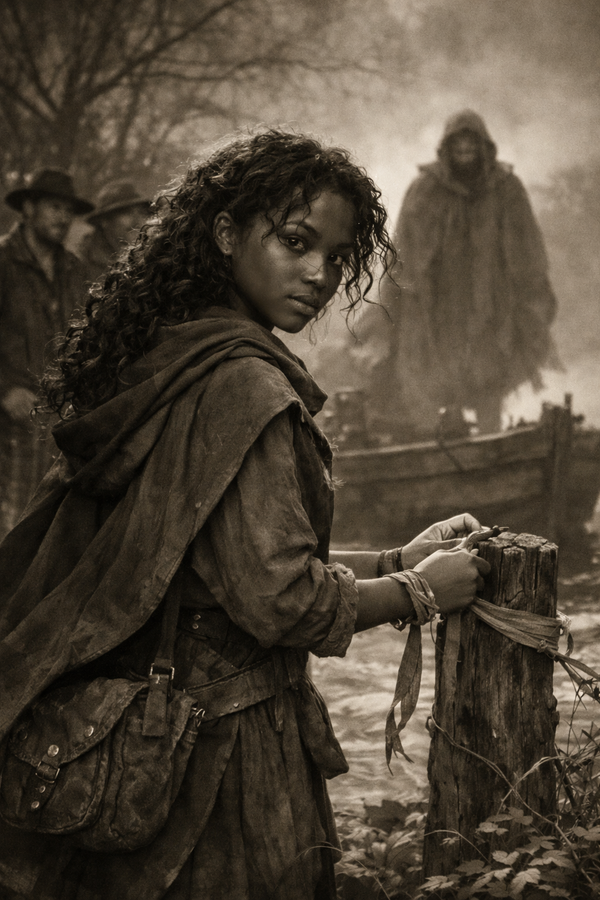
Wire Avenue met her with clean breath and ordinary light. No copper in the wind, no hyena-laughter in the gutters—just the huff and clatter of a street that had remembered how to be a street. Hope walked past Mercy’s bar—new paint over old grief, a sign rehung so it didn’t tilt like a tired shoulder—and paused at the window. Where once jars had waited to drink sickness into sugar, clear carafes of water stood in a row, catching afternoon like small captive skies.
Mercy opened the door before she could knock. He looked older in a kind way: the sort of older you earn by sleeping on the problem instead of on your anger. He folded her into him with both arms, then held her away to check for missing pieces.
“You’re thinner,” he said.
“You’re kinder,” she said, which made him smile in the place the town couldn’t bruise anymore.
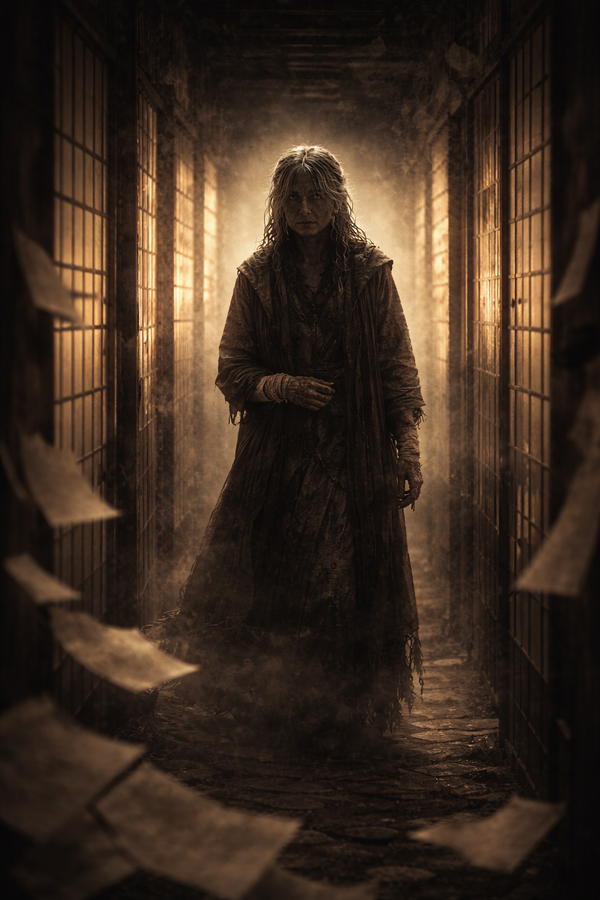
Inside, the air kept good habits—soap, yeast, lemon peel. At a corner table, the woman that was the Sorceress sat knitting badly and contentedly, tongue caught in the corner of her mouth with the seriousness of small work. When she looked up, her eyes held no storm. They were today’s eyes: the kind you make when you wake and tell the room you’re willing to believe in it. She did not know Hope, not the way memory knows; she knew her the way light knows faces. It was enough.
“Hello,” the Sorceress said, voice still paper but gentle now, the rasp smoothed into a leaf turned by thumb. “He said you might come.”
“I always come back,” Hope said, and bent to kiss her hair. It smelled of rosemary and time. “How’s the knitting?”
“Argumentative,” the Sorceress said gravely, and they all laughed for a moment.
Mercy poured tea and breaded the silence with news: which roofs had decided to remain roofs; which neighbors had learned to share; which child in which house had thrown a bell rope and made it ring twice just to see if the world would survive it (it had, smugly). No sign of the demon, he said.
“There’s been no copper humming at night. It’s quiet. No strangers taking notes on maps that shouldn’t exist. Business has been good. Wire Avenue’s been too busy for even dust to settle.”
He handed her a copper nail from the loose roofs to prove to her that it was no longer connected to anything, no hum, no threatening warmth that didn’t belong.
“For luck, as you continue this journey with that gunslinger,” he said. And offered a toast, “For normality, for once. And for doors that don’t remember they owe you.”
He took a long sip, staring into a distance beyond the bar.
“But he talked… it, it would brag,” Mercy added when the cups were empty. He kept his voice low out of habit, not fear. “In the old cycles—when the boy came and forgot and came again—the demon would lean on the bar and say things to get under my skin. He liked to mention another land. A place between places. Sounded… adrift. Like those minutes between first and second bell when the town can’t decide whether to be brave.”
Hope’s hand went to the sling at her shoulder—the one that looked like soft cloth and held a library. The House of Light had taught it to keep binding without complaint. She loosened the strap, and the weight shifted the way an idea does when you finally say it out loud.
“I brought homework,” she said.
Mercy snorted. “You always did.”
She read at the bar while the Sorceress counted stitches and Mercy counted customers. Titles fanned out like cards: Rail Schedules Between Realms (Revised); Doorwork; On Bells and the Ethics of Their Second Note; Interleavings: A Field Guide to The Between; Copper: Agreements & Annulments; Moonlight as Material; Conductance & Continuum: A Primer for People Who Think in Doors. In the last two, diagrams sketched a world that liked to travel as itself—lattices that shared their certainty, bands that let small things wander together.
Copper, one book said without apology, sings to itself. In the metal’s body the little charges—like a dragon’s pearl of power—don’t belong to any one thing; they drift—a sea, a cloud, a choir without assigned seats—so a push here becomes a movement there. Make a path of copper and you don’t have a line; you have a continuum. Press your will into it and what you are is handed off to ride the wanderers. Everywhere and nowhere, as long as the song holds.
Hope shut her eyes and saw the demon’s favorite shortcuts—the way a bell’s mouth would sour when copper felt counted, the way a city’s rails would hum the wrong hymn before he arrived wearing a suit that dust refused. Between places, Mercy had said. Adrift. Not sea, then; not road. A joining. The place that isn’t a place, the way two coins are “together” because they’re in the same pocket.
A note in the margin—librarian’s hand—read: Beware the lull. Between bells is when conductors love to lie.
She spent the next hour chalking small, stubborn patterns where a life needed them least: Mpatapo under the threshold, so quarrel would mend before it could grow teeth; Epa along the lintel, so the door would remember law without becoming a cage; Fawohodie tucked into the far corner of the back room, freedom like a secret you save for a worse day; Sankofa over the pantry shelf, so bread would fetch itself back to the table; Gye Nyame at the center beam, so nothing in the room would pretend to be God and therefore nothing outside could either.
She tuned the bar’s bell by thumb and breath until the second note stopped apologizing. She left a loop of moon-cord above the kitchen window to pull when copper remembered its song. For the Sorceress she folded a plain scrap of ribbon into a small knot and laid it on her palm. “If your hands forget,” she said softly, “this knows how.”
“I like you,” the Sorceress said, and returned to teaching the yarn its manners.
At the door, Mercy hesitated like a man who doesn’t believe in omens and has to use them anyway. “This between,” he said. “Is that where he hides?”
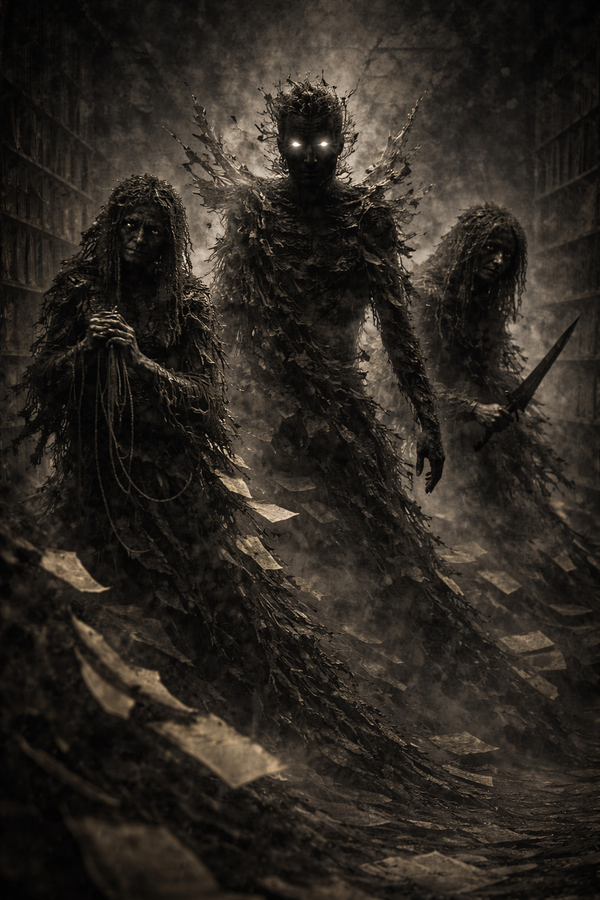
“It’s where he connects,” Hope said. “Hiding is for things with edges. He’s made of the lull. The places that don’t think they’re places. Copper to copper. Rule to rule. Fear to fear.”
“And if we cut the song?”
“We teach it a different key,” she said. “And we keep ringing.”
He nodded, a small, exact permission. “Tell the boy I’ve got a table for him,” he said, like it was a joke and a prayer, which it was.
She hugged him, kissed the Sorceress’s hair again—rosemary, thyme—and stepped into late day. Wire Avenue stretched before her with that old, good trick of pretending it had always been safe. The sling lay warm against her ribs, a traveling library that refused to be heavy. Over the rooftops Orion’s middle belt star found the first thin blue of evening and nailed it down.
The road east did not ask; it expected. Somewhere beyond the shoulder of the world, a reliquary with a cylinder for an altar would already be measuring hour by breath, and a bird would be practicing patience on a beam of air. Hope tightened the strap, felt the moon-cords settle, and set her face to the seam where towns forget and are reminded.
Between places waited. So did the next bell. Hope started riding.