Night After the Grove
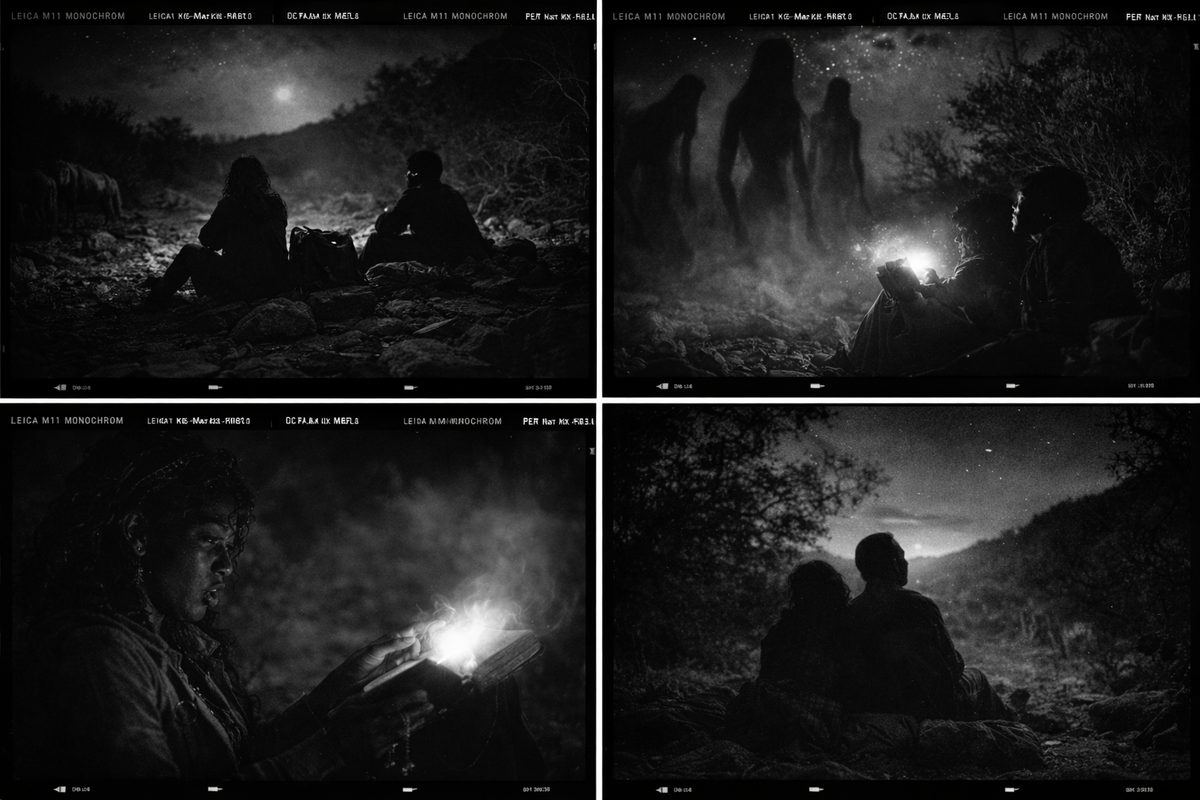
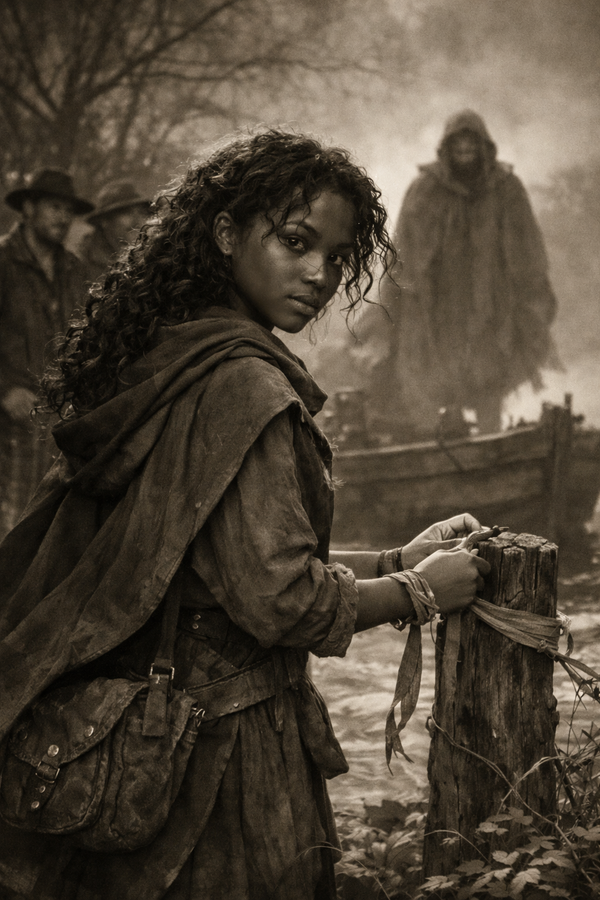
They walked until dark because stopping felt like inviting something to sit down between them. The trail out of the redwoods ran narrow, then broke into scrub and stone. They camped in a dry creek bed where the sand held old water-shapes and the night carried a taste of iron. No fire. The moon was thin and unhelpful. The ash twig and black acorn the witches had given them rode in Hope’s satchel like small, steady hearts. The thorn the third hag had set in the wet lattice still pricked her palm from memory.
They slept light and wrong. When it came, it came clean: a hand you couldn’t see laid over the mouth from the inside. Their chests went tight and flatter and then would not rise. The creek bed, the scrub, the pale strip of sky—they all pushed down and smiled about it.
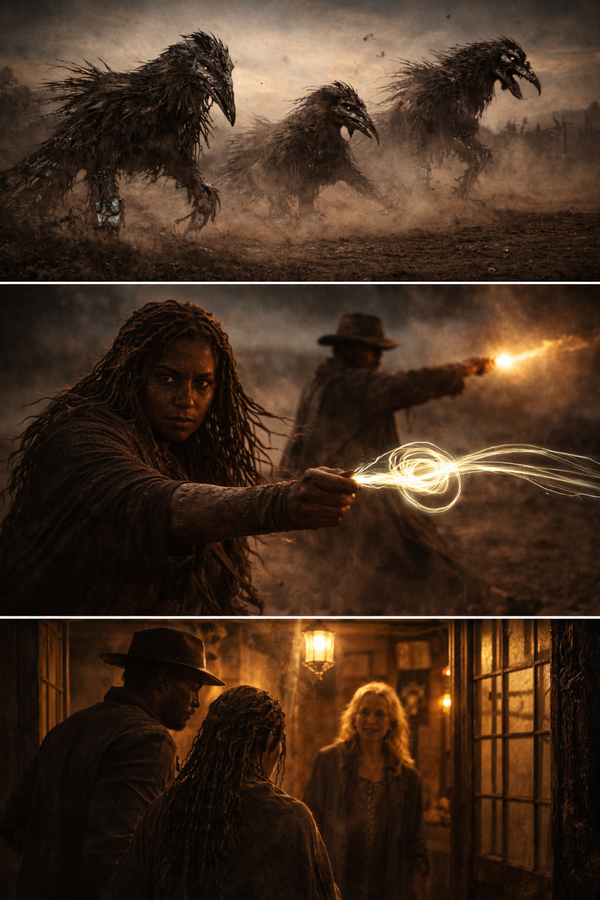
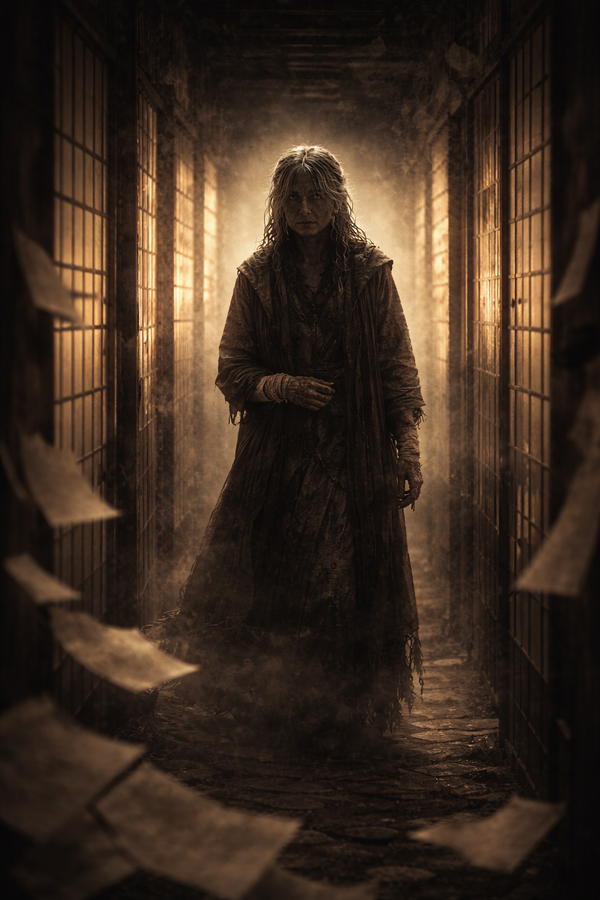
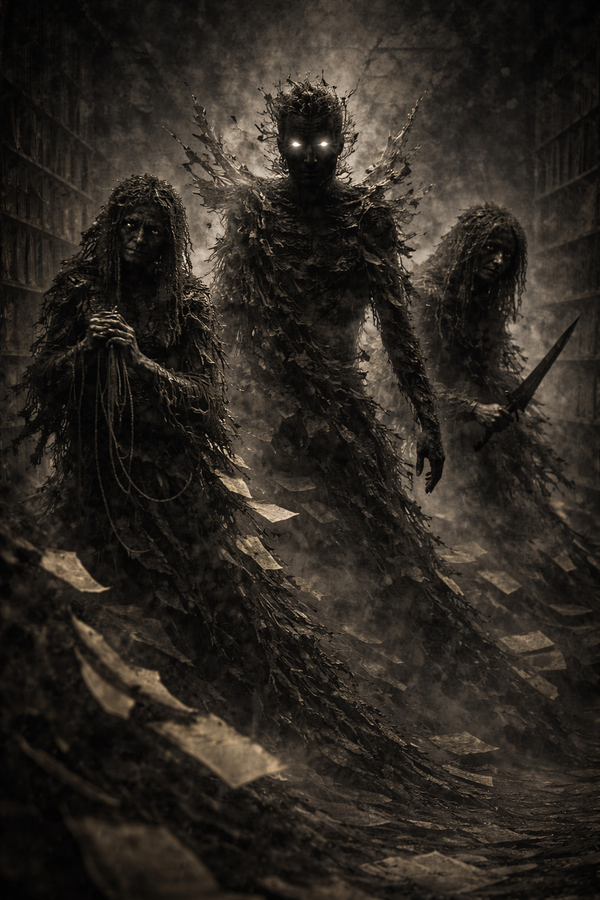
Three long thinnesses leaned over them. Not men. Not quite women. Tall where the dark pulled narrow, edges that made the stars miscount themselves. You could smell pennies and old wire. The sand forgot to be sand and took a mark that wasn’t there.
The gunslinger rolled and raised iron by habit. The barrel fogged with what breath he had left. He kept his eyes at their edges because looking dead-on felt like putting your tongue on a battery.
Show them, said the first, sweet as a stage light.
Sign here, said the second, neat as a clerk’s pen.
Cut, said the third, cold as a tiled room.
Hope’s hand found the book. It felt far and heavy, as if it had fallen through her. The witches’ rhyme was still walking around in her bones—second and true, braid with feather and star—but she had no air for speaking it. Her throat made the noise a rope makes when someone tries to pull it through a notch.
“Come,” she got out. A thread of a word. Enough.
The seams of the book loosened like breath held too long. Warmth steeped out—thin at first, then exact. Not fire. A pressure in the air that taught the molecules how to behave. The phoenix rose into the dark like a coal remembering itself. It wasn’t bright; it was sure. Heat folded under its wings and held.
The sweet thinness swelled, trying to turn the glow into a mirror. The neat one drew a loop around their bedrolls, the line creeping over sand like a wet string. The cold one leaned to finish the job. The phoenix turned its head in a slow, exact motion and looked at each. That look set names back where they belonged.
The pull on their lungs slackened. Hope dragged in air that felt like knives and kept it. The gunslinger stepped up into the space the bird made and planted his boots like a man standing in a slow river. He fired once, out of principle. The bright round stitched the dark and went nowhere. No echo. No bell. These weren’t for bullets. They were for bargains.
They didn’t flinch. They folded, like film held up to a flame. Each tall nothing pinched thinner, vertical and mean, until there were only three slits standing in the air. The slits stepped backward into the mesquite and were gone. Not fleeing. Withdrawing. The way a hand leaves a child’s throat when it remembers there are witnesses.
Sound crept back on its belly. The scrub ticked. Far up the wash a stone let go and thought better of it. The phoenix held a while longer, then dwindled to a thin brand and slipped into the book like a coal into ash. The night took back what it could.
“You all right?” he said, low.
Hope nodded. Color coming back in slow patches.
“They must have come because we asked the trees,” she said. “Because we were told where to go.”
He checked the creek lip, the horses, himself—the way a surprised person checks even their own name when no one’s listening. The animals stood braced, wide-eyed, like barn stock after lightning. The sky above the wash looked honest except for one patch to the east where the stars went thin and wrong, rubbed as if a thumb had been working at them for years.
They sat with their backs to stone and let a few hours go. Hope held the book in her lap and felt the bird’s warmth leak slow into her skin. She kept a finger on the ash twig and the black acorn like a pulse. The gunslinger watched the smudged place where the stars were missing and counted quietly—one, two—waiting for a bell that wasn’t there.
“When the light comes,” he said, “we keep on toward the place the witches named.”
“The winds,” she said. “Older than metal, older than maps. The ones that guard what we need to ask.”
“Nothing to slip under,” he said. “No between to ride.”
They broke camp without talking about it. The sand kept their bed-shapes for a while, flat and innocent. The east went gray. A wind started high and didn’t touch ground, just circled once like a dog deciding where to lie. They walked into it. Behind them, the dark pulled itself back together and practiced being ordinary. Ahead, somewhere past the last polite line of the map, the humming that wasn’t wind waited with its eyes open.