Chapter III: Mercy's Sister
I keep a rag behind the bar. Habit more than hygiene. If I rub the same knot on the counter long enough maybe the world will smooth there too.
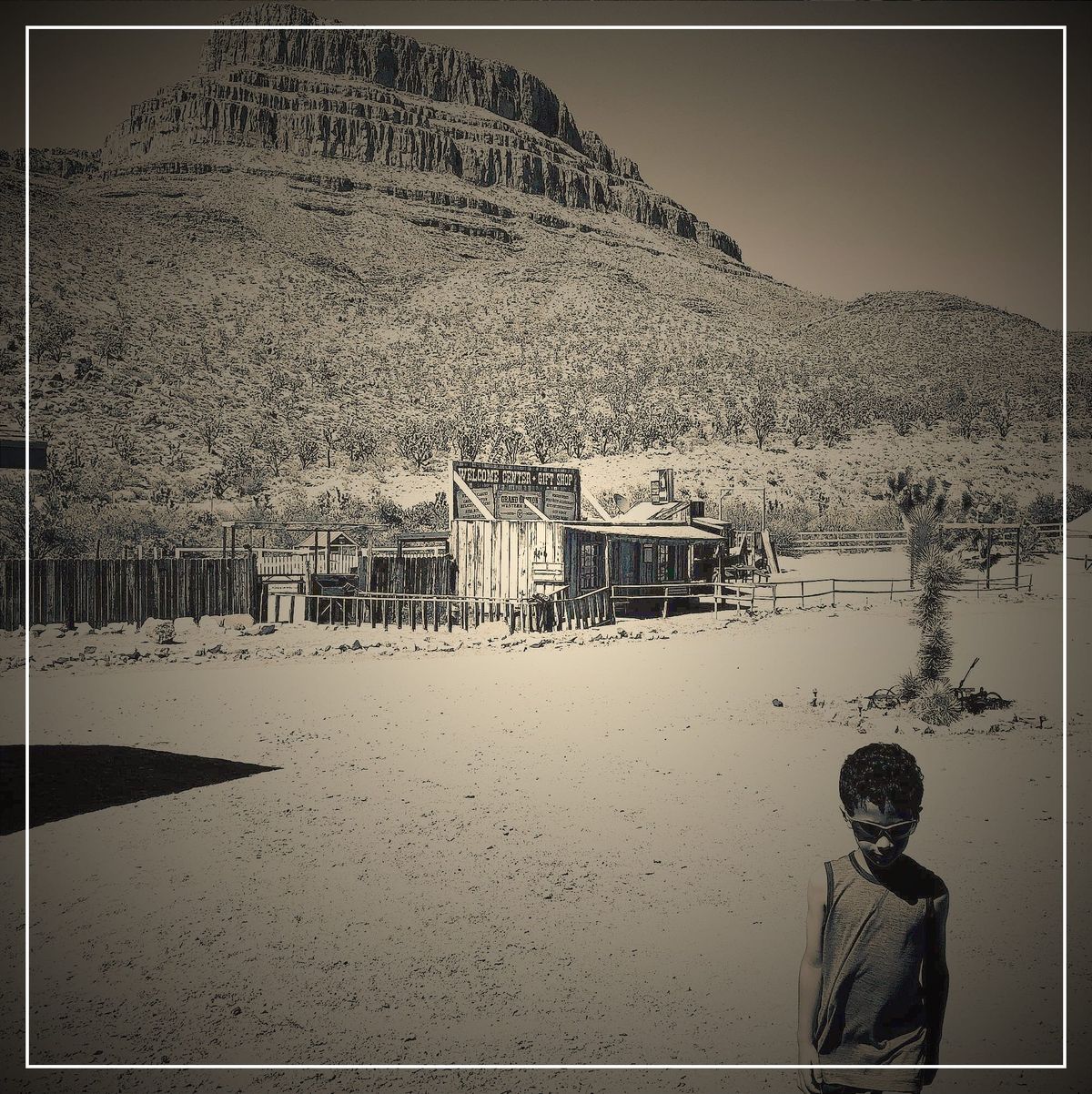
Years wear names off things. The street sign out front used to say WIRE AVE. Somewhere between summers the I slipped, and a boy with a stone made sure it stayed gone. WORE AVE. Honest enough. The avenue carried a weight and it showed.
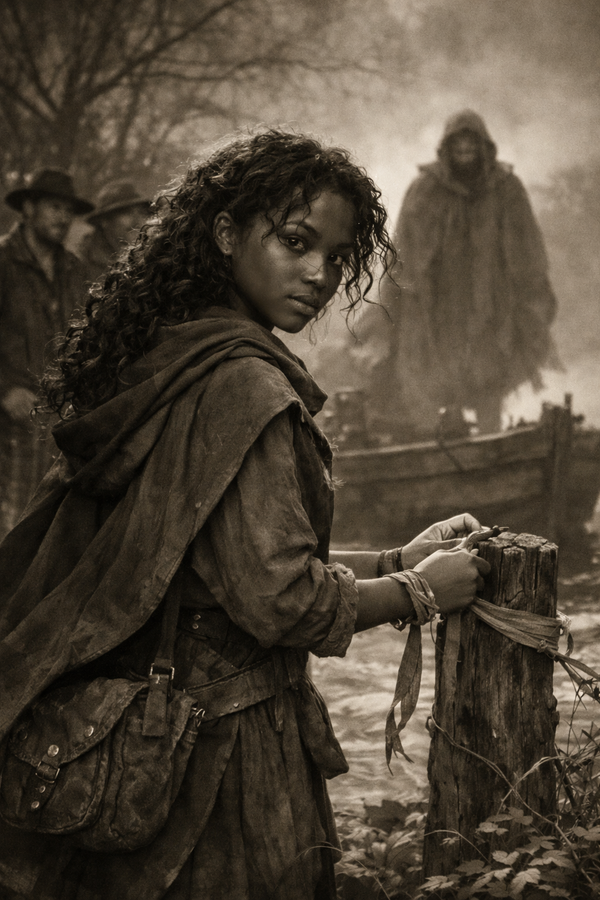
Hope came back on a morning the sky was the color of a tin pail. My sister—lungs once full of rain, now quiet as folded cloth—walked up the middle of Wore Ave with a canvas satchel and that look she gets when she’s already decided. She kissed my cheek and smelled like sun-warmed cotton.
“You shouldn’t have written,” I said, which is how I say I missed you.
“You’d have known anyway,” she said, which is how she says the same.
She glanced up at the wires. They were humming their thin blade-song, the way they’ve hummed for years. If you hold your breath you can hear it bite back a note you’re sure should be there. My scar itched. I set the rag down.
“He’s still coming,” I told her.
“He’s always coming,” she said. “I didn’t come to wait for him. I came to end it.”
There was a time I would have asked whether ending a thing and breaking it were the same. I didn’t. I already knew her answer, and I knew my part in why an ending was needed. The woman with the paper voice had once pulled the fever out of Hope and folded it away in sugar; after that I owed her. Owing is a thread. I tied mine to her copper years ago and pretended I liked the music it made.
“What about the bill?” I asked, because the bill always comes.
“We’ll pay what we have to,” Hope said. “No more.”
She started at the water tower because everything here starts at the water tower if you climb high enough to see it. I didn’t follow her up. I watched from below while the rungs took her weight like a promise they were tired of keeping. She worked quiet. The wind shifted key when she snipped hair from under green glass insulators—hair the sorceress had braided into copper to teach the town forgetfulness. The pitch of the avenue dropped a fraction, like a knife easing off a throat. The dog two doors down stopped whining without knowing why.
From there she went to the church and set the bell right by the breadth of a thumbnail. When she tugged the rope it tried to choke on the second note, the way it had for years, then surprised itself and rang twice like coins into a plate. People looked up from breakfasts and arguments and said, “Huh,” like something small had slid back into place.
We walked Wore Ave together with a shovel, a carpenter’s hammer, and a length of new copper. She dug where the old loop lay buried in the middle of the street. The red sand bled up. She hauled the wire out and took two careful strikes. The sound went up the poles and made the glass shiver. She pried square nails from the corners of the old circle and planted iron grass in their place—thin blades that drank spells and gave back nothing but honesty.
Inside my bar, she unscrewed the sugar jar that used to hold a fever and poured the old sweetness into the sink. The room breathed easier. So did I, though it hurt.
When she was done the town felt different, the way a room does after somebody tells the truth in it. Smaller in one way, bigger in another. The hum went thin as cobweb, and in the quiet you could hear your own remembering try to stand up.
“Are you sure?” I asked, because someone had to say it out loud.
“No,” she said, because we’re family. “But it’s the right kind of not-sure.”
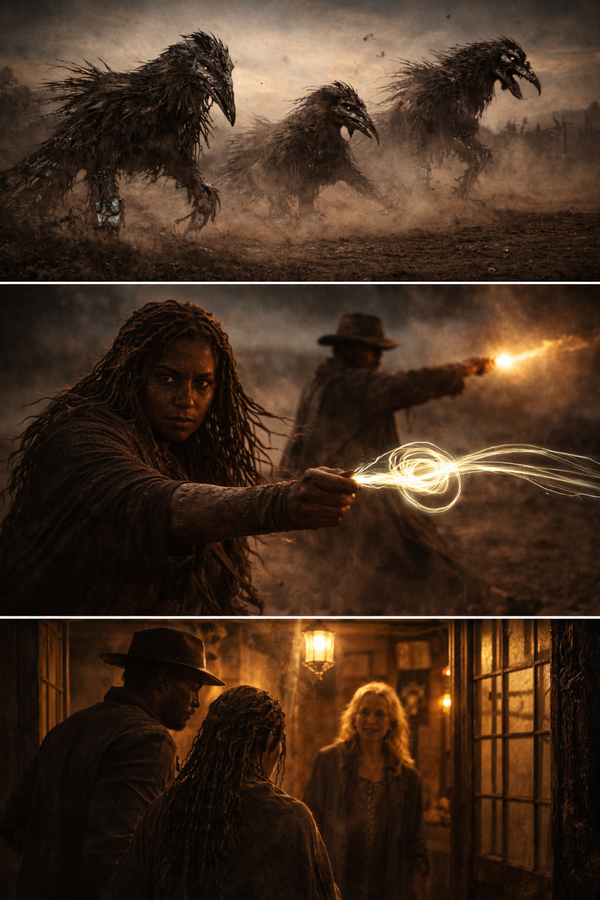
Noon brought him like it always does, as if the hour had his name in it. Hat caked in our dust, pistol riding his palm like a dog that won’t heel for anyone else. He paused under the sign, stared at where the I should be, and gave a little nod a man gives a riddle he doesn’t care to solve right now.
He looked at the doorway—at the woman standing in it with her paper voice—and then at my sister. His eyes are a color the sky might try on if it woke up honest.
“Do I know you?” he asked Hope.
“Not yet,” she said. “But you will.”
I set a clean glass on the counter and didn’t pour. The wires above us hushed like an audience that can feel a different play coming.
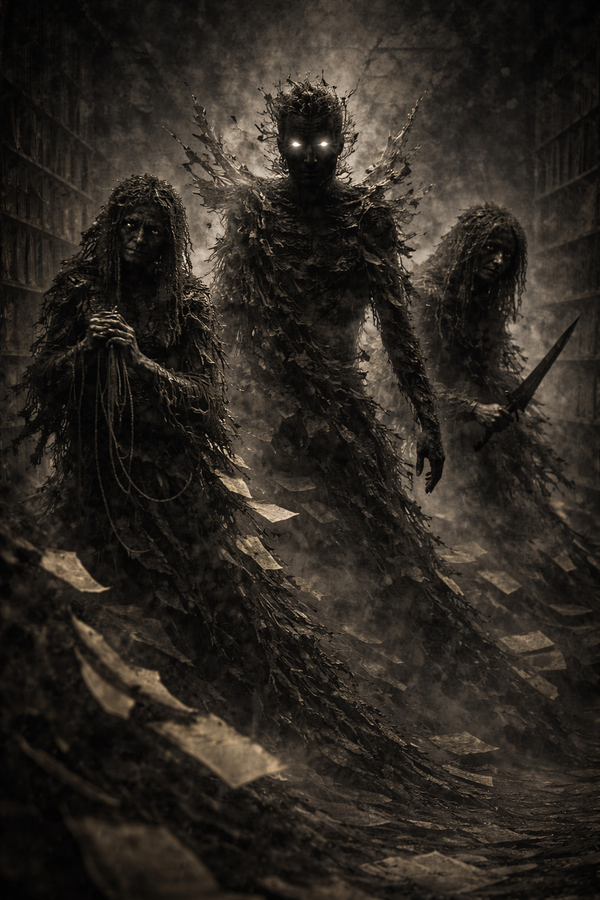
From the back table the demon rose out of a shadow that wasn’t attached to anything. Black suit, never wore our dust. Smile you could shave with if you didn’t mind bleeding. He looked past me, past the gunslinger, past Hope, and up the poles to measure what had been undone.
“What have you done to my stage?” he asked her, light as a man admiring a parlor.
“Unbuilt it,” Hope said.
He touched the cut copper ring with two fingers and this time came away dirty. He held his hand up, amused. “Unbuilt is not paid,” he said. “You pull a nail, you still owe the carpenter.”
We stepped into the street anyway—because endings like the middle—and the town made room without admitting it was watching. The woman with the paper voice stayed in the doorway. Sun made her hair look like a story about fire told on a calm night. Without the wires singing for her, she looked smaller; without the wires singing against me, I felt taller and didn’t like it.
“Outside, inside, anywhere,” the demon murmured, and he smirked at the habit of a rule that no longer existed. He glanced at me and my hands on the bar, at the bell rope, at the hawk holding its place over the flats. “Delightful. Also expensive.”
“What’s the bill?” Hope asked, chin up, the way our mother taught us to look at men who think they’re clever.
“The currency was always memory,” he said. “His has paid in installments.” He tipped his chin toward the gunslinger and the small hard constellation of notches beneath the pistol’s base plate. “I find myself moved by your town’s romance with mercy—” he smiled at me; it wasn’t a compliment—“so I won’t take the rest of his. I’ll take hers.”
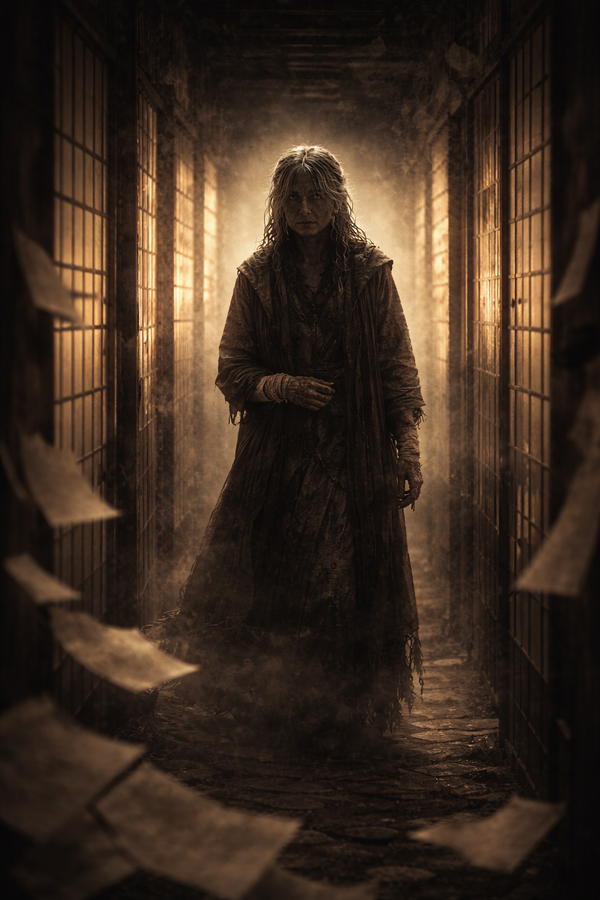
He turned his face—really turned it—toward the woman in the doorway. For the first time in years he looked at her like a person, not a problem to occupy a man. She drew herself up. Without her web of copper and wind she was only a woman who had learned too many tricks and carried too many jars. Which is to say: a mountain, still.
“No,” the gunslinger said, as if the word had been pounding on the inside of his teeth. He took a step forward. “Take mine.”
“You’ve paid, faithful thing,” the demon said, and he sounded almost fond. “You taught me laziness. This is new. I like new.
Hope stepped between them. “Through me, if you must,” she said.
“That’s not how it works,” the demon replied, and he was right about that part. He didn’t raise a hand. He didn’t need to.
The air changed. Not colder, not warmer … emptier. It went out beneath the woman like a tide. I watched each name leave her face because I am a coward who looks at the thing that hurts when I can’t stop it: child healed with sugar; bell clapper; copper under glass; my scar; my sister; this street; that pistol; this bargain; that morning. When the last one tore free—her own—she swayed.
Hope caught her and lowered her to the step. The woman’s eyes were wide and clean and new. She breathed like someone who’d just learned how.
“That settles accounts,” the demon said cheerfully. “And now we can—”
The woman had cut the line with a laugh, and for the first time, I saw fear in the shadow.
“Now we can be done,” I said, and my voice did a thing it had never done before. It didn’t shake.
The gunslinger stood with his knees easy and his breath inside his breath, thumb pressed to those bright-worn stars on the gun. He didn’t look up. He didn’t need to. He had been told once to steal a bite of sky and keep it. Today he was keeping something else.
He drew.
The bullet went where bullets go when there isn’t a tab open to call them back. It found the demon’s chest and made no door at all. For the first time the dust accepted him. He took a step as if he meant to argue, then didn’t. Smoke tried to be loyal to a shape and failed.
“Again?” he asked, small now out of habit, and the habit died with the word.
“No,” the gunslinger said. “We’re done.”
The corner where the demon liked to gather stayed a corner, with weeds and a bottle cap and a stone that had never been wished on. The bell at the church rang twice by itself and seemed pleased to have remembered how. The wires rested. Somewhere a dog decided it had been wrong about everything and slept.
I climbed over the bar. My hands found Hope and then the woman. Up close the paper in her voice was gone; when she said “Do I know you?” it sounded like a page warmed near a stove.
“Not yet,” Hope told her, crying and smiling at the same time. “But you will.”
The gunslinger came over and knelt. He set his pistol on the street like a hymnal in a pew. He looked at me and said, “Thank you, Mercy,” like a man discovering he didn’t have to borrow names anymore.
“Always,” I said, and the scar above my brow remembered how to sit on my face without pulling.
We did the small things first because that’s how you keep big things from swallowing you: swept glass that wasn’t there; coiled the church rope neat; hammered the “I“ back into the sign with a nail Hope swore she found behind the depot … I didn’t ask which year it came from. The hawk let itself be a bird again and landed on the fence post behind my place like it had remembered where it liked to sit.
At dusk I poured three drinks. One for Hope. One for the gunslinger. One for the woman who no longer wore a mountain under her dress.
“To endings,” I said.
“To beginnings,” Hope corrected.
The gunslinger touched his glass and didn’t drink yet. He turned his pistol over in his hand. I watched him count the notches softly with his thumb, not as a man keeping score but as a man reading a weathered map he no longer needs to follow. On the base plate, rubbed shallow by years, I could still make out the old scratching—When you wake, go east—and I saw him smile like a man deciding breakfast before he decides a road.
He looked at the woman. “Do I know you?” he asked, and meant it in a way that didn’t hurt.
“Not yet,” she said, and this time a promise and a warning stood side by side like two chairs, companionable. She laughed—and the town was a little warmer.
Later, when the lamps were puddles and the place smelled like orange and varnish, Hope climbed the tower one last time with a small paper envelope. She told me after she buried gray braid under the ladder and wrote RETURN in the dirt with her finger. I didn’t ask whose hair it was. Some things are better as a story in a whisper.
I stood in the doorway and listened to the quiet. Not silence—life without a particular hum. The kind where conversation can start.
The woman came to stand beside me. She looked up. “That sky,” she said, wonder in it like a child seeing her first peach. “It’s…blue.”
“It is,” I said. “It’ll keep.”
The gunslinger stepped out into the street and did what he was born for: he looked up, too. Not to steal anything from it this time. Just to agree with it. When he lowered his eyes he looked like a man, not a blade.
“Where now?” I asked him.
“Breakfast first,” he said. “Then east.” He grinned. “Or west. It turns out both are the same if you keep walking.”
Hope bumped my shoulder with hers. “You’ll be all right?” she asked.
“I’ll keep the bell in tune,” I said. “I’ll keep the oranges. I’ll keep the floor. And I’ll keep the names. Somebody ought to.”
She kissed my cheek again and left her hand there a moment, warm and sure. Out front the sign read WIRE AVE again, and I imagined newer boys with newer stones slowing down to think twice.
When the wind came through at midnight the wires didn’t sing like a blade anymore. They sounded like something else—maybe just wire. It was enough. I folded the rag, set it on the counter, and let it be.