Chapter VIII: Measurements laid in starlight


If you’re a student of gun-smithing, this will likely confuse you.
What follows isn’t a schematic; it’s a family secret finally speaking.
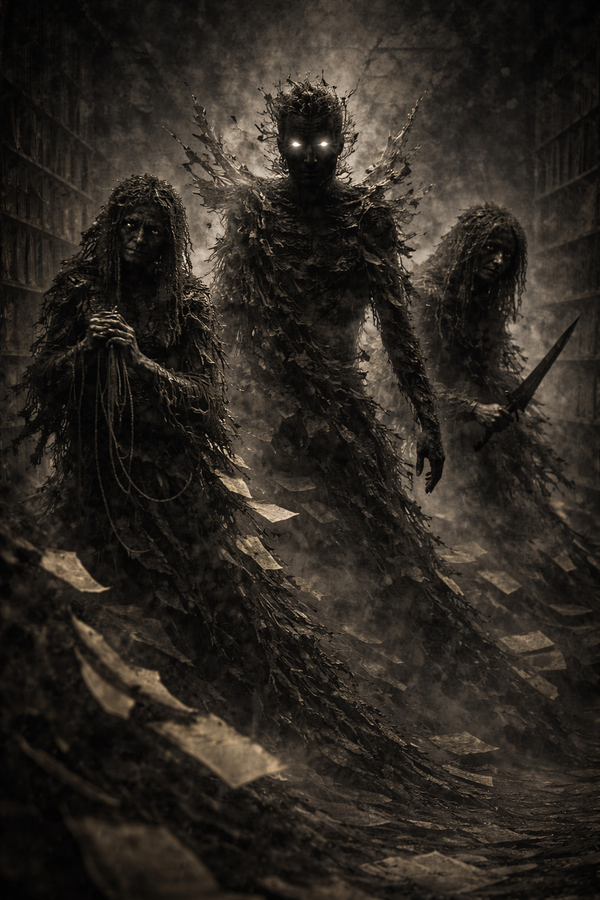
Grandfather was a gunslinger—no one in the house knew it. And the gun in his cedar box was older than his silence. It was forged by his own grandfather—the great-grandfather you’ve never seen in photographs—the man who slew the first dragon-demon and, afterward, made a sidearm of starlight to split cursed copper and the evil things that are not touched by dust.
Great-grandfather’s forge
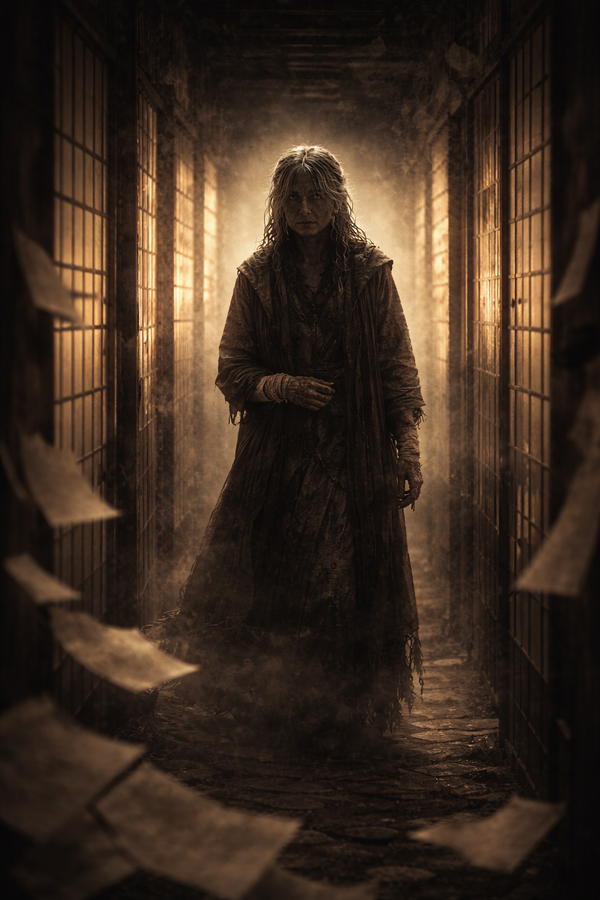
His forge wasn’t a cathedral to iron—just a wind-lean shed behind a field where the bell from town could be heard ringing twice like good manners. He came home from that first hunt scorched and blinking, dragon ash on his coat, a shard of fallen sky in his palm: meteor iron, sky-iron, call it what you like. He folded that star-metal through clean steel the way a baker feeds old dough to new, six heats and a seventh rest so the temper wouldn’t learn pride. When the billet glowed like bread, he quenched it in a crock he’d drawn at the exact breath between the bell’s first and second note—two-bell water that remembers how to cool without killing.
He bored the barrel slow—seven shallow grooves, one for each of the known shadow lands. In the grooves he cut hair-thin channels—not letters, not quite—countermarks for a work that would be half chemistry, half prayer. He turned a six-shot cylinder that clicked like a tidy constellation. He pinned the frame with a cross-bolt forged from the thinnest curl of that same star-iron so the whole piece would remember what it had once struck.
The grips he whittled from cottonwood by the far fence (wood that takes oil and keeps secrets) and set a round of ox-bone in the heel—an homage to labor that lays down when it’s done.
Cartridges made for copper
Lead and brass would punch holes in men. That wasn’t the point. He needed rounds that unbound arrangements—oaths wired through copper, circles buried shallow, nails that gave spells a mouth.
He cast a small run of special bullets:
- soft-lead cores kissed with a shaving of star-iron,
- thin jackets of nickel silver (white brass)—never copper against copper,
- two spiral bands engraved to the barrel’s pitch: capillaries for a dissolving "hymn."
At the bench, after dark, he mixed a paste by stubborn grace—lamp oil from a chapel kept for names, river salt from a drought year, a dusting of verdigris coaxed from an old kettle then “reversed” with lye and a sip of two-bell water, bound with beeswax. In each hollowpoint he set a tear-vial of rain-glass (quartz drawn in a storm) filled with separation: clear, patient, made to persuade copper into breath.
On the back lot he hung a loop of wire from a nail. A common round, when shot, tugged the line and left the song. A blessed round touched and the loop sighed—bloomed a pale green flower, then melted to smoke. No spark. No shatter. Just unbinding.
The quiet inheritance
He built a cedar box for the pistol—no flourish, only fit—and slid it beneath his bed. He told his son little, and his son told his son less. Work like this prefers hush.
The grandfather—the one who kept his coat by the door and his stories shut—led two lives with one pair of boots. By day he mended gates, lifted sacks, counted weather. By night he walked out alone and came home before the rooster, copper dust on his cuffs and nobody the wiser. The sidearm fit his hand as if his palm had been measured in advance. He rationed the blessed rounds like winter light and refreshed what he could at the bench with the same stubborn recipe; when the ingredients ran thin, he prayed the two he kept would be enough.
When he passed the box to his son, he used the only words he trusted: “This isn’t for men. It’s for arrangements. If copper’s holding what it shouldn’t–and you'll know it–use the silver-white ones. Otherwise, use lead and come home.”
The boy who would be the hour
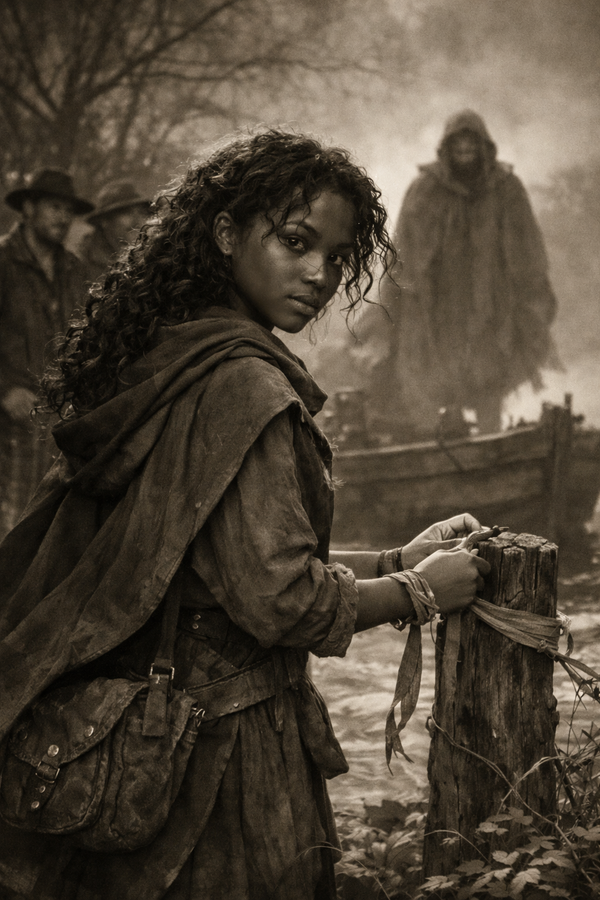
Years later, a boy was called by a dream, a window stuck against summer, a cedar lid slid, and a young hand lifted the old work. The gun settled like a dog recognizing a whistle its master hadn’t learned yet. Two cartridges in the row glinted faintly—the blessed kind, smelling of pennies and rain. He didn’t yet know why the sight of a nail in a dusty street would make his tongue taste metal. He learned.
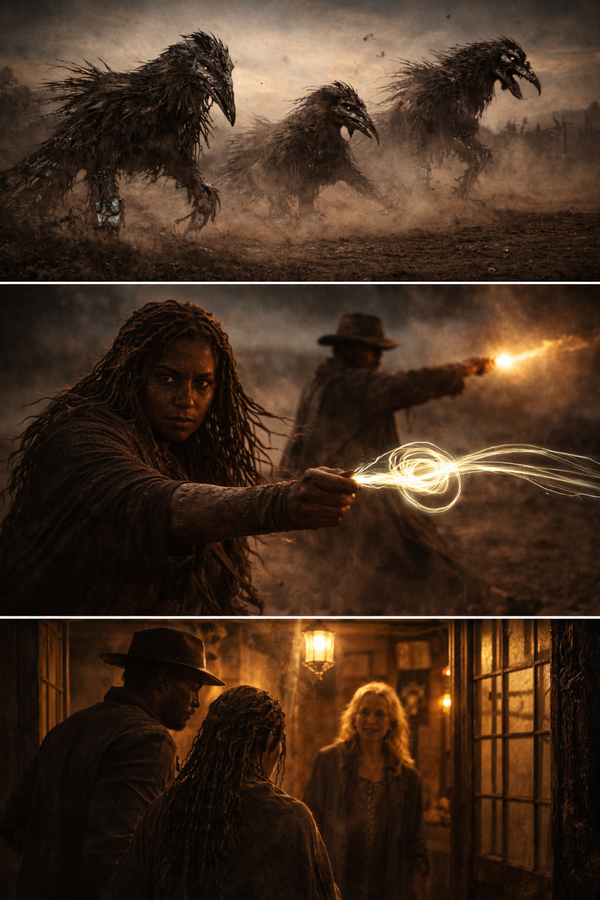
On the first day that needed it, he didn’t aim at a man. Though their neighbor was threatening him, axe in hand. He aimed at a copper mouth in the dirt. The round struck, unfolded its green petal, and turned the binding into breath. The humming quit. The boy didn't know why it worked—it felt true. People on that block forgot to hate someone without knowing how they’d learned.
Of course, later, forgetting would come for him too, the way this work requires. The boy would scratch four words shallow under the base plate’s stars—WHEN YOU WAKE, GO EAST—because steel keeps what men can’t.
If you were to lay the pistol out on a bench, you’d find nothing miraculous stamped beneath the grips: honest rifling, sensible screws, cedar and oil and a breath of river. A gunsmith might say any patient hand could make it. Maybe. But only one great-grandfather came home from a dragon with star-iron in his fist and the sense to listen for the second bell; only one grandfather carried the work in secret so the family could sleep.
And only one boy lifted the box on the morning the hour came due—taking up a sidearm of starlight, made to split cursed copper and the evil things that are not touched by dust.