Letters from Copper & Fire
Stella Combs — Night Nurse
October 12
The sky had a bruise and it pulsed. Orion’s middle light throbbed like a thumb pressed on a wound, then went out for one clean heartbeat and came back colder. Mr. Dilley said it looked “infected” and I laughed—the small nurse laugh you use to keep a room from breaking—but it died halfway up my throat.
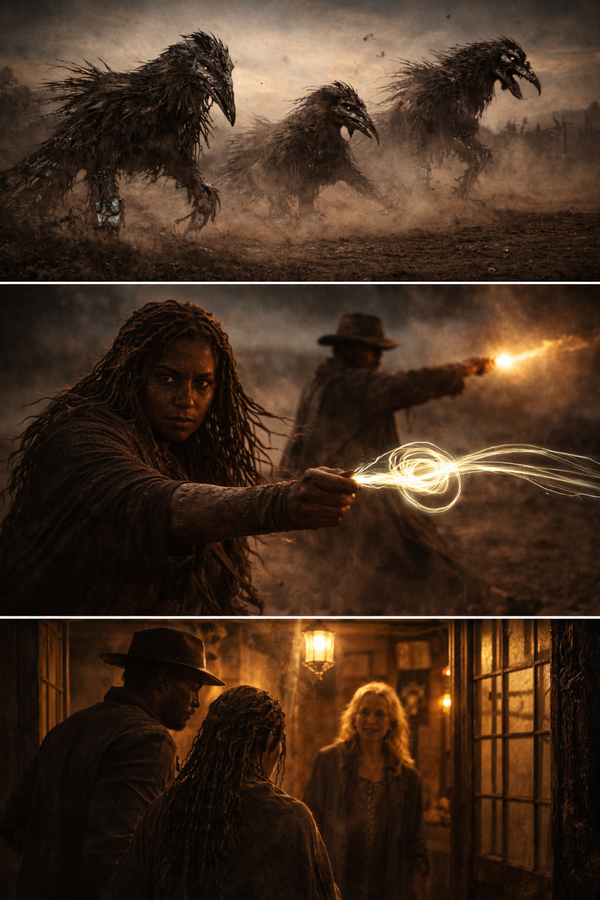
In the pharmacy glass, my face arrived late to my own hands. I touched my cheek and watched the touch come after, pale and floaty, like it was thinking about whether to belong to me. On the ramp, one of those soft-foot birds stood at the bottom step, head cocked like it could hear the building remembering it was a hospital. It didn’t blink. I don’t think it could.
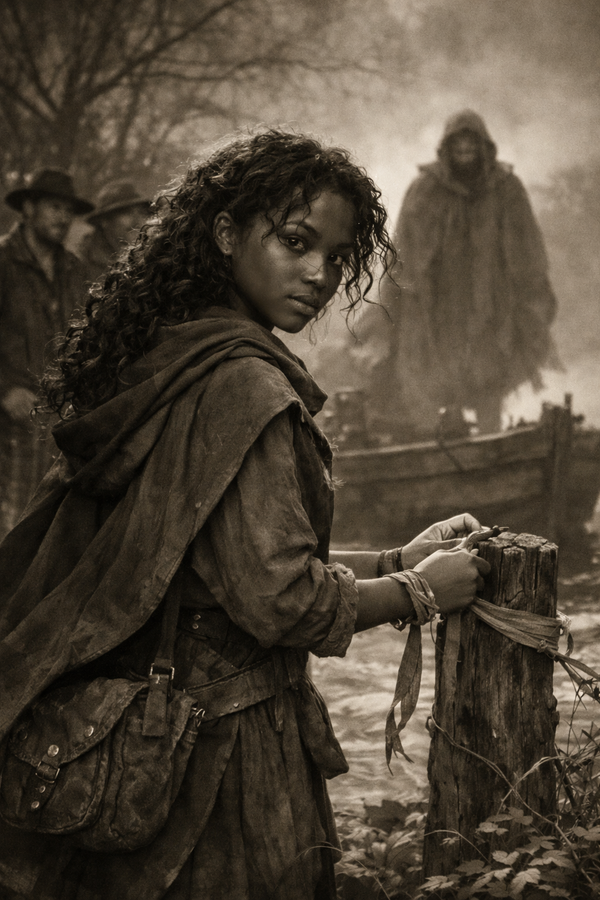
The vents tap at night. Not mice. Softer. Polite. Like something reminding the walls of an appointment. I tied a ribbon to the oxygen cart handle and whispered the rules—name what a door is for, count where eyes can watch, ring twice—like a prayer. When I breathed on the bell rope by the service door, it was wet and smelled like a cellar that doesn’t want you anymore.
If I forget my own name, this is for me: Stella. You are Stella. Pull short, short.
⸻
Darnell Price — Barber, Broad Street
October 13
Mirrors are sick. I shave a man and my grin shows up late like a stray dog. My hand goes where it should; the man in the glass thinks about it first. Thin fellow with stringy fingers came in and tied air between himself and Freddy Larkin—knot you couldn’t see ‘til the sun slid just right. I felt it tug my shirt like I’d agreed to something with my back.
Gunslinger came by and put a bright round through nothing. Sounded like a plucked nerve. The pull let go and the thin man’s smile sagged in the middle. He left, and I swear the bell over my door breathed like it had almost drowned.
I printed OPEN MEANS OPEN in big block letters and taped it to the glass. At closing, the paper was gone. Not torn. Not fallen. Gone. I watched the empty tape twitch, like the door was trying out being a wall.
If my face ever stops catching up, Mae—cut the rope and run.
⸻
Irene Callow — Foreman, Copper Yards
October 14
No motors, still a hum—yard singing one note that isn’t a note. Boys say they feel it in fillings. I do too. Sounds like a crowd far off, all proud for counting to one together. Can’t hear the “two.” It never comes.
Soft-foot birds lined the spools this morning, neat as inspectors. They stared with the places eyes belong and tapped the wood with their toes. After lunch we found a mouse skeleton laid out in little copper loops like somebody teaching bones to read.
Serena set a knife on the bus and told the copper what it’s for. Gunslinger dusted three junctions and the hum slipped off, slick as grease in hot water. Came back by shift change. I told the boys we’ll keep telling the metal its name. Truth is, I’m scared the metal is learning mine.
If I start calling the bars by boys’ names, take my keys.
⸻
Walt Fincher — Bailiff, Riverside Court
October 15
I shut both doors today—the one for the public and the one for the accused—and stood between like a piece of furniture waiting to be moved. A woman asked if she could breathe and I heard myself say “Permit” like a clerk at a joke window. Hope opened the right door and said, “This one welcomes,” and for a second the hinges sighed like a man sinking into his own chair. Then my hand closed it again without asking me. That was worse.
The warrants on my desk had blank lines. I signed five before my brain stood up. Commas crawled at the edges like bugs. Serena burned them and the ash made letters on the blotter: my wife’s maiden name, spelled wrong. I tore the blotter and the letters scuttled under the blotter pad like roaches.
If I forget my daughter’s voice, God help me. I wrote it here: Ellie laughs on the inhale, like a hiccup. When the rope is wet, I’ll pull anyway. Short, short.
⸻
Pastor Len — First Church on the Hill
October 16
We make a circuit evenings now—me with my collar, the girl with the ribbon, the woman who writes rules on rocks, the lighted one holding our streets level with her shaking hands. We say it like catechism: name what a door is for, count in daylight, ring twice, don’t price a child. Folks nod. It holds until dark.
After midnight the parsonage walls remember a tapping. Every hinge I chalked wears a smear in the morning like a mouth wiped clean. Hymnals re-order themselves so “Amazing Grace” comes out wrong. In the sanctuary at noon a darkness hung high and flat like a dropped sheet; people walked out of it with their breath held and their eyes shiny. I rang the bell. Second note came late and cold as a coin.
I prayed after. The prayer went somewhere and didn’t echo. Maybe that’s good. Maybe it’s gone.
⸻
Tisha Alvarez — Market Stall, Pump Row
October 17
Lots of talk while I sell onions. Mine Four bends light around your lantern now. Field past Murphy’s where sound goes in and never comes back; you can yell your name in and it’ll forget you. Kids draw black rings on the school slates and say they’re mouths that eat hours. They laugh and then get quiet, like the ring heard them.
A string-fingered man tied a knot over my counter. I salted my own sill and he smiled like I’d served him tea. When I locked up, there was a jar on my table I didn’t own. Sugar inside, glittering like frost. I didn’t touch it. I wiped the jar’s place with vinegar, twice. When I turned my back the jar was nearer. I left by the back and ran.
If you find a jar that wasn’t there—do not name it. Do not feed it your hands.
⸻
Captain Roane — City Watch
October 18
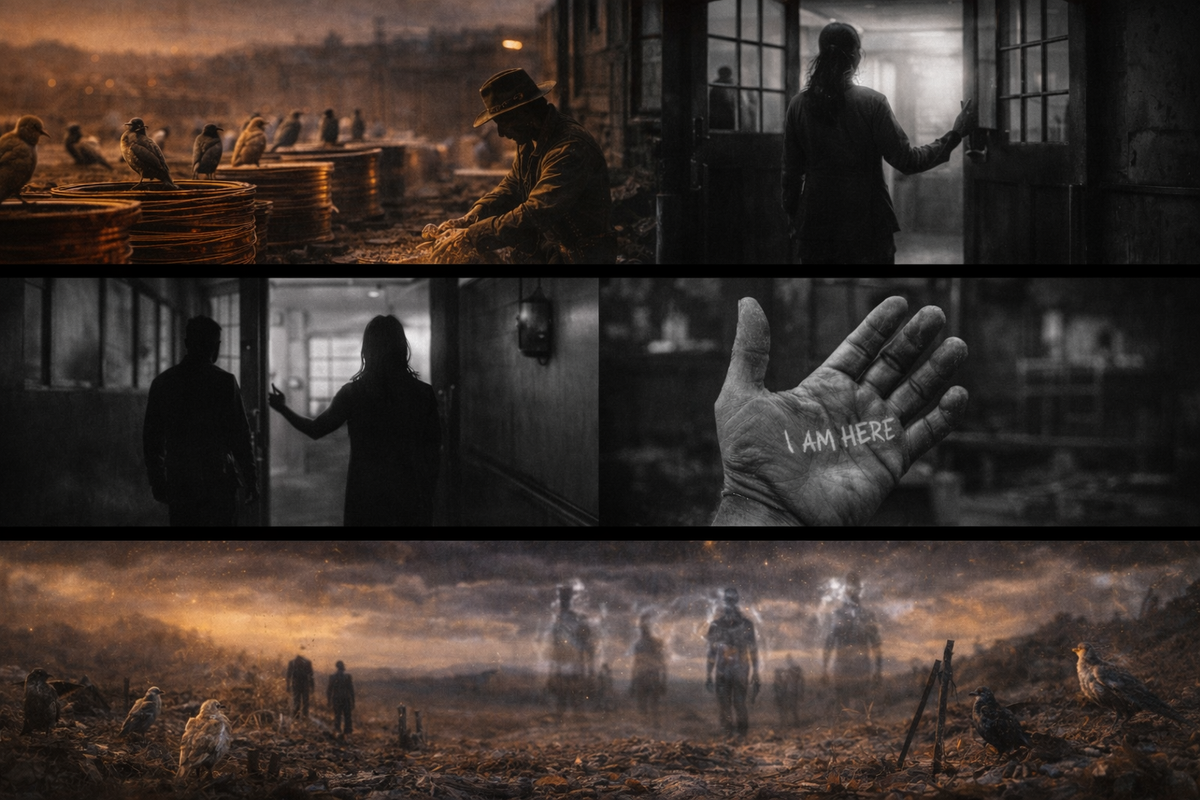
I said “Erase that problem” again in my head even though my mouth stayed shut. Felt it crawl across my tongue like a slug. The locker-room mirror lagged—uniform first, face after—and for a blink I wasn’t sure any of it was mine. Someone wrote I AM HERE on my palm in soap. I don’t remember doing it.
We stood men on the square. Their eyes slid off people. Blank like fresh paint. The bell rope was wet when I checked it. No rain. Copper taste on my lips after I touched it. I wrote I DO NOT ERASE ten times in this book and can’t swear it’ll stick to me by morning.
If I point at people and call them chalk, take my coat.
⸻
Mason “Red-Boot” Carver — Iron Camps
October 18 (maybe)
Went up past the quarry again, though my boots didn’t want it. There’s a place where wind leans one way. Not a door. Doors are for coming back. This is a pull like three hands on your belt. Threw a rope. Rope slid. Orion’s middle light blinked while I watched. Felt my teeth grow heavy, like they were copper.
Saw three thin men on the ridge, sleeves neat, listening with their smiles. When I looked again, the ridge had moved a step to the left, like somebody had nudged the world on its track. I walked home slow and steady and still got there too fast, as if a piece of road was missing between.
If I forget that gap, something else will remember it for me. If I go again, I’ll tie myself to the bell tower first.
⸻
Serena H. — Field Notes (on the back of a library card)
Undated
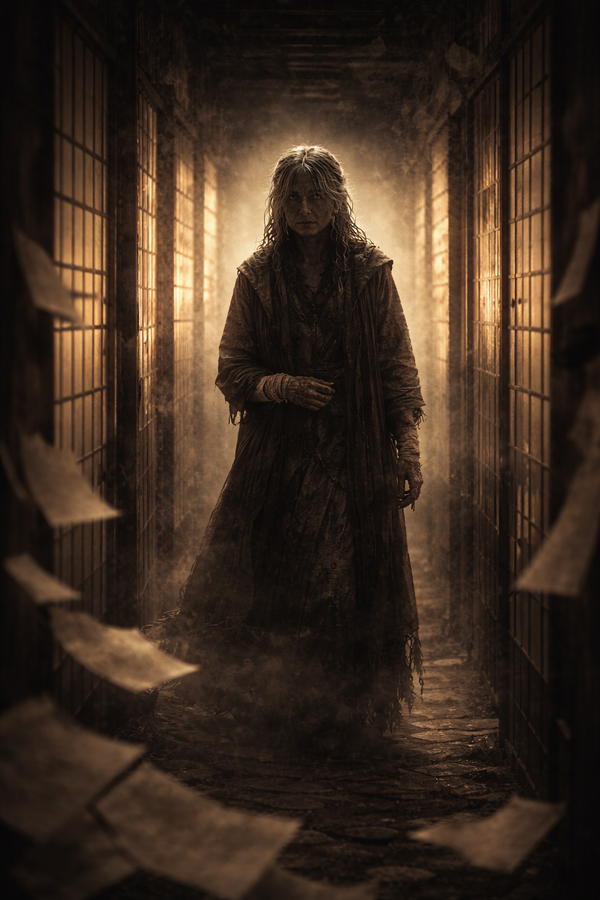
Air reads wrong. Like paper held over a stove—ink loosens and slides. People talk and meanings skid off the ends. Clauses crawl; I burn them; the ash makes shapes on the table: loops, hooks, the beginnings of names that don’t belong to anyone I love.
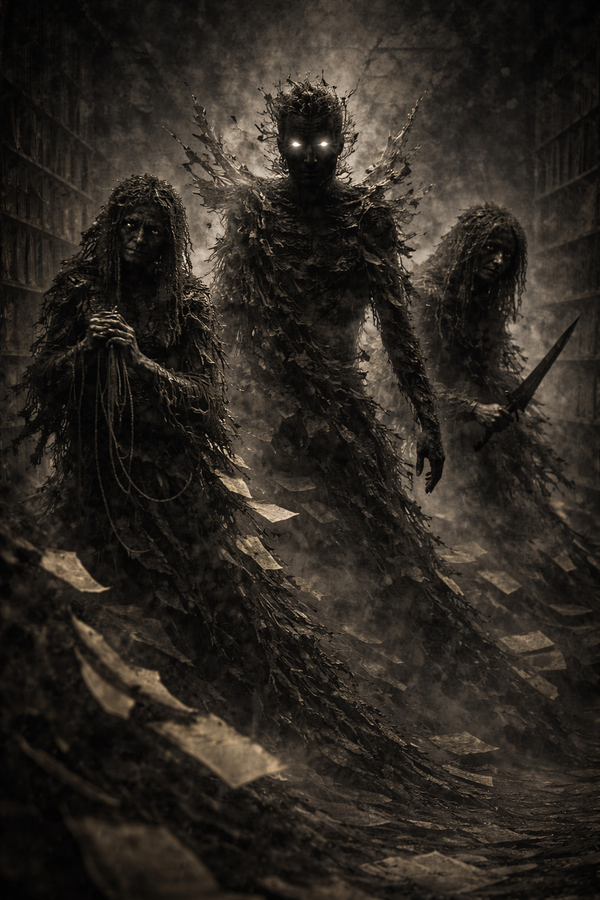
Thin men multiply. Birds without eyes learn the porches like routes. New things: dogs with bronze nails scratching from under floors, mothers touching doorframes and forgetting to blink until Hope laughs them back. Phoenix sings lower, like a floorboard settling before a fall.
I wrote DON’T SPEND MERCY TWICE on my wrist because skin remembers longer than chalk. If I start writing in the air where you can’t see, slap the pen from my hand.
⸻
Mae Combs — Porch Book
October 19
I keep this book on the step because the step knows things before I do. Orion’s wound-light blinked out and came back mean. I held the broom and felt silly, then less silly. The eyeless birds stood in the yard and turned their heads like they could hear my name leave me.
My husband lagged in the hall mirror, a half-second late to his own face. I said his name twice on purpose and his eyes focused on me like a swimmer coming up under a dock. Bread didn’t rise today. It sagged in the bowl like it wanted to be clay.
Down at the hall the bell rope was wet and smelled like a basement trying to remember rain. I wiped it with my sleeve and rang short, short. Nothing moved but it felt like something stopped moving, if that makes any sense. The disappearing is getting fatter. It eats hours and rules and faces. It eats little jokes.
If this book goes blank, someone ring for me. Twice.