Hyenas in the night
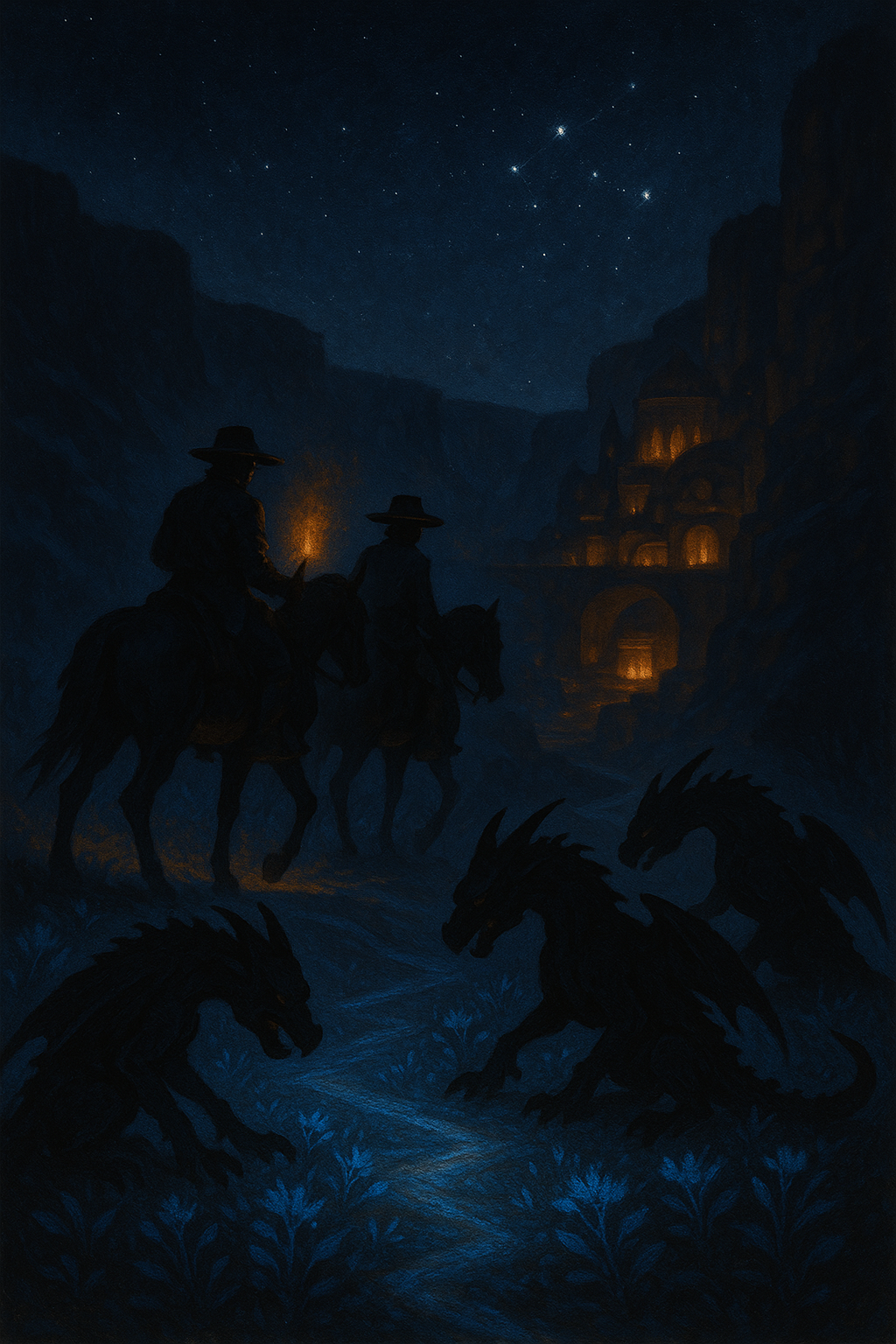
Shadow chose their road long before their horses touched it. It walked beside them like a second rider—sometimes keeping pace, sometimes sliding ahead to erase a fork or throw a sheen across a ravine so they’d step where it wished.
The Night Plateau earned its name honestly: decades of darkness had taught flowers to glow and stone to remember starlight. Quartz ridges chimed in the wind, ravines held blue moth-fog, and trails mirrored the sky until horizons seemed like liars.
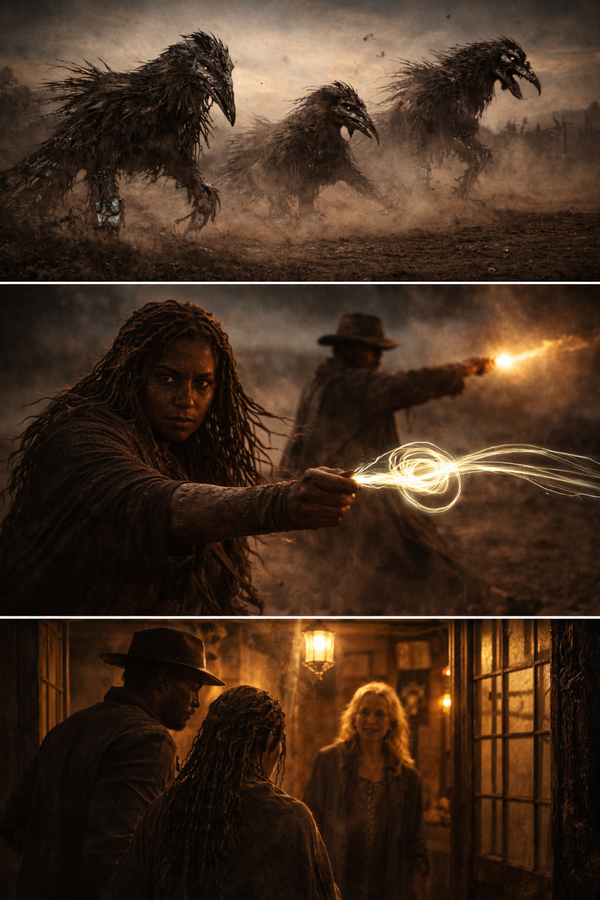
Orion burned near enough to touch; the middle belt star kept its steady knot over their heads. Between the mountain town’s clean two-note bell and the silences that followed, copper hunted their tongues, sly as hyenas stalking the edge of torchlight.
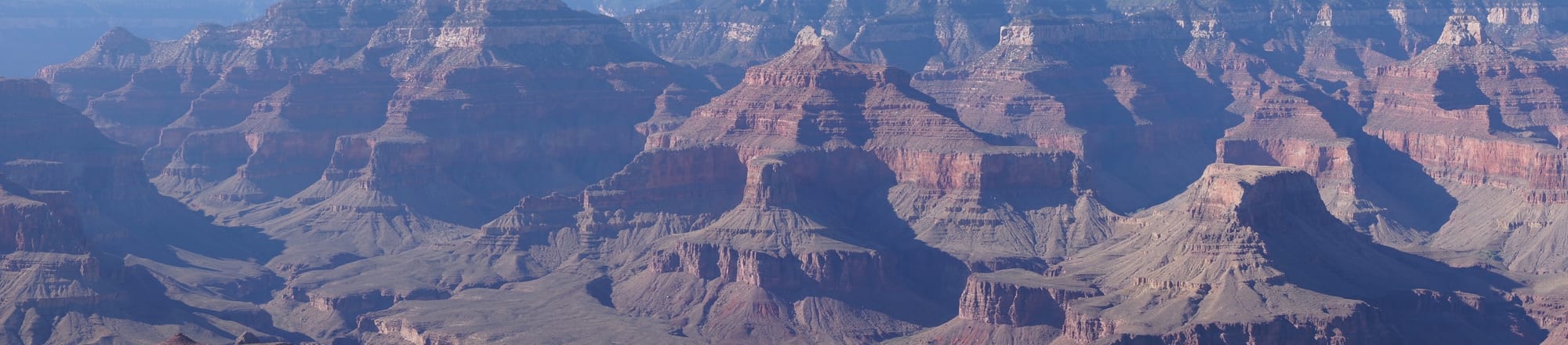
Far ahead, a city gathered itself out of canyons: furnaces nested in sandstone bowls, bridges stitched from rim to rim, dry riverbeds like sewn scars that sometimes burst with molten thread. The air smelled of iron and something older than rust. Bells here—if bells they were—half rang, the second note snagging in iron throats as if embarrassed to be heard. Smelting was language. Hammers conjugated ore. Copper lay naked in the cliff faces, green as old envy, and dragon-shaped shadows perched at the corners as if stone had learned menace by imitation.
They went to where ground-level first instincts always send you—to a bar under the rim to measure a town’s manners.
The door’s hinge pretended friendship. Inside, the room was lit the way secrets are—enough to see your own hands, not enough to read anyone else’s. Bartenders drew frothing drafts of sugar—white, brown, burnished—from shining taps; bowls of rock sugar glittered like coin; bricks of dark cane made the till speak in sweet clinks. Dark riders hunched over glasses, cloaks the color of ink, hats making their heads into privacy. They looked past the gunslinger as if owing him nothing were a skill.
Two saucers appeared where glasses should be. The bartender poured sugar onto each, then blew so it foamed high and held—a gesture that felt like an invitation and a test. The gunslinger didn’t touch it. Hope stared at the froth, at how it shaped itself like a lung with the wrong idea of air, and felt a memory rise: the sorceress pulling sickness into sweetness, stacking jars behind Mercy’s bar. Here the sweetness was capital; here pain boiled down into currency. The same magic, unkindled.
“This isn’t for us,” the gunslinger said. The bartender’s mouth did not move, but the whole room seemed to smile.
A bolt slammed. Shutters dropped. Copper grates fell from the rafters with a soft, satisfied sigh. The air filled with a mist of syrup that went straight for the throat. Dark riders stood as one, sugar-glass knives winking, cudgels wrapped in spun-sugar skeins that would break as amber and cut like honesty. The bartender reached under the counter and threw a lever; the floor tilted a degree toward the back, toward a door that was suddenly all latch.
“Trap,” Hope said, paper-voice steady.
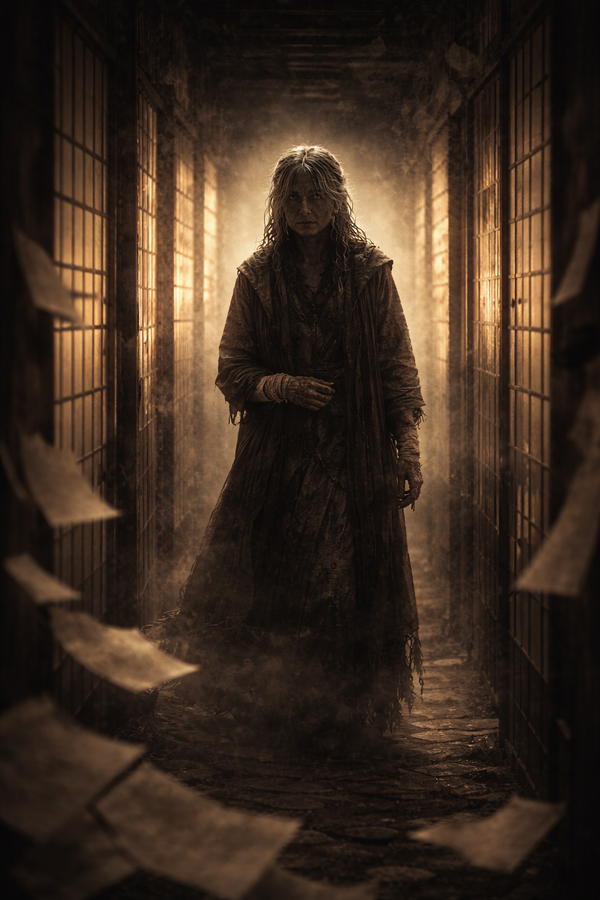
The gunslinger moved before thinking. Two shots took the nearest taps—common rounds, not holy—and the barrels coughed out geysers of syrup that sheeted into the room, dragging riders by their boots and making their knives into poor choices. A third shot shattered a chandelier’s glass spine so its rain hit the sugar like hail; the floor went from slick to stuck in a breath. Hope hissed a stitch under her tongue and pressed two fingers to the syrup at their feet; it hardened in a seam straight as a ruler, a narrow, amber causeway from counter to door.
They ran it while the room learned regret. A rider lunged; the gunslinger’s shoulder met his ribs and put him into the syrup where he stayed, preserved in sweetness like a caution. A second rider swung; Hope snapped a ribbon over the cudgel and spoke left-handed—knot, bite, forget—and the weapon remembered being a stick that didn’t belong to anyone and fell willingly away.
The door’s latch was copper—a pretty mouth with a bad memory. The gunslinger didn’t want to spend one of the blessed rounds; he did it anyway, quick prayer in the chamber. He aimed for the hinge. The shot struck with no spark, no jump; verdigris bloomed a pale green flower and turned to breath. The copper sighed and fell to pieces like a lie that had run out of audience.
They crashed into an alley, breathing syrup and bell-metal. Night took them and made them anonymous.
Behind, shutters hammered and men shouted with voices that promised they’d be brave again in a minute. The street tilted toward the canyon’s throat; the half-rung bells argued with themselves. They ran. A hyena-laugh feathered the dark—nothing seen, everything certain.
Horses were tied where no one bothers to look: between a smithy and a prayer. They cut leads, swung up, and let the animals choose terror’s speed. Through switchbacks and slag heaps, over a dry riverbed that steamed as if thinking about lava, past furnaces that burped small stars—the city fell behind like a page torn and crumpled. The copper smell paced them for a while, then lost interest. Orion kept his hand over them; the middle belt star hung where it ought. They didn’t stop until the hills learned how to be hills again and the wind forgot its sugar.
They made a small camp under a basalt lip where quartz sang so faintly you had to hold your breath to hear it. Hope wiped syrup from her palms and stared at the sticky clots in the cloth. “Wealth,” she said, almost to herself. “Boiled pain. Mineable, farmable, never-ending.”
He checked the cylinder and left the one blessed round fewer where it now belonged, heavy as the choice that had spent it. “Someone wanted us delayed,” he said. “Or taken,” he added, not sure which truth had sharper teeth.
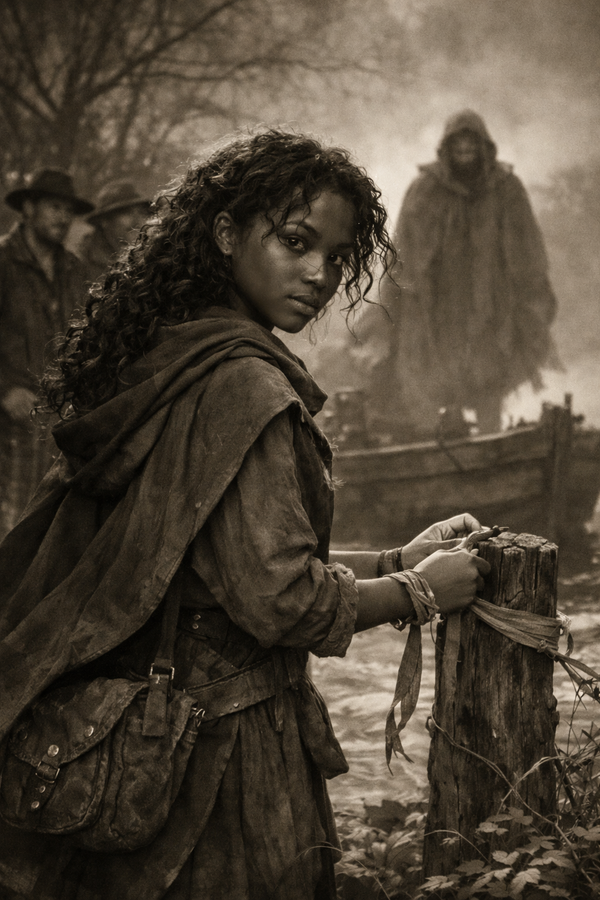
“Or weighed,” Hope said, easing the book at her side without opening it. The spine was warm the way a living thing is warm. She didn’t call. She didn’t laugh. The bird remained a promise, and promises are best kept until they aren’t.
Below, the canyon city practiced its half-bells. Above, Orion refused to blink. In the dark between those two fidelities, shadow settled in beside their small fire like a guest that has decided to stay a while and shape tomorrow’s road.