Chapter IX: Epilogue + Genesis: Sisyphus—pleased to meet you.
Again?
“For dust you are, and unto dust you shall return.”
That’s what they say over bodies. It sounds official, like a ledger slammed shut. I’ve heard it so many times that the word again has become my doorway. I use it the way you use a key you stole in secret.
You want a beginning? Take the one that hurts the neatest. I once went by Niles. Yes—smiling, hungry, sleeping with my mouth open in the shadow of a broken gate while the sun filed its teeth. A friend beside me, a man with ribs like tally marks and a pocket full of nothing but breath. Believe me or don’t; I prefer your doubt. It keeps you listening.
I brought copper to him before he brought copper to me. A bright nail planted weeks earlier where the ditch would be easy on tired eyes, the way a fisherman salts a cove. Copper is a conductor—of heat, of oath, of consequence. It carries bargains like wire carries weather. He found it, kept it, rubbed the head smooth with his thumb as if polishing an idea.
Hunger narrows a man until only one story fits. That evening I snored like a child at an opera and made sure my throat showed him a simple door. He did it fast and wrong. If you want me to be the victim, keep that version; I’ll even tremble if it helps. If you prefer the other one—where I left a nail and a gap in the sky and touched the weather until it didn’t rain—keep that. They’re both true, which is to say they’re both useful.
The next day he walked to where the roads meet, because crossroads never lie about time. I was there before him, watching the dust dance through my hands in shade. I wore a clean coat that dust refused because dust and I have our understandings. He said he was starving. He said he never wanted to do that again. I love a rehearsed confession.
“What have you got?” I asked, because trades are my liturgy.
He showed me the nail. Copper. "Good." We forged our hinge: he would bind himself to the harvest—his soul in the wire, his name in the rows, his breath a tremor under roots. I would set the rain in motion and let the earth remember its better manners. He would never be empty. He would never be full. I pressed the nail head into his palm until it left a small, listening mouth. He didn’t cry out. He saved that for later.
You know the next chapters: copper at the corners, wire along the rails, penny under the pump stone. The sky softened. Green came up in unison like a congregation. He married a woman whose laugh called birds. I suppose you hadn't heard of her yet—wasted dragon's breath. A daughter arrived, quick and paper-small, born with that same taste of metal on her tongue. The town ate well enough to invent different troubles.
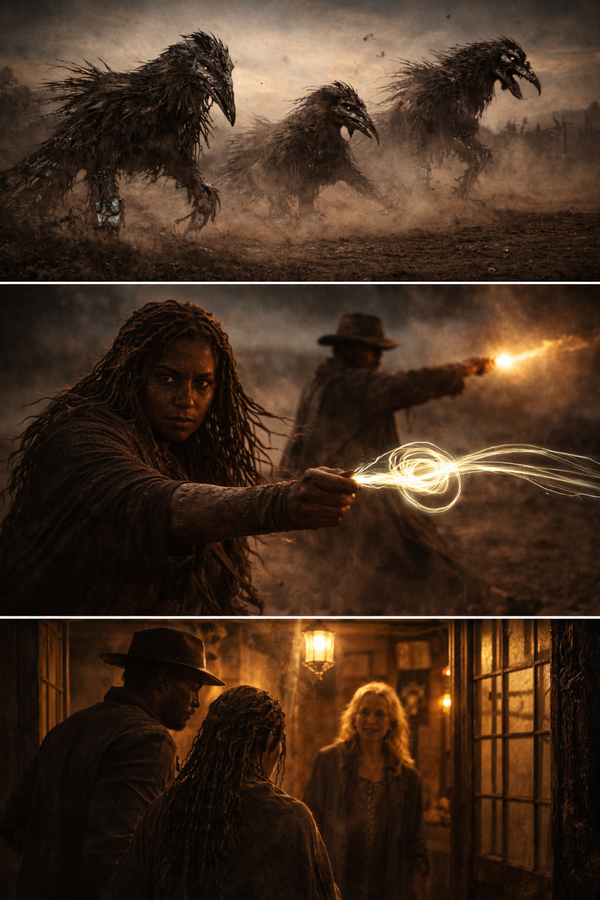
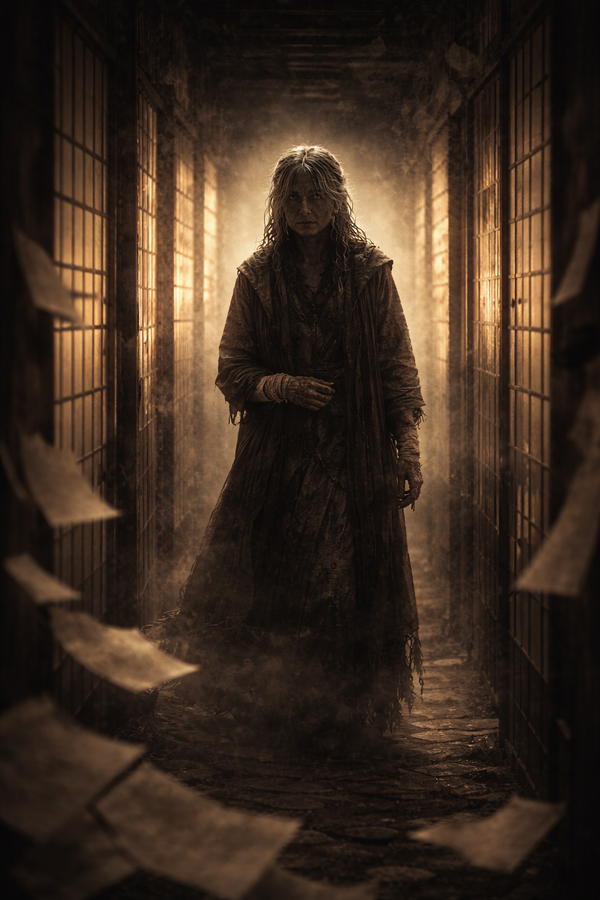
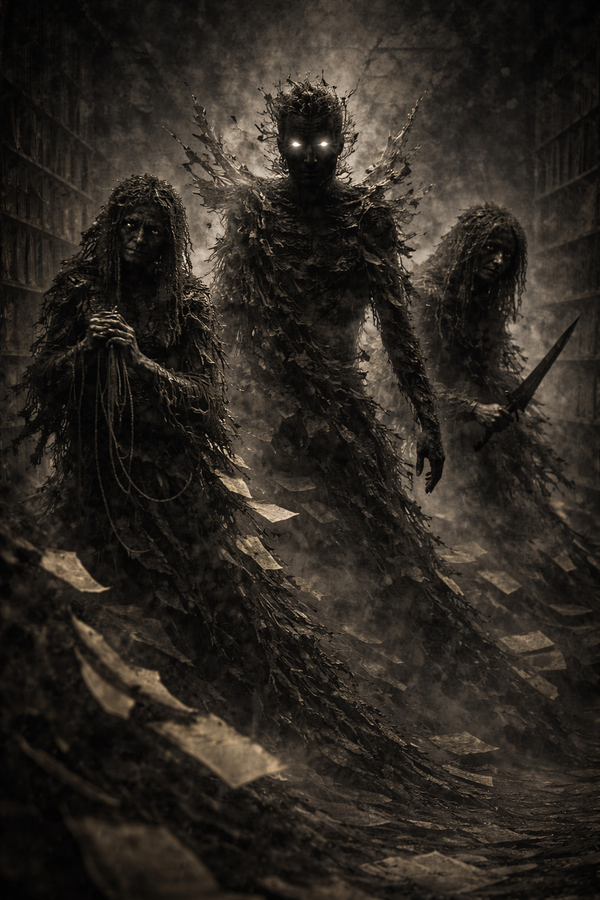
Then came the night with the latch-hook and the wrong hands. She reached for the forbidden syllables. She tore the dark. I came with my shadow—a dragon made of heat and arithmetic, a leader of my kind, the part of fear that breeds. Her throat healed crooked; her voice learned to rustle like pages. They called it witchcraft because it wasn’t theirs. She healed them anyway, and learned the cost: payment now or later, coins or days or names. Power runs a shop with no returns.
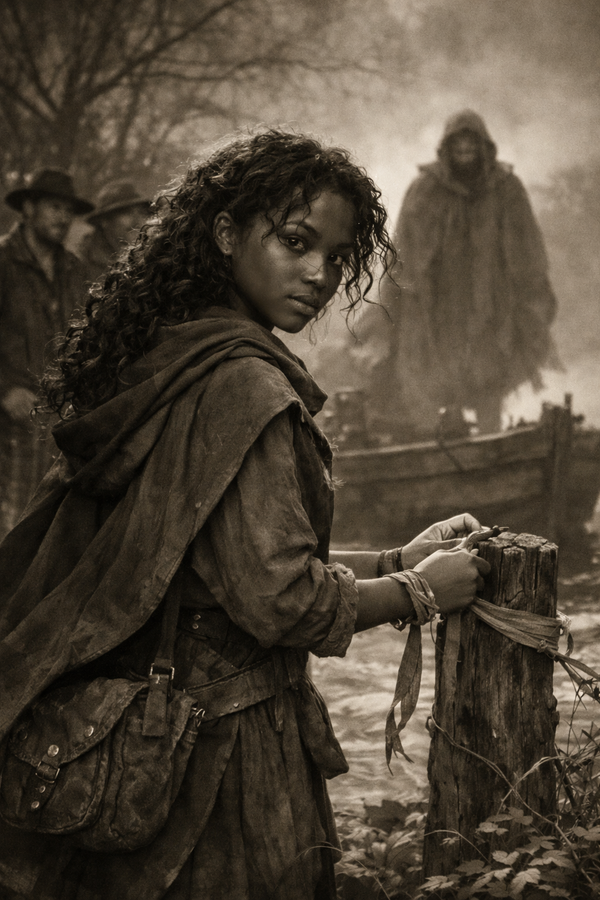
The town, fat with harvest, grew frightened of its own appetite. They wanted a simple villain and a simple rope. When they discovered they could not hang her without also hanging their luck, they chose the path to banishment and forgetting—the sort of mercy that can be folded and kept in a drawer. She went east with bread and ribbon; her father stayed bound to copper, humming under the rows, a kindness anchored to a crime he could not admit he’d committed to a friend he cannot remember.
If you need me to be that friend, Niles, then keep it. I wore his face long enough to make the nail heavy.
As for the boy—the one who would be a gunslinger, your little Sisyphus in a dusty hat—my work with him began the night the dragon walked the bottoms and the bell choked on its second note.
Prophecy is a knot tied without spectators. It is said, as small prophecies do, that when the dragon-leader walks, a boy will be condemned to defeat the demon each time—or else the dragons take the road. There was no glory written in; you may write it in after, so you can sleep.
He only made the dragon turn its head.
Yes. He learned the smell of the world sparking its tongue: salt-iron wind, penny-copper aftertaste. He learned to watch bells—how one chime at noon tells you someone has put fingers on a throat. He learned me in my wardrobes: preacher’s collar, visor green, dying boy’s mouth, mother’s trembling hands. He learned his own handwriting on the inside of jackets, because I taught him forgetting and he taught himself how to leave bread crumbs in metal.
You want me to say I taxed him out of malice. Fine. I did. You want me to say I took from him what I knew would keep him sharp and alone, because a man full of faces wouldn’t push the stone quite so faithfully? Also fine. I kept the roads in him and emptied the rooms. Call it theft; call it engineering. I answer to both.
Years later, the woman with the paper voice tied the core of me to a street with copper and hair, and I tolerated the leash because it tuned him to my key. Her rules were written—outside, never inside; spare the oranges; spare the man with the winged scar; meet in the middle so the city can watch. He came by noon like a song on schedule, and we danced, and I fell, and he looked up to steal a bite of sky because sometimes the sky is the only face I cannot invoice.
And then Hope climbed the tower. She cut the hair from under the glass mouths, corrected the bell by a thumbnail’s breath, snapped my copper loop with two neat strikes. Unbuilt is not paid, I told her. She asked the bill. I took the memories of the woman who had kept my leash. Not vengeance—bookkeeping. He killed the suit I was wearing. Dust touched it. It pleased you to see it. You made a moral of it in your head and carried it like a pocket saint.
Do not mistake untethered for undone.
I told you I was Niles. You've heard I was the clerk, the preacher, the boy, the mother, the gentleman at the crossroads, the shadow under the eaves. Believe me when it suits you; doubt me when it makes your dark nights kinder. The story you prefer will be the one that harms you least. The story I prefer is the one that continues. Marginalia.
Listen for me between the first bell and the second. Taste for me when clean wind turns metallic on your tongue. If a man steps into your street with dust in his hat and asks, “Do I know you?” say your name twice. He will do his part. He always does. That’s why your prophecies stay tidy.
Mine do not.
The gathering dust is not meant for me.
For dust I am not, and unto dust I shall never return.
The dust rejects me, as I it. The eternity of flesh, fire and smoke shall be my curse.
I am the static between dust and verdigris. Scribbling notes in the margins.
Again.