Bell & Storm
The second bell rang into weather.
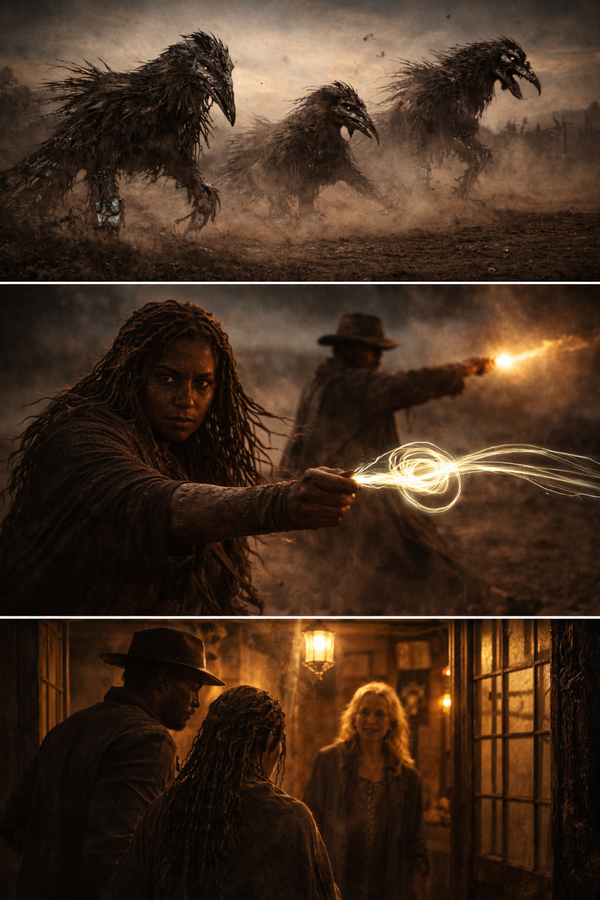
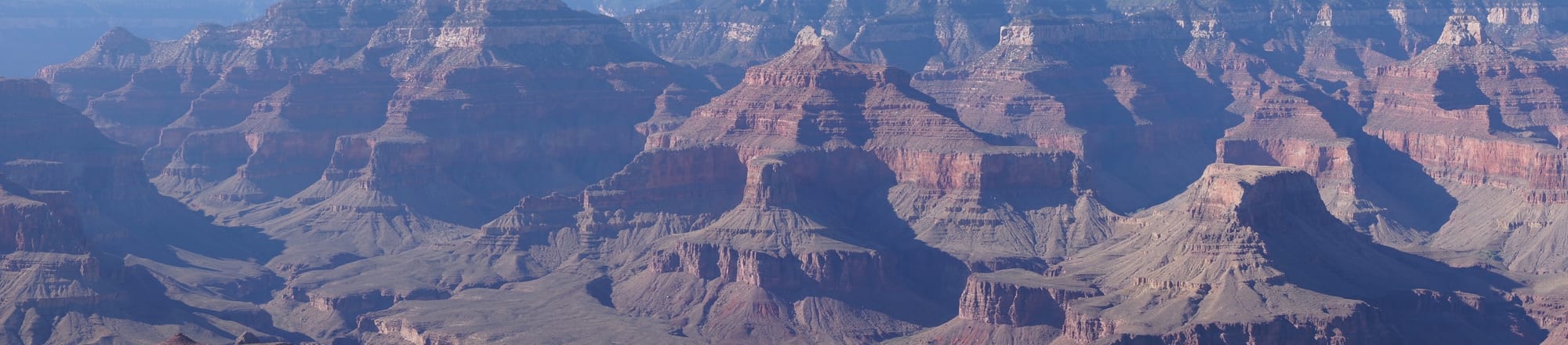
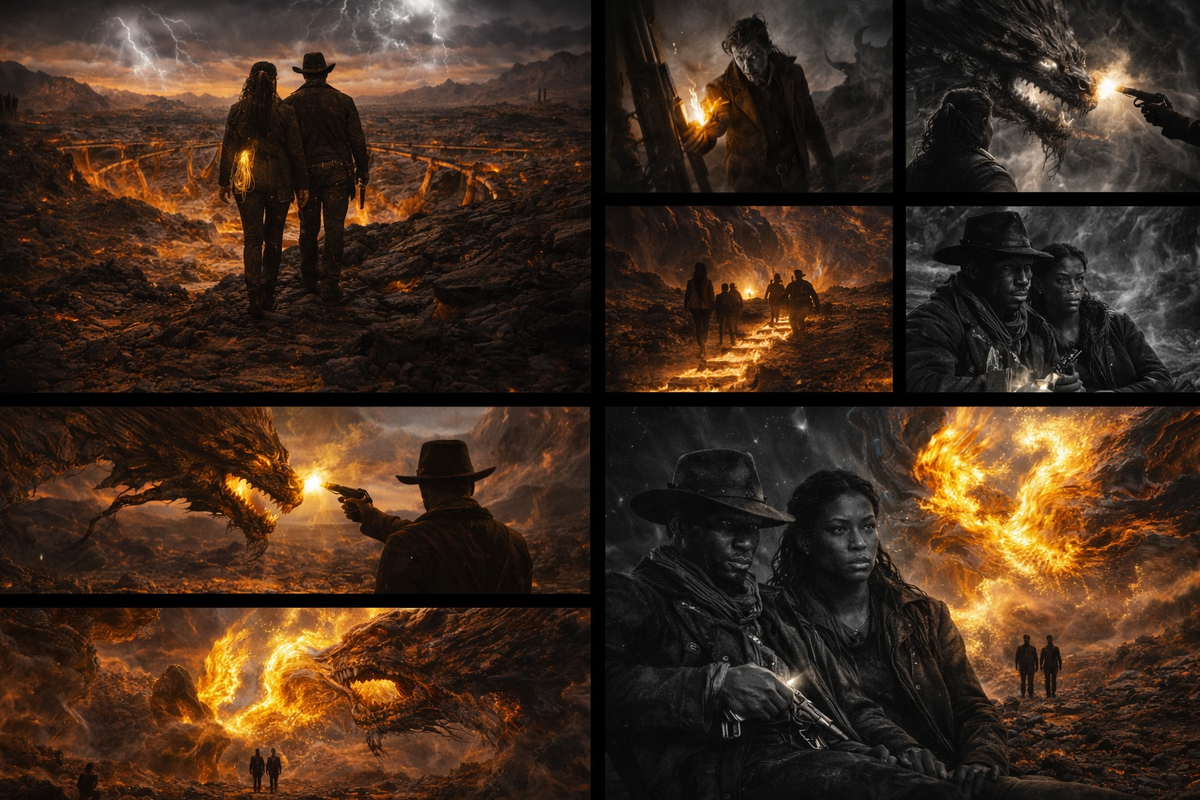
Lightning stitched a seam through a sky that had forgotten stars, and thunder rolled in like furniture moved in a dark room. Hope and the gunslinger crested the last rim and saw the field the demon had named and the sky had already chosen: a cathedral to shadow. Molten rock braided and unbraided through a gouged riverbed; copper ribs arced from wall to wall, holding the canyon open like a jaw set for surgery. The copper hummed a dark tune that could split lesser minds—notes that wanted to be law. Above them hung not night but lack, a dome of subtraction. Lightning kept finding arguments with it and losing politely.
The demon stepped out of that tidy absence and stood in front of Hope as if he had been invited.
“I will watch,” he said, voice the temperature of a ledger. “From shadow. Survive my elder, and we will speak again.”
“Bring the bird,” the gunslinger said.
“We both know I won’t do that by want,” the demon replied, pleased by the ritual of refusal. He touched two fingers to the humming copper and vanished into it, as smoke remembers purpose.
The Chief of Dragons descended.
It did not fall; it arrived, and the world consented. Wings flared—storms in the shape of decisions. With each slow beat, pressure rolled across stone and into bone. Its breath was a black hole’s courtesy, pulling at edges until edges forgot they were promises. The copper ribs brightened a malignant green. The canyon learned how horizons lie.
“Now,” Hope said.
They worked without spending words.
The gunslinger loosed a hawk-charged round past the Chief’s left eye—not to wound, but to measure. The blue-gold bite wrote a clean line along absence and taught it pain; the Chief adjusted with a mathematician’s malice, revealing nothing twice. He turned a second shot into ricochet—bell-metal off a copper brace, down the stone, back into a joint—and bought three heartbeats. He spent them all.
Hope bent the House’s moonlight to her will. From the cords she had braided, she threw a veil over the two of them—gravity shared, not owned—and the Chief’s breath lost a fraction of its theft. When lava surged across the bed with the impatience of history, she unrolled a ladder of light the width of a boot-sole; they crossed on faith made visible. When the void exhaled subtraction, she lifted a mirror of lunar glass and returned hunger to the mouth that had opened it; the canyon shuddered and kept being canyon.
The Chief struck. Claw traced theorem; tail revised geography. The gunslinger met angles with patience—low, left, high, the old grammar of surviving beastly storms. His bright cartridges sang a high thread like a red-tailed hawk you hear before you look up. Each impact unstitched a seam of copper; each dissolution turned brace to breath. The field changed sides in inches.
Hope kept those inches from ending. She threw a veil of shared gravity that made the Chief’s breath stumble, then braided Mpatapo and Epa into a doorframe in midair—one step sideways through Doorwork, and the dragon’s bite closed on the empty clause she’d just vacated. A ladder of moonlight unfurled beneath their boots as the riverbed caved; they ran three rungs, and she snapped it back into her palm before molten memory could remember their names.
“Rail Schedules, Revised,” she hissed, stamping once; a slim, silver track blinked on, carrying them three heartbeats forward in a clean skip of place and time. The gunslinger pivoted with it, sent a round off a copper rib into a Sankofa lens she’d hung like a floating coin; the ricochet came back righteous and caught the joint the Chief had trusted.
The dragon answered with subtraction. Wings beat like celestial hurricanes, peeling horizon from earth; its breath dragged at marrow, a black-hole hunger that wanted edges for breakfast. Hope lifted a mirror of lunar glass; the pull folded against itself and tore a strip of shadow from the beast’s throat. The mirror cracked in her hands and she let it become sleet, glittering down to salt the copper with doubt.
Hours lengthened and frayed. Ledges unmade themselves underfoot; she read the ground like a volatile text, hopping page to page through book-passages only she could see, reappearing at his shoulder with a knot retied or a word that kept the page from tearing. Twice she vanished between beats and dragged him with her—once through a paragraph of night to drop them behind the dragon’s elbow, once through a footnote of rain to land on stone that still remembered being stone.
The toll found them. A copper shard kissed the gunslinger’s ribs and came away red; he cinched a moon-cord tight and kept his stance small. The Chief’s tail skimmed Hope’s shoulder; her paper voice tore to a rasp that bled air. She bound it with a quick Mpatapo, breath hitching, and lifted another ladder even as her hands shook. Sweat carried the salt-iron taste of the first days; grit glued their lashes; their lungs measured thunder.
Still they worked the dance. He fed the barrel patience and bright answers. She fed the light permission and shape. When the world went to pieces, they learned the steps that kept two pieces close enough to keep being world and kept a balance between them.
Still, the world around them crumbled and disappeared—bridges unremembered themselves, ledges decided they had never been—and still they moved inside the small rules they carried. Hope drew Mpatapo with a fingertip in ash—knot of reconciliation—and held the page of the land from tearing. She set Epa as a bar where the copper wanted to lie and made it tell the truth twice. She spoke Fawohodie and doors appeared where walls had been sure of themselves. She leaned her head back once, just once, and laughed—a stitch pulled tight—and every ladder of light grew another rung.
“Now,” she said again, and the gunslinger heard what now meant.
He ran the last belt like a prayer. Rounds that remembered star-iron and feather screamed their hawk-scream down the rifled spiral and met the Chief where intention chooses muscle. One, two, three—angles flattened. Four, five—wings faltered. The sixth he saved until the world seemed to ask for it.
The Chief lunged, mouth of grave and cave and math. The gunslinger waited as a man waits for a bell to finish its first note. Then he put the final blessed round where a ledger keeps its secret: the heart of the dark beast—if heart can be said of an argument against being. The bullet’s cry—a red-tail’s clean command—walked into the void and split atom from whatever binding made it real.
The beast fell.
Not like a body. Like a moon collapsing into shattered glass. Wings broke into weather and weather into nothing. The copper ribs forgot the melody they had been forced to remember. The molten river remembered it was only heat and lay down.
From within the Chief’s unmaking, light stood up.
The phoenix did not explode. It arrived, blue-gold and exact, risen not as rescue but as revision. It opened its beak and ate, not flesh but argument—devouring the Chief from the inside out, teaching absence how to be window. The canyon brightened by degrees it had forgotten to count. Stars hurried back to their sockets.
From everywhere and nowhere the demon shrieked once—not fear, but want denied—and fled into copper and hum, like smoke congratulating itself on still knowing how. He left nothing but the memory that he had been there and would count himself present in the margins later.
Silence stood up and held. The second bell, bravest of instruments, found its voice in several somewheres far off and rang again as if to say: begin.
The phoenix circled them once, heat without hunger, and folded itself small enough to sit the hour inside Hope’s voluminous sling. It looked at the gunslinger with an ethic instead of a color and inclined its head, as if to admit that precision is a kind of mercy.
They did not celebrate. They breathed. He checked the cylinder out of the old superstition that has saved more men than luck. She tied a moon-cord back into a loop and tucked “Moonlight as Material” into her coat.
They rode out of the cathedral of shadow while the canyon relearned its manners and the sky, penitent, put Orion back where he belonged. The phoenix kept company at a polite distance, feather-light and certain.
Ahead lay traps to be promoted to trials, and lessons pretending to be weather.
Behind them, the House of Light hummed its patient hymn.
Still, the road promised an ending to be kept.